Truviss’s Marketplace Scanner runs continuous listing- and seller-level detection across major marketplaces, including low-attention categories like drinkware.
Book a demo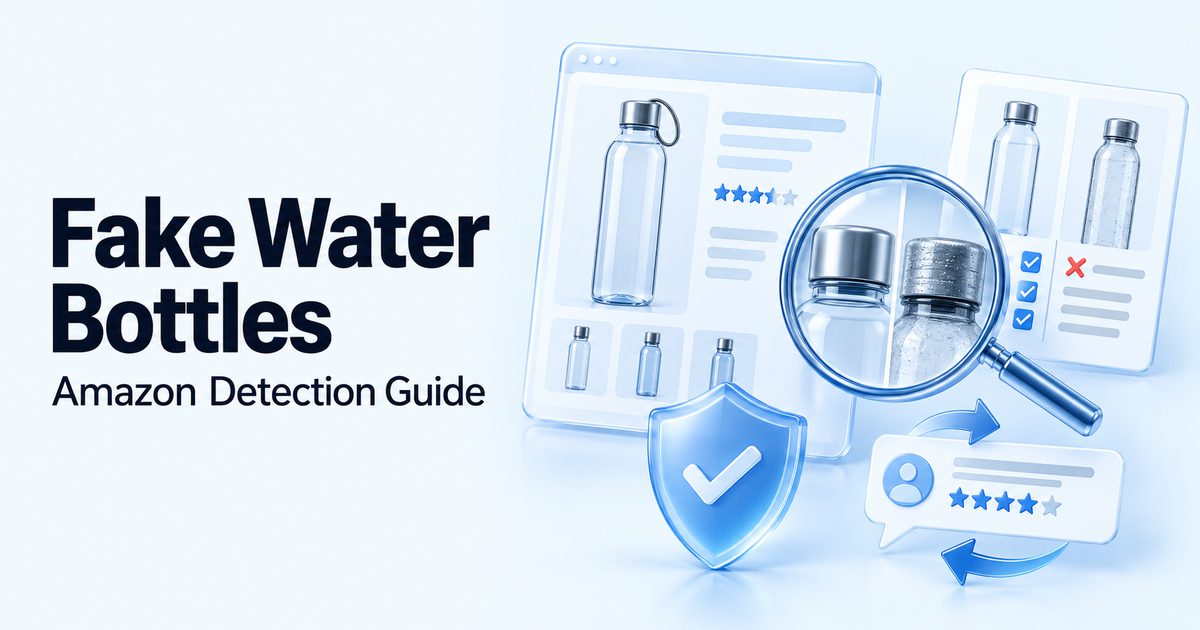
- Drinkware is cheap to counterfeit and gets far less buyer scrutiny than higher-priced categories.
- Real tells: mismatched cap threading, printed vs. embossed logos, missing batch codes, reused product photos.
- Amazon’s Brand Registry and Transparency Program are reactive, not continuous monitoring.
- An automated scan plus a short manual check against these tells catches what either alone misses.
Water bottles are one of the easiest products to counterfeit on Amazon, and one of the least discussed. Most brand-protection advice online is written for “any product” in general: enrol in Brand Registry, watch your Buy Box, report infringements. None of it explains why drinkware specifically slips through, or what a fake listing actually looks like once you know where to check. Truviss’s marketplace scanner is built for exactly this kind of category-level blind spot.
Why drinkware is an easy counterfeit target
A moulded bottle with a printed logo is cheap to reproduce. Unlike electronics or apparel, there’s no circuit board to fake and no fabric weight to get wrong, just a plastic or steel shell and a design file. Buyers also tend to scrutinise a £15 water bottle far less than a £150 pair of trainers, so a listing with slightly off colours or a blurry logo rarely gets reported. Add in high repeat-purchase volume (people buy replacement bottles constantly, as gifts, in bulk for offices and gyms) and you get a product category that’s genuinely attractive to counterfeit sellers and genuinely under-monitored by brands.
What a fake listing actually looks like
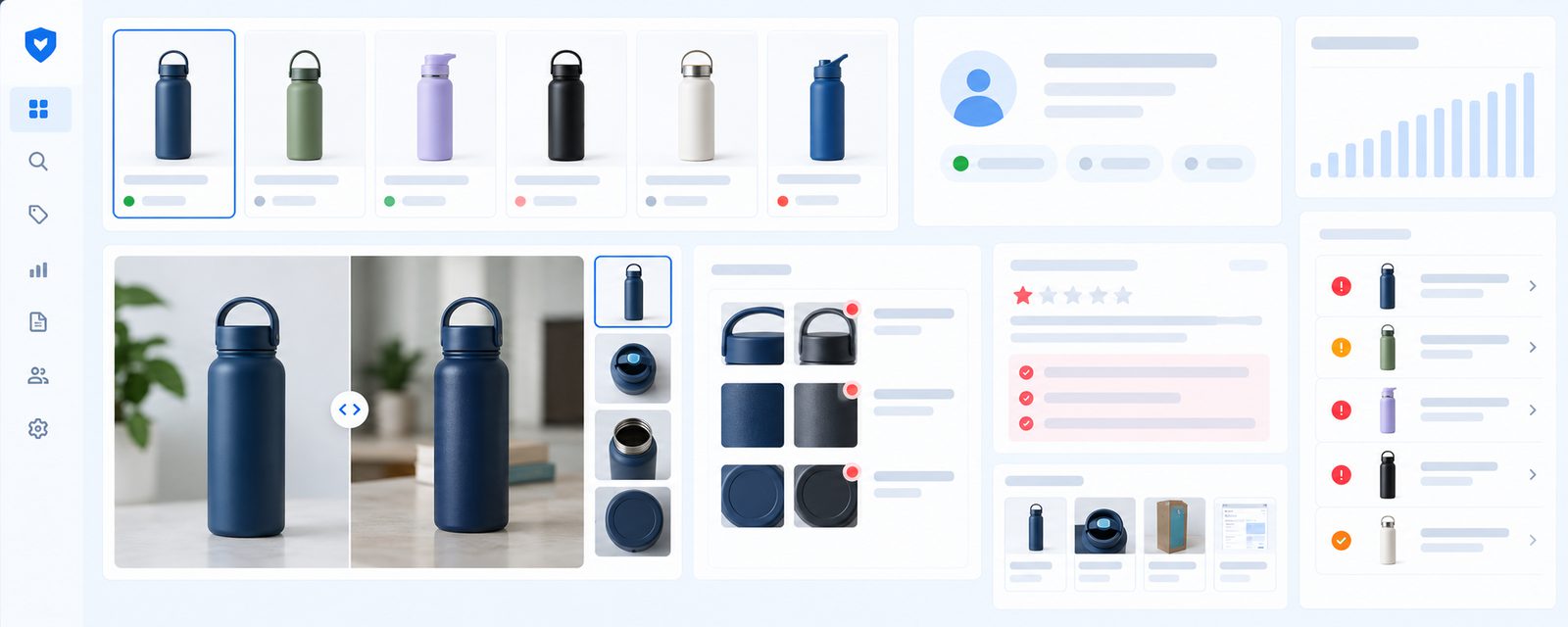
The tells are usually small and specific, not dramatic:
- Cap threading that doesn’t quite match. Counterfeit moulds are often reverse-engineered from a photograph rather than the original tooling, so the thread pitch on the cap can be visibly off.
- Printed logos where the original is embossed (or vice versa), which is one of the most common cost-cutting tells.
- Missing or generic batch/lot codes on the base of the bottle, where a genuine unit has a traceable code.
- The same product photos reused across multiple “different” seller accounts, a strong signal that one supplier is running several storefronts.
None of this requires special equipment to spot. It requires actually looking at listings side by side against a verified genuine unit, which is the part that doesn’t scale manually once a brand has more than a handful of SKUs live across regions.
Where Amazon’s own tools fall short
Amazon’s Brand Registry and Transparency Program are real tools and worth enrolling in regardless. But both are fundamentally reactive: Brand Registry gives you standing to report a listing once you’ve already found it, and Transparency requires unit-level codes to be applied at the point of manufacture, which only protects units shipped after adoption, not the fakes already circulating. Neither one watches the marketplace continuously on your behalf.
Truviss’s marketplace scanner runs that continuous check instead, flagging suspect listings across Amazon, Flipkart and other marketplaces as they go live, not weeks after a customer complaint.
Explore Marketplace ScannerBuilding a detection workflow that doesn’t rely on manual checks
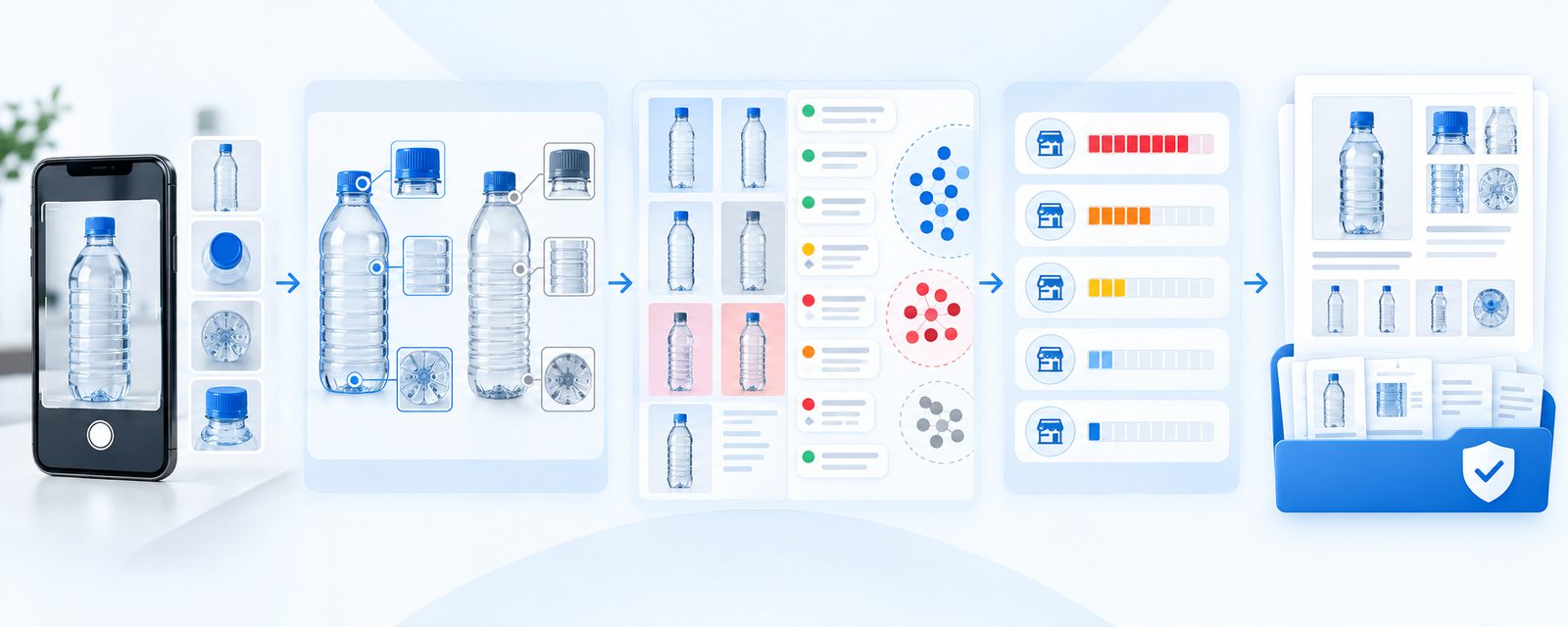
A workflow that actually holds up over time looks like this: automated scanning catches the pattern-level signals (duplicate photos, mismatched pricing tiers, seller accounts with no other listing history) that are tedious to check by hand across dozens of SKUs, then a human reviews the flagged listings against the specific tells above (cap threading, logo method, batch codes) before filing a takedown. The glossary entry on fake product listings covers the broader pattern this fits into, if you’re building out a first-time process.
The point isn’t to replace judgement with automation. It’s to make sure the judgement gets applied to the right listings in the first place, instead of whichever ones happen to get reported by an annoyed customer.
Next steps
Drinkware brands selling on Amazon at any real volume are a target precisely because so little category-specific advice exists. Start with the tells above on your own current listings, then look at Truviss’s marketplace scanner if manual review isn’t catching things fast enough to matter.
Related reading
- How to Report Counterfeit Sellers: Amazon to Alibaba
- Counterfeit Risk on Quick Commerce: Blinkit to Instamart
- What Happens After You Report a Counterfeit Listing

Mithileshkumar leads growth at Truviss, working every day to make sure the brands losing the most to counterfeits, fraud and digital impersonation are the ones who find out about a fix first. He’s spent his career believing that good marketing isn’t about noise, it’s about showing up right when someone needs the answer. Off the clock, he’s usually chasing the same instinct in something entirely unrelated to work.