
A rogue affiliate is a marketing partner who breaks a brand’s affiliate program terms to generate commissions it hasn’t genuinely earned, commonly through unauthorised paid ads bidding on the brand’s own trademarks, cookie-stuffing to claim credit for sales it didn’t influence, or promoting counterfeit or grey-market stock under the brand’s affiliate link. Affiliate fraud is the broader pattern of abuse this behaviour falls under, inside an otherwise legitimate performance-marketing program.
What it is
Affiliate programs pay a commission when an affiliate’s link genuinely drives a sale. A rogue affiliate exploits the gap between “genuinely drove the sale” and “was credited with the sale” — inserting itself into a purchase a customer was already going to make, so the brand pays a commission for traffic it never needed to buy. This differs from ordinary brand impersonation in that the affiliate usually has a real, signed-up account inside the program; the fraud is in how it drives and claims traffic, not in faking the brand identity itself.
Left unchecked, a rogue affiliate also damages the customer experience directly. Brand-bidding ads that route through a middleman page before landing on the real site slow the checkout down and can expose visitors to unrelated offers or malware along the way.
How it works
- Brand-bidding in paid search: the affiliate buys ads on the brand’s own trademarked terms, sometimes using the brand name directly in the ad copy or display URL, intercepting shoppers who were already searching for the brand.
- Cookie stuffing: a tracking cookie is dropped on a visitor’s browser without a genuine click or intent, silently claiming affiliate credit for any purchase that visitor later completes, even through an unrelated route.
- Coupon and cashback-site abuse: fake “exclusive” discount codes are listed on coupon aggregator sites purely to capture the affiliate click and commission, often with a code that doesn’t actually apply any real extra discount.
- Promoting unauthorised inventory: the affiliate link drives traffic toward grey-market or counterfeit stock sold under the brand’s name, collecting a commission on a sale the brand didn’t actually authorise.
In practice
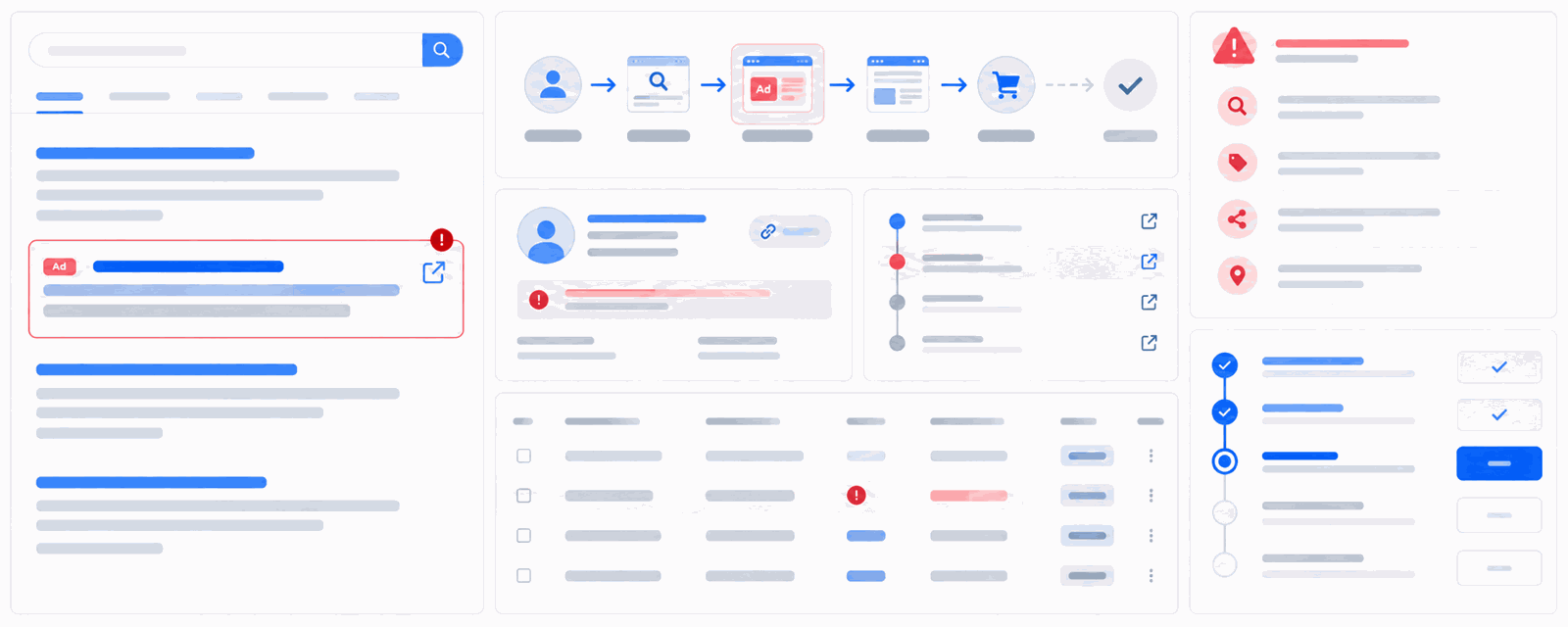
The most common pattern brands encounter is an affiliate running paid search ads on the brand’s own name, so a shopper who types the brand into Google clicks an ad that routes through the affiliate’s tracking link before landing on the brand’s real site, generating a commission payout for a sale the brand would have made anyway, at zero real marginal benefit from the affiliate. Over a large enough affiliate program, this can quietly become one of the largest line items in the affiliate payout budget, without any of it representing genuinely new customer acquisition.
How Truviss helps
Truviss’s Ads Scanner detects unauthorised ads misusing a brand’s name, trademarks or product imagery across Google, Meta and other ad networks, flagging affiliates and other advertisers operating outside program terms for case review and enforcement.
Related terms
Not usually. A rogue affiliate is typically a real, signed-up partner inside the brand’s own affiliate program, abusing how it claims commission rather than faking the brand itself. It can overlap with counterfeit sales when the affiliate is promoting unauthorised inventory, but the core fraud is in the tracking and attribution.
Cookie stuffing is dropping an affiliate tracking cookie on a visitor’s browser without a genuine click or intent to buy, so the affiliate later claims commission credit for any purchase that visitor makes, even through a completely unrelated path to the site.
Because the brand pays the affiliate commission on top of a sale it was already going to make organically, since the shopper was searching for the brand by name. The affiliate adds no real new demand, only inserts itself into demand that already existed.