How to remove counterfeit listings from Alibaba
Alibaba connects businesses with manufacturers and suppliers across the globe, particularly in Asia. The B2B model creates unique counterfeit risks: bulk orders of fake products enter supply chains before detection, and wholesale pricing makes counterfeiting economically attractive. This guide covers Alibaba’s enforcement mechanisms, the IPP platform, and why supply-chain-level monitoring is essential.
See how Truviss can help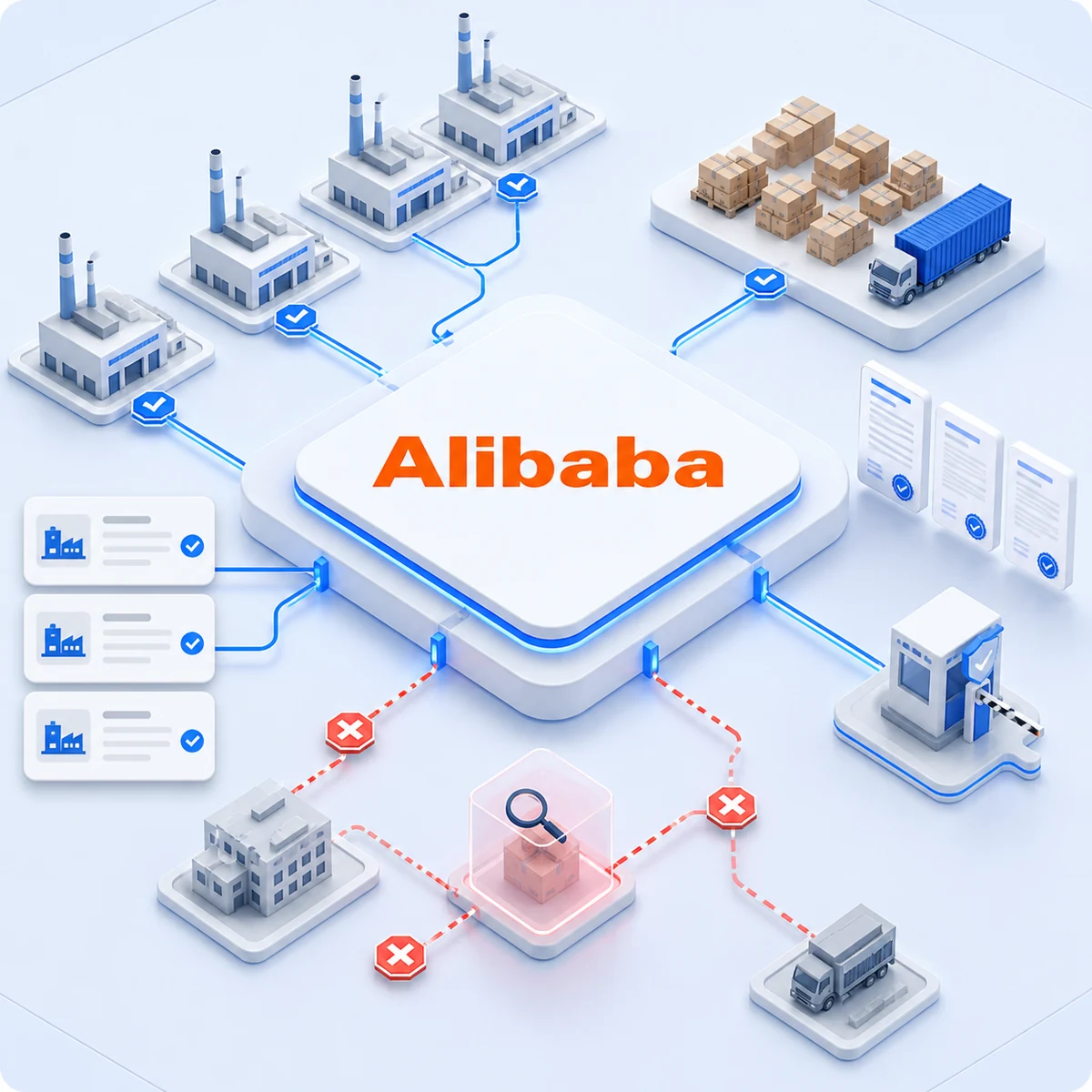
The scale of Alibaba counterfeiting
Alibaba sits at the heart of global B2B trade, connecting buyers with hundreds of thousands of suppliers and manufacturers across Asia and beyond. That concentration is precisely what makes it attractive to counterfeiters. A single factory can produce bulk orders of fake goods that enter legitimate supply chains before any quality check flags them, and wholesale pricing makes the economics of faking especially rewarding.
Truviss analyses more than 500 data points per listing to compare products, pricing, sellers, images and metadata.
For brands, the damage goes beyond lost wholesale revenue. Counterfeit components infiltrate manufacturing runs, damage buyer trust, and erode the value of hard-won certifications. Because orders are bulk and wholesale, a single undetected counterfeit supplier can cost a brand far more than any individual marketplace listing.
How counterfeits appear on Alibaba
Understanding the tactics counterfeit suppliers use is the first step to stopping them. Alibaba’s B2B structure creates attack vectors that marketplace models do not.
How to remove counterfeit listings from Alibaba
Alibaba provides several enforcement mechanisms for brands. Understanding each one, and when to use it, is essential for effective counterfeit removal at wholesale scale.
Use Alibaba’s IPP (IP Protection Platform)
Alibaba’s dedicated intellectual property enforcement portal. Submit trademark proof, evidence and specific product URLs for takedown review.
Enrol in Alibaba’s IPR Protection Programme
Alibaba’s IP Protection Platform lets eligible rights owners submit intellectual-property complaints and track them through the platform’s current process.
Report through Alibaba.com’s complaint system
For non-IPP issues: counterfeit product reports, misleading product descriptions, certification fraud.
Document supply chain evidence
Product testing, independent lab reports, purchase order documentation for legal escalation.
Consider separate customs advice
Customs recordal and border action are separate from Alibaba’s IP Protection Platform. Requirements vary by jurisdiction, so seek qualified advice before taking this route.
Key point: Each of these tools requires ongoing attention. Counterfeit suppliers relist under new accounts after a takedown, and manual spot checks of bulk supply chains miss most infringement.
Evidence requirements for Alibaba takedowns
Alibaba rejects vague or incomplete reports. A successful takedown includes:
- Trademark registration certificate (international or target-country specific)
- Specific product listing URL on Alibaba.com
- Evidence of trademark ownership (registration number, owner name, goods/services)
- Product comparison photographs (genuine vs. counterfeit)
- Independent product testing reports where available
- Purchase order documentation and shipping records
- Supplier communication records showing misrepresentation
Complete, well-organised evidence gives the platform clearer information to assess. Requirements and outcomes depend on the platform’s current policy.
Why manual counterfeit removal fails at scale
Most brands start by having a team member manually search Alibaba for counterfeits and file reports. This works when there are a handful of infringing suppliers. It breaks down when the problem grows.
| Challenge | What happens |
|---|---|
| Volume | Alibaba hosts millions of supplier pages and product listings across categories. Manually searching, evaluating and filing reports for each one is a full-time job that scales poorly. |
| Global scope | Counterfeit suppliers operate across jurisdictions with different IP laws, making enforcement complex and slow to coordinate. |
| Sample switching | Manual inspection catches sample-bait fraud only after bulk orders are shipped, when the damage is already done. |
| Intermediary opacity | Trading companies and agents obscure the actual manufacturer, hiding the true source behind layers of intermediaries. |
| Relisting | Banned suppliers create new accounts through different trade entities, undoing each takedown soon. |
| Certification complexity | Verifying forged certifications requires specialist knowledge per industry, which most monitoring teams lack. |
How Truviss automates Alibaba counterfeit removal
Truviss replaces manual monitoring with continuous, automated surveillance and enforcement across the Alibaba ecosystem.
Continuous Alibaba monitoring
24/7 scanning of product listings, supplier pages, pricing, images and certification claims across Alibaba.com. The system cross-references these signals against your brand’s actual products, catching fakes that keyword-only tools miss.
IPP enforcement support
Truviss files IPP complaints with complete evidence packages that meet Alibaba’s requirements, tracks outcomes and escalates rejections. Every action is logged with timestamps, screenshots and supplier data, building the evidence trail needed for legal escalation.
Supply chain intelligence
Mapping supplier networks, identifying connected accounts and tracking products across Alibaba, AliExpress and 1688.com. When a supplier is banned, Truviss spots the connected accounts that try to relist under different trade entities.
Cross-platform coverage
Counterfeit suppliers list where enforcement is weakest. Truviss monitors Alibaba, AliExpress, 1688.com, Made-in-China and GlobalSources from a single account, so fakes on secondary platforms are caught and addressed.
Frequently asked questions
The IP Protection Platform is Alibaba’s dedicated tool for trademark owners to report and request removal of infringing product listings. It supports trademark, copyright and patent claims.
Alibaba does not guarantee one review time for every IP Protection Platform complaint. Timing depends on the right, evidence and any response from the reported seller.
Yes. Truviss covers the entire Alibaba ecosystem including B2B (Alibaba.com), B2C (AliExpress) and domestic China (1688.com).
Alibaba performs basic business verification but does not independently verify product certifications (ISO, CE, etc.). Buyers must verify certifications separately.
Through the IPP Platform for IP violations, or via Alibaba.com’s complaint centre for general product quality and misrepresentation issues.
Trademark registration, specific listing URLs, proof of ownership and evidence of infringement. Product testing reports strengthen claims for quality-based complaints.
Customs recordal is separate from Alibaba’s IP Protection Platform and depends on the destination country’s laws and procedures. Seek qualified advice for customs enforcement.
Truviss monitors supplier behaviour patterns, pricing anomalies and listing changes that indicate sample-bait switching, and flags these for investigation.
 Amazon
 Flipkart
 Meesho
 Instagram
 Facebook
 YouTube
 X / Twitter
Counterfeit supply chains start with a listing
Truviss monitors Alibaba around the clock, detects counterfeits at supplier and product level and supports automated takedown workflows and tracks evidence.
Book a Demo