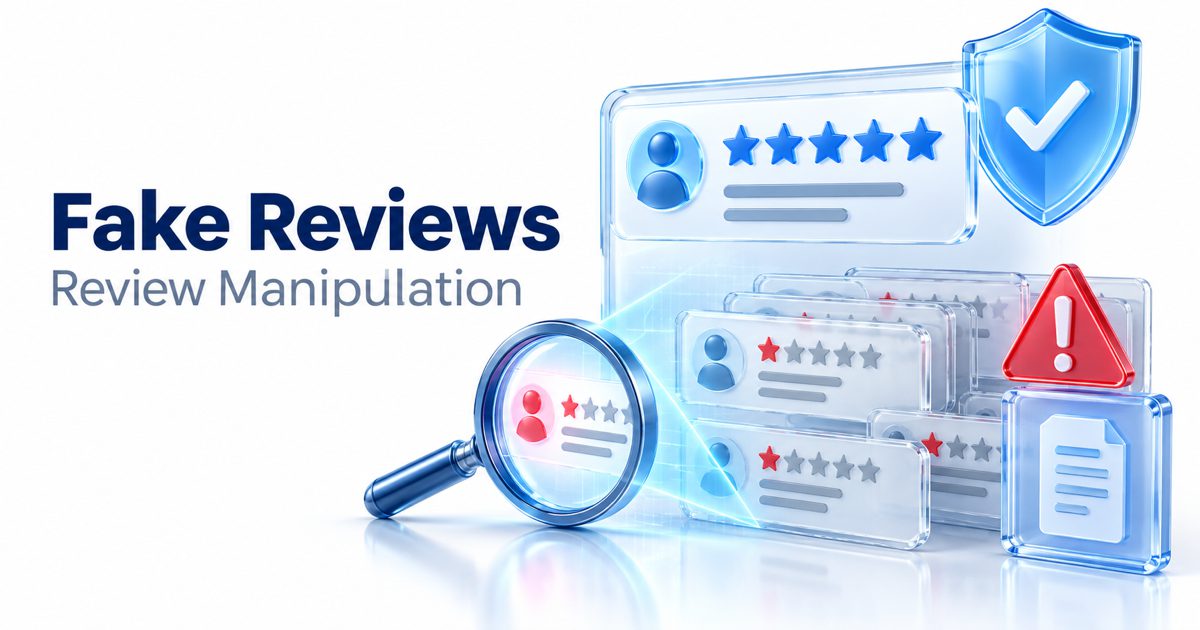
Fake reviews, or review manipulation, is the practice of posting artificially generated, purchased or coordinated reviews to inflate a product’s rating or bury genuine negative feedback. On a marketplace, a sudden spike in five-star reviews concentrated in a short window is one of the clearest early signals that a seller account is new, unverified or selling counterfeit stock, rather than a natural sign of product quality.
What it is
Review manipulation covers a range of tactics: reviews written by paid reviewers who never used the product, reviews swapped between sellers in reciprocal arrangements, and reviews generated through “brushing”, where a seller ships an unordered package to a real address purely to unlock a “verified purchase” tag on a fake review. All of them share the same goal, making a listing look more trustworthy than the product or seller actually is.
Genuine fake product listings rely on this trust signal heavily, since a new seller account with no track record needs some way to appear credible fast. A burst of reviews achieves in days what organic customer feedback would otherwise take months to build.
How it works
- Recruit reviewers: sellers source reviewers through private groups, review-exchange networks, or paid review-farm services, sometimes offering a refund or gift card in exchange for a five-star post.
- Seed in bursts: reviews land in a short, concentrated window, often timed to a new listing’s launch or shortly after a takedown, rather than trickling in at a natural pace.
- Use brushing to fake “verified purchase”: an unordered package is shipped to a real address so the review can carry the marketplace’s own verified-purchase badge, making it harder to dismiss as fake.
- Rotate accounts: if a listing or seller account is flagged and removed, the same reviews and inventory frequently reappear under a new account within days.

In practice
Review-velocity spikes are now recognised widely enough that regulators have started acting directly on the practice. The US Federal Trade Commission finalised a rule in 2024 banning the sale or purchase of fake reviews and testimonials, with penalties for both the seller buying them and the platform hosting them if it knowingly allows the practice to continue. For brands, the practical pattern is simpler to spot than to prove after the fact: a listing that gains hundreds of five-star reviews in a week, with little variation in language or timing, is a stronger counterfeit-seller signal than the product photos or price ever are.
How Truviss helps
Truviss’s Marketplace Scanner correlates review-velocity anomalies with other listing and seller signals, flagging accounts that show the fake-review pattern for human-reviewed enforcement before the listing scales further.
Related terms
Look at timing and language rather than star rating alone. A cluster of five-star reviews posted within days of each other, using similar phrasing or generic praise with no specific product detail, is a stronger signal than any single suspicious review on its own.
Brushing is when a seller ships an unordered package to a real address, using that shipment to unlock a “verified purchase” review from an account they control. It lets a fake review carry the marketplace’s own authenticity badge.
Yes. The US FTC finalised a rule in 2024 banning the sale, purchase or hosting of fake reviews and testimonials, with penalties that can apply to both sellers and platforms that knowingly allow the practice.