Truviss covers marketplace, social, domain, app and ad monitoring plus evidence management and SKU-level configuration in one place.
Book a demo
- 12 strategies spanning channel monitoring (marketplace, social, domain, app, ads), process (evidence, SKU hygiene, SLA tracking, seasonal cadence, review monitoring, influencer vetting) and cross-team ownership.
- Treated as one connected system rather than 12 separate tasks, these close the gaps where counterfeiters and impersonators operate longest.
- Each strategy links to the deeper Truviss resource or module that covers it in full detail.
Most e-commerce teams have brand protection running somewhere. Marketing keeps an eye on social mentions. Legal files the occasional takedown notice. Ops flags a suspicious listing when a customer complains. What almost no team has is all twelve pieces of a real brand protection programme running at once, on a schedule, with clear ownership, and the gaps between those pieces are exactly where counterfeiters and impersonators operate longest before anyone notices.
This is the checklist version of that programme: twelve strategies, in the order a team typically builds them out, from channel monitoring through to the process and ownership questions that decide whether any of it actually works day to day.
1. Marketplace monitoring
Start here, because it’s the highest-volume channel and usually the one teams already half-cover. Counterfeit and unauthorised listings appear on marketplaces faster than any manual check can catch, in one documented Truviss case, counterfeit listings on a single marketplace undercut the genuine product by 30-40% and kept relisting after being reported.
A marketplace scanner needs to run continuously across every marketplace the brand actually sells on, not just the flagship one, Amazon monitoring alone misses the regional and vertical marketplaces where a lot of counterfeit volume actually lives. See what marketplace monitoring covers for the mechanics.
2. Social monitoring
Impersonator accounts run scams under a brand’s name while the marketing team is busy watching engagement metrics, not enforcement queues. A fake seller page on Instagram or Facebook can run for months, taking orders and payment for products that never ship, before a customer complaint reaches the brand.
Social monitoring needs to catch three things: fake seller and reseller pages, cloned brand accounts, and DM-to-order schemes that never touch a public storefront at all. That last pattern is now common enough to be its own risk category, see how DM-to-order selling works on Reels and Shorts and the broader social commerce fraud picture. For the general playbook, see how to protect your brand on social media.
3. Domain monitoring
A lookalike or typosquatted domain is frequently live for weeks before anyone in-house notices it, long enough to harvest customer credentials through a phishing page or run a fake storefront that damages trust in the real one. Domain monitoring closes that visibility gap by scanning for newly registered domains that resemble the brand’s own, plus cloned websites copying its design wholesale.
This is one of the few brand protection categories with a clear regulatory backstop: the EU’s Digital Services Act has already produced a €550m fine against a major marketplace for counterfeit-related failures, which is pushing platforms toward faster domain and listing takedowns industry-wide. Read the complete guide to domain phishing for the full mechanics, or the domain scanner page for how detection works.
4. App monitoring
A cloned app sitting in the official iOS or Android store looks exactly as legitimate as the real one to a customer scrolling search results, there’s no visual signal that distinguishes a rogue app from the genuine release. That makes app monitoring one of the higher trust-damage categories on this list: a customer who installs a fake app and has a bad experience blames the brand, not the app store.
Coverage needs to span both stores continuously, not just at launch, clones tend to appear after a brand’s app gains traction, not before. See rogue apps and app cloning and the app scanner page.
5. Ad monitoring
Fraudulent ads spend a brand’s own reputation to sell someone else’s product, a fake ad using the brand’s name, trademark or product photos on Google, Facebook or Instagram routes a paid click straight to a scam listing or phishing page. It’s worth being precise about what ad monitoring actually delivers: detection and verification of the fake ad, routed into case management for a human-reviewed enforcement decision, not an automated ad-network takedown, since ad platforms require a documented complaint rather than an automated API pull.
The GLP-1 category has been a live example of how coordinated this fraud can get, a documented AI-driven ad scam network impersonating GLP-1 brands ran across multiple platforms simultaneously. See ad fraud in brand protection and the ads scanner page.
6. Evidence and case management
A takedown filed without a documented evidence trail is a favour, not a repeatable process. Legal and compliance teams need URLs, timestamps and screenshots captured at the moment an infringement is found, not reconstructed after the fact when a dispute or court filing demands them.
This is the difference between brand protection as a one-off reactive scramble and brand protection as an auditable programme. A structured evidence trail is also what turns a single takedown into a pattern case against a repeat offender, see the Truviss case studies for what that looks like against a real reseller network.
Every scanner feeds one shared evidence trail, so legal, marketing and ops are always looking at the same case, not three different spreadsheets.
See the case management workflow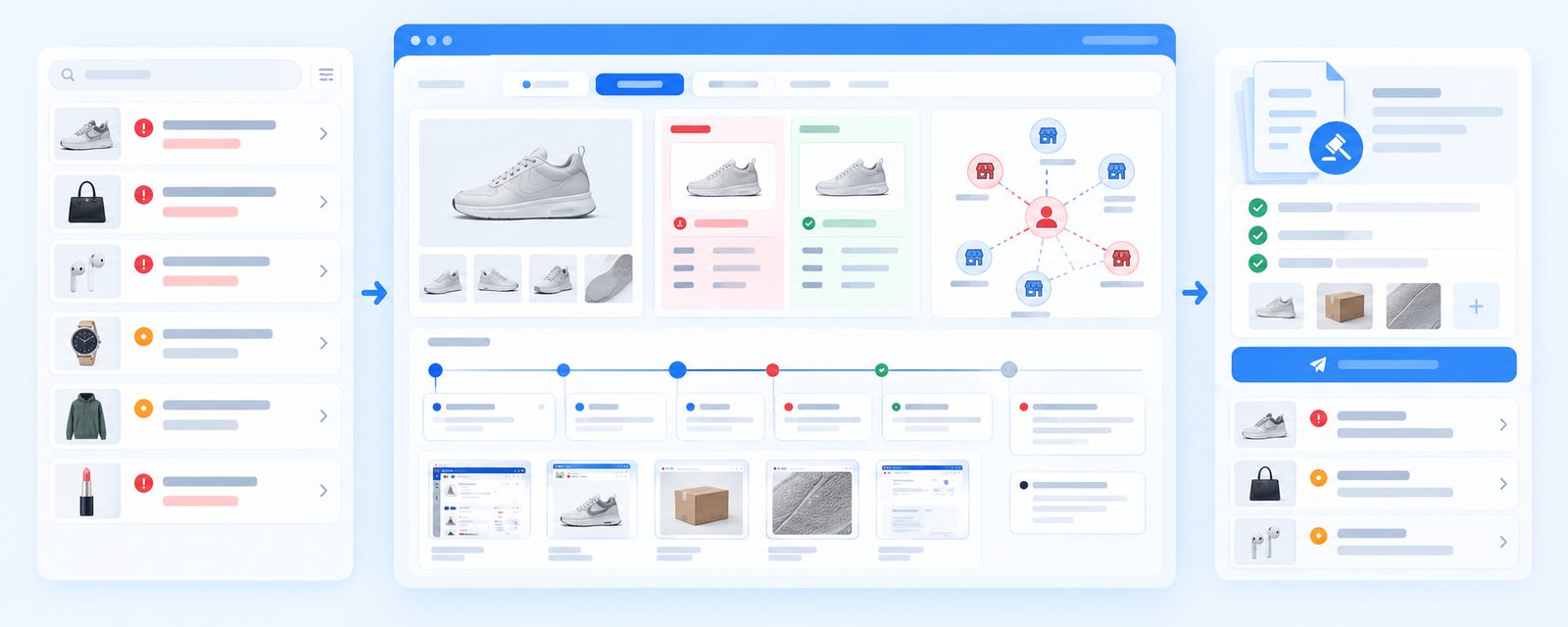
7. SKU catalogue hygiene
Detection is only as precise as the catalogue behind it. A stale or incomplete SKU list produces both false positives, real resellers flagged as counterfeit, and real misses, new SKUs launched without matching detection rules, giving counterfeiters a head start on every new product. SKU-level matching only works if someone owns keeping the catalogue current, new product launches, discontinued lines, updated packaging all need to sync into the detection system, not sit as a quarterly cleanup task.
This matters more in categories where genuine product variation is high and counterfeiters exploit exactly that, the SKU-level detail behind luxury goods monitoring is one clear example of why catalogue hygiene isn’t a one-time setup step. See what SKU-level matching covers.
8. Takedown SLA tracking
“We filed a report” is not a metric. Time-to-removal is. A takedown request that sits unresolved for three weeks leaves a counterfeit listing selling at full volume for three weeks, tracking how long each request actually takes, by platform, is what turns enforcement from an activity into a measurable programme.
Different platforms have wildly different response times, and that variance is exactly the data a brand protection team needs to prioritise escalations. See what happens after you report a counterfeit listing for the realistic timeline, and what a takedown request actually is for the mechanics behind it.
9. Seasonal monitoring cadence
Infringement volume doesn’t stay flat across the year, it spikes hard around major sale events and festival shopping windows, when genuine demand surges and counterfeiters follow it almost exactly. A monitoring cadence built for an average week misses the spike that matters most, because the spike is precisely when a brand’s own trust and revenue are most exposed.
Continuous scanning solves the coverage problem; what’s still a policy decision is alerting thresholds and review staffing scaling up ahead of known peak periods, not just reacting once volume has already climbed.
10. Review monitoring
Fake reviews are frequently the first visible signal of a counterfeit seller, not a separate problem to solve on its own. A cluster of suspiciously similar five-star reviews appearing on a listing that’s already undercutting the brand’s price is a pattern worth flagging before the listing itself gets reported.
There’s no single dedicated review-scanner product category the way there is for marketplaces or domains, this is better treated as one more signal folded into marketplace monitoring’s listing-level analysis, seller history, pricing, and review patterns together, rather than a separate tool to buy.
11. Influencer vetting
A real, verified influencer account can still carry a fake sponsorship post, and the brand absorbs the reputational cost either way, a follower who buys based on an influencer’s post assumes the brand approved the partnership, whether or not it actually happened. This has become common enough that it now sits as its own distinct fraud pattern, separate from a straightforward impersonator account.
Vetting here is more process than product: confirming a partnership actually exists before it goes live, and having a fast path to flag and report one that doesn’t. Social monitoring’s impersonator-detection coverage is adjacent to this but doesn’t replace the manual vetting step itself.
12. Cross-team ownership
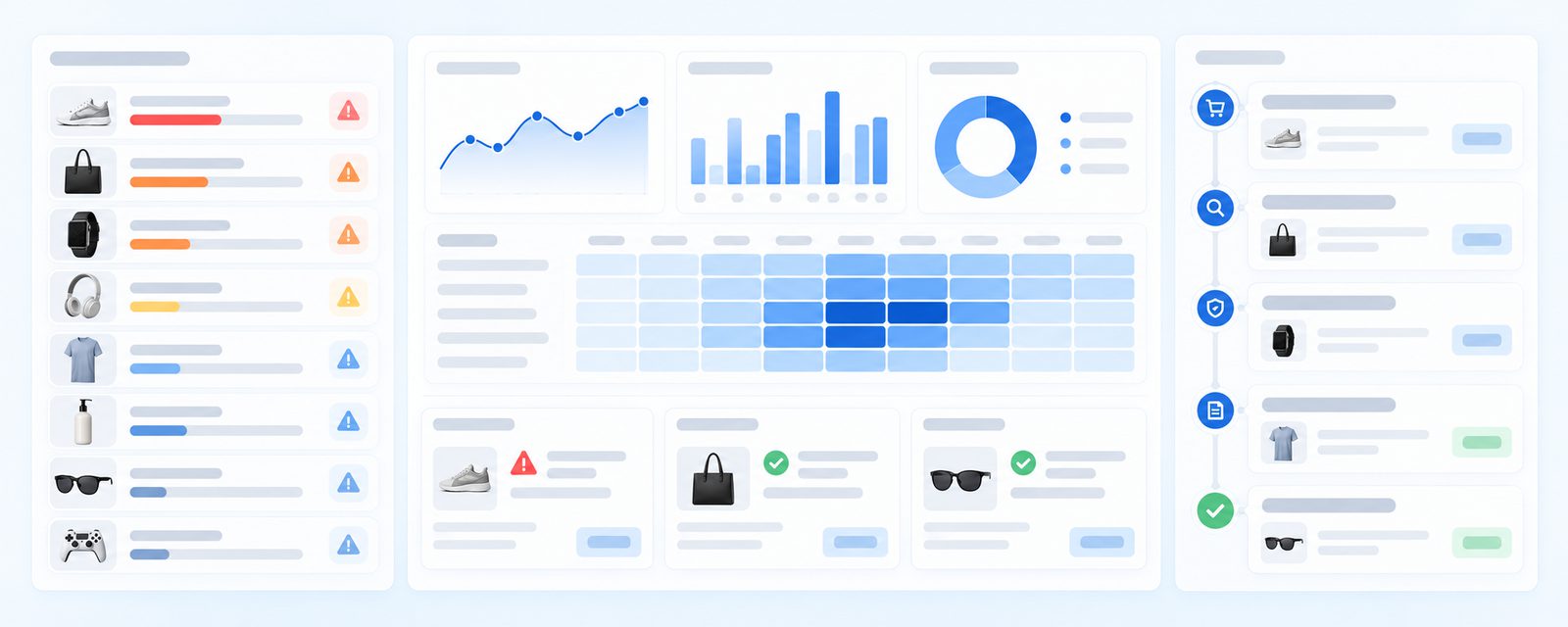
Brand protection programmes fail between departments, not within them. Legal owns enforcement and evidence. Marketing owns brand voice and social presence. E-commerce ops owns the marketplace listings and pricing. Each team can be doing its job well and the programme still fails, because no single team owns the full twelve-point view, a domain threat legal would act on instantly might sit unseen in a marketing inbox for weeks.
The fix is structural, not additional headcount: one shared dashboard with role-based access, so each team sees what’s relevant to them without needing a separate handoff process to surface it. That ownership question is also a budget question, see how to prove brand protection ROI to finance for making that case internally.
The twelve as one system, not twelve tasks
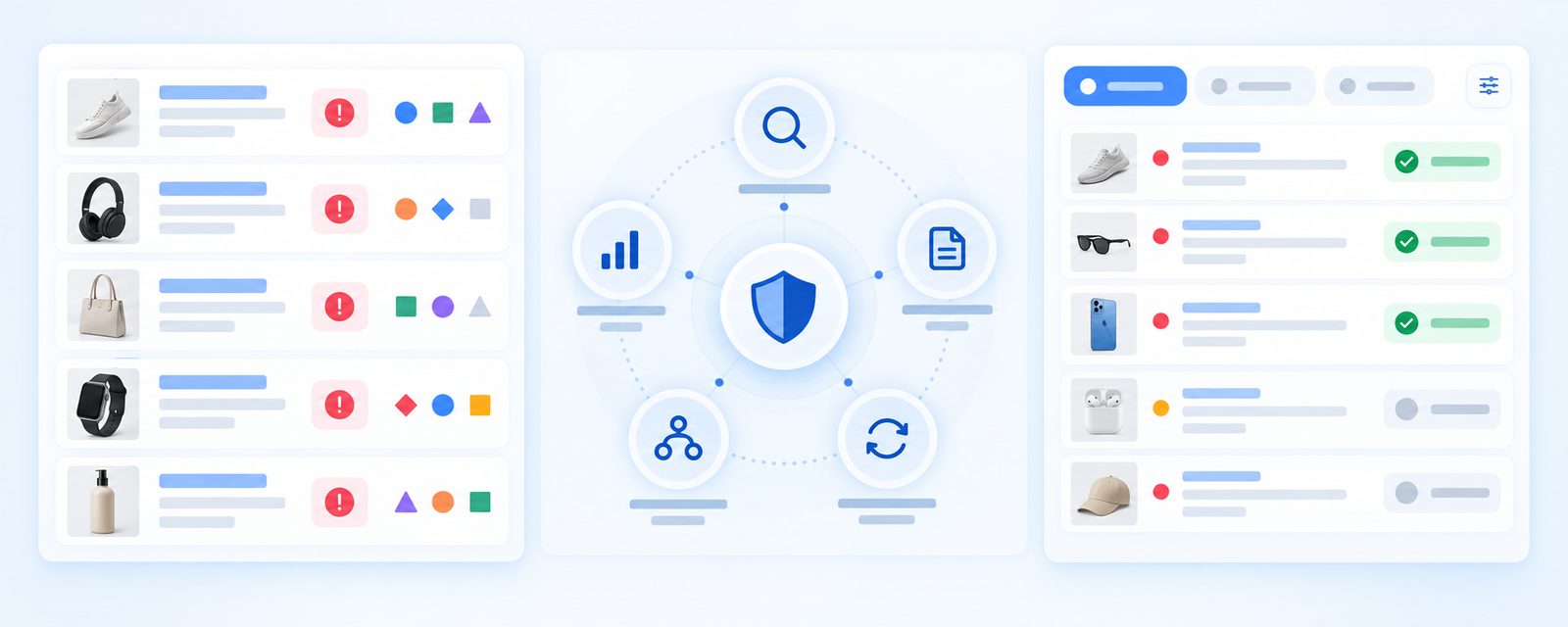
Treated separately, these twelve strategies turn into twelve disconnected checklists that nobody owns end to end. Treated as one system, continuous monitoring across marketplaces, social, domains, apps and ads; evidence and SKU data feeding every takedown decision; SLA and seasonal cadence turning enforcement into something measurable; and one shared view across legal, marketing and ops, it becomes an actual programme instead of a reactive scramble each time something goes wrong.
For a deeper look at where brand protection is heading as a category in 2026, beyond this operational checklist, see Brand Protection 2026: What’s Actually Working.

Mithileshkumar leads growth at Truviss, working every day to make sure the brands losing the most to counterfeits, fraud and digital impersonation are the ones who find out about a fix first. He’s spent his career believing that good marketing isn’t about noise, it’s about showing up right when someone needs the answer. Off the clock, he’s usually chasing the same instinct in something entirely unrelated to work.