- What digital brand abuse looks like in 2026
- How big the problem actually is
- The five fronts: where brand abuse actually happens
- Case in point: a fake sold as genuine on a mainstream marketplace
- What regulators are doing about it
- Detect, verify, enforce: the process that actually works
- Where to start
Truviss scans 150+ marketplaces, social platforms, app stores, domains and ad networks around the clock.
Book a demo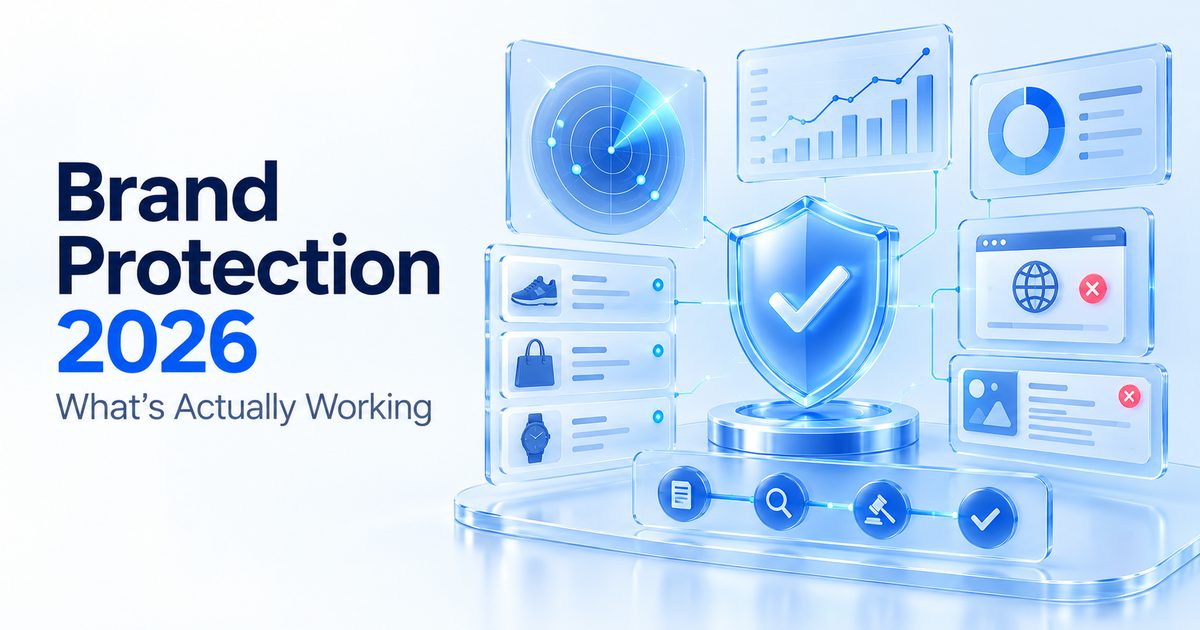
- Counterfeit goods made up an estimated USD 467 billion in global trade in 2021, 2.3% of world trade (OECD/EUIPO), and digital channels have made fakes easier to reach buyers directly than ever before.
- Brand abuse now spans five fronts: marketplaces, social media, domains, app stores and ad networks, not just counterfeit listings.
- Governments are naming and tracking the worst offenders: the USTR’s 2025 Notorious Markets List is the latest annual accounting of where counterfeiting concentrates online.
- A detect, verify, enforce process, run continuously rather than as a periodic sweep, is what actually keeps pace with how fast new infringements appear.
What digital brand abuse looks like in 2026
Brand abuse used to mean one thing: a counterfeit product. It now means five. A counterfeit listing undercutting price on a marketplace. A cloned social media profile running a fake giveaway in a brand’s name. A lookalike domain harvesting customer logins. A cloned mobile app collecting data under a familiar-looking icon. A fraudulent ad steering search traffic toward a fake storefront. Each is a distinct attack surface, and each one is a form of online brand abuse that most brands only discover after a customer complains.
What’s changed isn’t the intent behind any of this, it’s the speed and the surface area. A counterfeit operation no longer needs a warehouse or a distribution deal, just a marketplace account and a copied product photo. A phishing operation no longer needs to compromise a brand’s own servers, just a domain that looks close enough at a glance.
How big the problem actually is
Global trade in counterfeit goods reached an estimated USD 467 billion in 2021, equivalent to 2.3% of total world trade, and EU imports of fakes alone were valued at EUR 99 billion (OECD/EUIPO, Mapping Global Trade in Fakes 2025). Clothing, footwear and leather goods jointly accounted for 62% of all counterfeit goods seized globally, categories that also happen to be among the most heavily traded on consumer marketplaces.
Those figures cover physical seizures. They understate the digital side of the problem, the impersonator accounts, phishing domains and cloned apps that never show up in a customs report because nothing physical ever crosses a border. A brand can lose customer trust to a fake Instagram giveaway or a typosquatted domain without a single counterfeit unit ever being seized.
The five fronts: where brand abuse actually happens
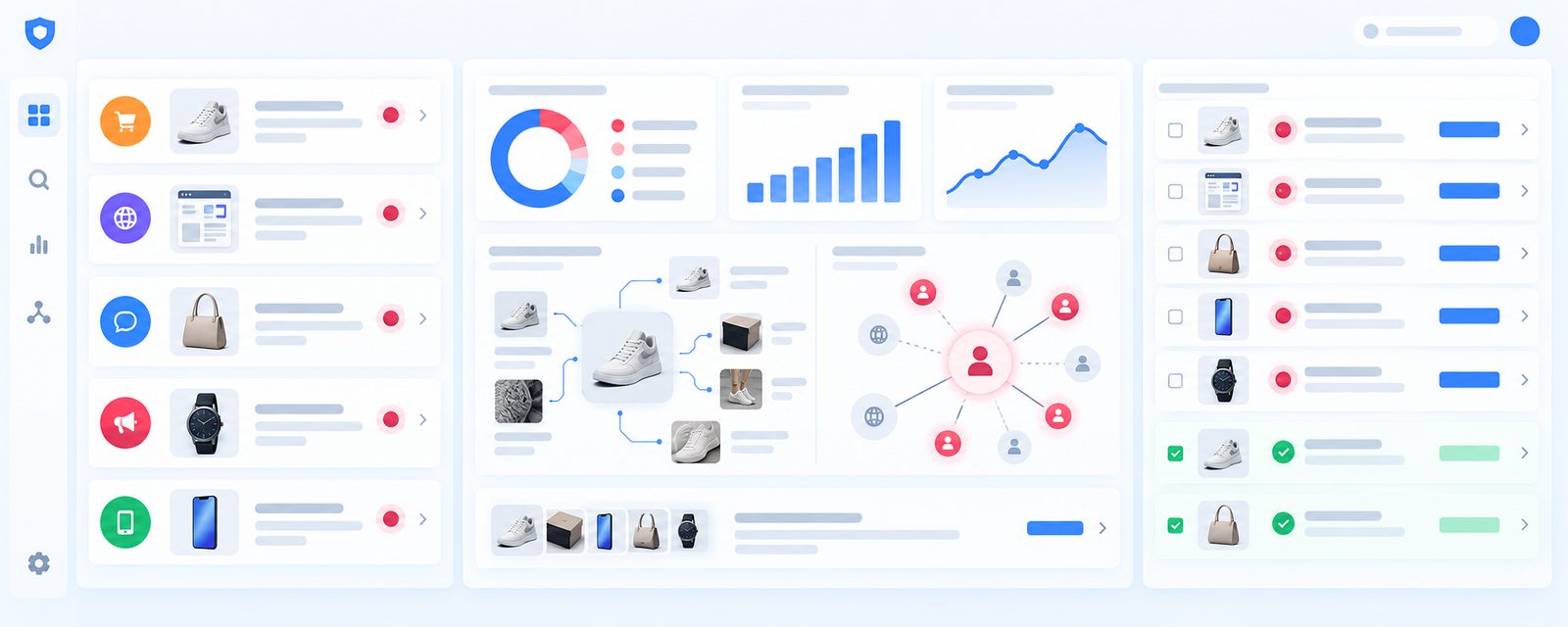
Marketplaces remain the biggest single channel, covering everything from major platforms to regional and vertical ones, and quick-commerce apps have added a newer, faster-moving front on top of that. Truviss’s Marketplace Scanner covers 150+ of them, matching listings against a brand’s real catalogue at SKU level rather than by keyword alone.
Social media is close behind: fake profiles and scam pages on Facebook, Instagram, X, TikTok and YouTube trade on a brand’s name and following to run scams the real brand never sanctioned. Domains are the quieter threat, lookalike and typosquatted URLs built to harvest logins or payment details before a customer notices the misspelling. App stores add a fourth front, cloned or rogue apps on iOS and Android that mimic a brand’s real app closely enough to pass a casual glance. And ad networks are the fifth, fraudulent ads that redirect paid search or social traffic straight to a fake storefront, quietly spending a competitor’s or counterfeiter’s budget against a brand’s own customers.
Case in point: a fake sold as genuine on a mainstream marketplace
This isn’t a hypothetical. Truviss has seen the pattern play out with a real client, one of India’s leading helmet manufacturers, whose helmets were counterfeited and sold on Amazon by unauthorised resellers at 30-40% below the genuine price, with repeat offenders relisting after being reported. It didn’t need to fool every buyer, only enough of them, on a platform mainstream enough that shoppers don’t think to double-check.
Daily scanning combined with computer vision image matching against the brand’s own catalogue was what eventually mapped the reseller network and gave Amazon’s IP enforcement team enough evidence to act.
What regulators are doing about it
Governments are paying closer attention too. The US Trade Representative’s 2025 Review of Notorious Markets for Counterfeiting and Piracy, published in 2026, is the latest edition of an annual list naming the online and physical markets where counterfeiting concentrates most. Being named on the list carries no direct legal penalty, but it is a public signal that puts pressure on the platforms and marketplaces involved, and it gives brands and their legal teams a citable, government-sourced reference point when building an enforcement case.
Regulatory pressure alone doesn’t remove a single fake listing, though. That still comes down to a brand’s own monitoring and enforcement process, applied consistently, not just when a list like this makes headlines.
Detect, verify, enforce: the process that actually works
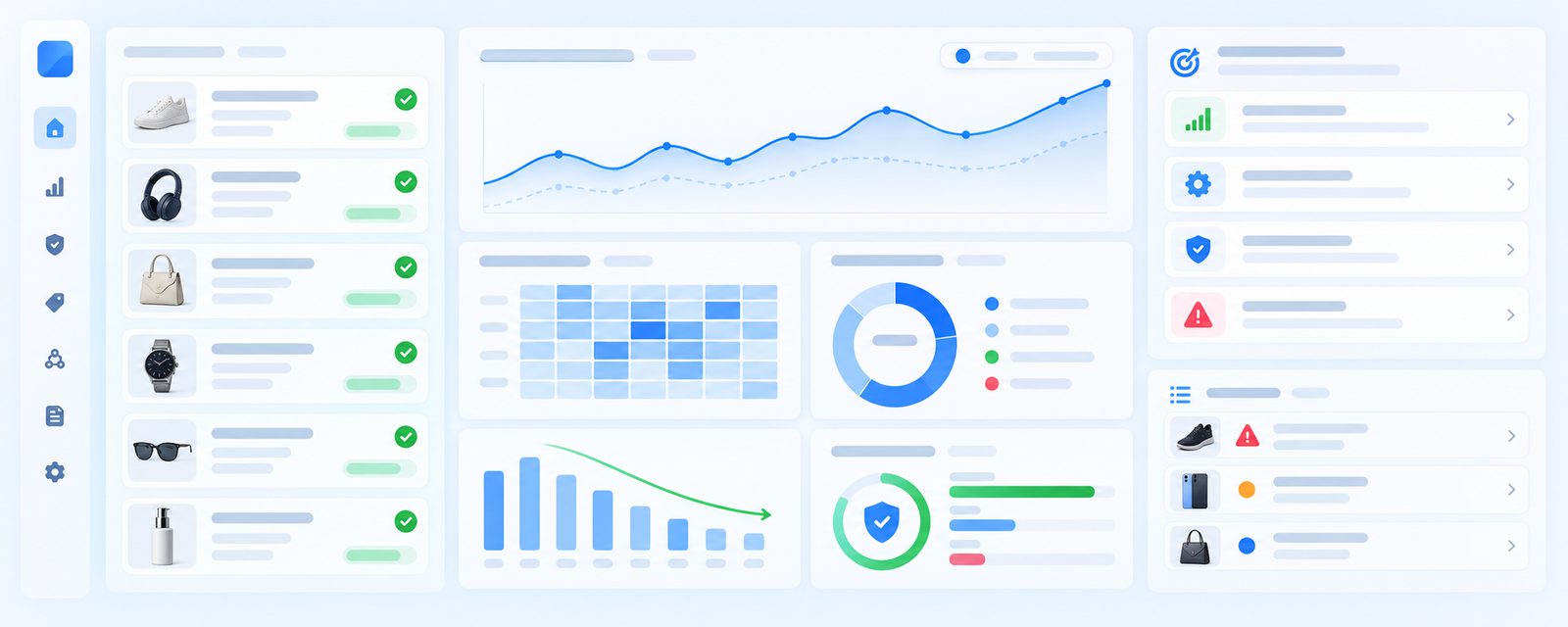
The brands that keep pace treat brand protection as a continuous process, not a periodic clean-up. It comes down to three steps, repeated constantly.
Detect continuously, not periodically. Scanning that runs 24/7 across every channel where a brand actually has exposure, analysing 500+ data points per listing, images, pricing, seller history and text together, rather than keyword search alone.
Verify against the brand’s real catalogue, at SKU level. This is what protects genuine resellers and authorised partners from being caught up in enforcement by mistake, and it’s what gives a takedown request credibility with the platform reviewing it.
Enforce with a documented evidence trail, URLs, screenshots and timestamps logged for every action, not just the immediate takedown but as a record if a case ever needs to escalate beyond a single platform’s own process.
See how Truviss runs detect, verify, enforce automatically across marketplaces, social media, domains and apps.
Explore Marketplace ScannerWhere to start
Start with whichever front carries the biggest exposure. For most consumer brands that’s still counterfeit listings on marketplaces, but a brand with a strong social following may find impersonator accounts the more urgent risk, and one running paid acquisition may be losing more to ad fraud than it realises. Get continuous monitoring in place on that one channel first, build a documented takedown process around it, then expand coverage as the process proves itself.
Frequently asked questions
Both, and increasingly the two are connected. A counterfeit product still has to be manufactured somewhere, but the sale, discovery and distribution to the buyer now happens almost entirely through digital channels, marketplaces, social media and search ads, which is why digital monitoring has become as important as any physical enforcement.
Whichever carries the most exposure for that specific brand. A brand sold heavily through third-party marketplaces should prioritise counterfeit listing monitoring; a brand with a large social following should prioritise impersonator detection. There’s no universal answer, it depends on where the brand’s own customers actually are.
It doesn’t remove listings directly, but it adds public and diplomatic pressure on the named markets and platforms, and it gives brands a citable, government-sourced reference point when making the case for stronger enforcement with a specific marketplace or registrar.
No. Smaller and regional brands are targeted too, and often with less visibility since they have fewer resources for manual monitoring, which makes continuous, automated detection proportionally more valuable for a smaller team.

Mithileshkumar leads growth at Truviss, working every day to make sure the brands losing the most to counterfeits, fraud and digital impersonation are the ones who find out about a fix first. He’s spent his career believing that good marketing isn’t about noise, it’s about showing up right when someone needs the answer. Off the clock, he’s usually chasing the same instinct in something entirely unrelated to work.