Truviss

Tag: IP Infringement

  • Trademark Cases Reshaping Brand Protection in Africa

    Trademark Cases Reshaping Brand Protection in Africa

    Home/Blog/Trademark Cases Reshaping Brand Protection in Africa
    Marketplace Protection

    Trademark Cases Reshaping Brand Protection in Africa

    Don’t wait for a courtroom to find out your brand’s been copied

    Truviss monitors marketplaces continuously so you catch counterfeit listings, copied packaging and unauthorised resellers before they force a legal fight.

    Book a demo
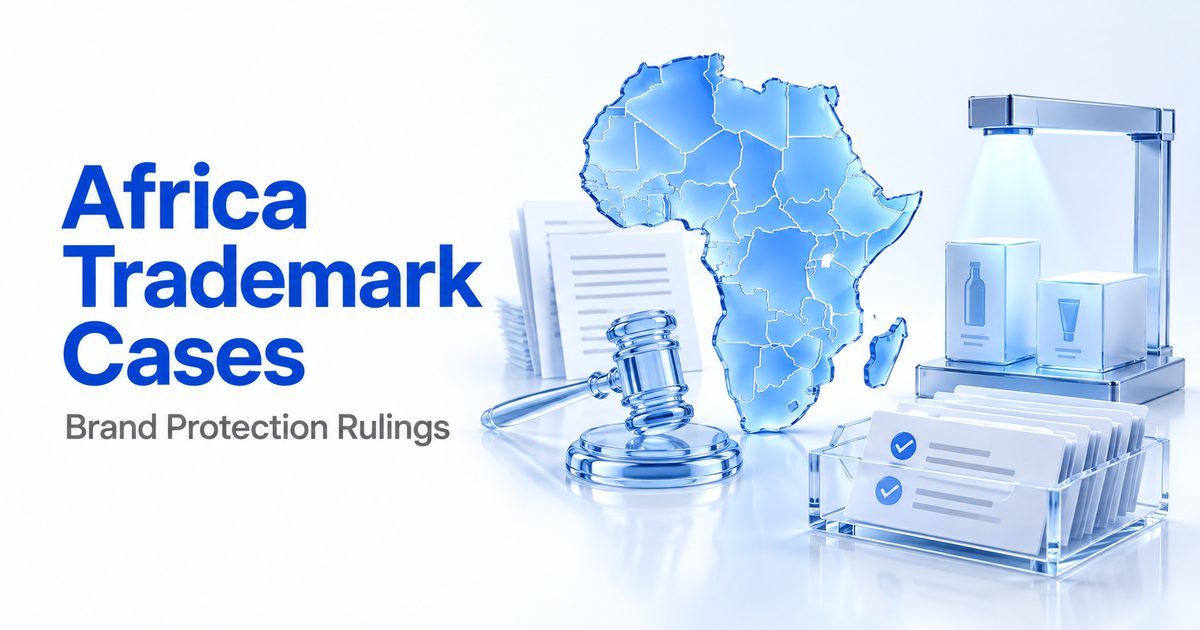
    Africa map with scales of justice, trademark court cases illustration
    TL;DR
    • South Africa’s Supreme Court of Appeal ruled 3-2 that genuine Enrico Coveri shoes imported without local trademark consent are not “counterfeit” under the Counterfeit Goods Act, since counterfeiting requires criminal intent to deceive.
    • Kenyan courts backed two rights-holders: Ezeetile won KES 3 million in damages over copied tile-adhesive packaging, and Unga Limited got a temporary injunction against a copycat maize brand in January 2026.
    • Nigeria’s Rite Foods had to go back to court twice against the same energy-drink rival after a first settlement was quietly ignored.
    • A private Nigerian company lost its own trademark fight against the Central Bank of Nigeria over the “eNaira” name, showing registration alone isn’t a guaranteed shield.

    Brand owners who assume “our goods are genuine, so we’re covered” got a rude awakening in South Africa this year. And they are not alone. Across South Africa, Kenya and Nigeria, courts have spent the last eighteen months drawing sharper lines around what counts as trademark infringement, who owns a brand name, and how far a rights-holder’s protection actually stretches. The results have not all gone the way brands expected.

    This roundup covers five verified, recent court rulings from three African jurisdictions. It is not an exhaustive index of every case on the continent. We searched specifically for Ghana and Egypt rulings from 2025 and 2026 and found none we could verify to a specific court judgment, so they are left out rather than padded in with vague trend pieces.

    South Africa: when the “real thing” still isn’t yours to sell

    The most counterintuitive result of the year came from South Africa’s Supreme Court of Appeal in Yossi Barel v Popular Trading CC and Others ([2025] ZASCA 94, decided 23 June 2025).

    Yossi Barel holds the registered South African trademark for the ENRICO COVERI footwear brand. Popular Trading CC, a separate distributor, imported genuine Enrico Coveri shoes sourced directly from the brand’s Italian manufacturer, without Barel’s consent as the local trademark holder. Barel tried to have those shoes seized as counterfeit under South Africa’s Counterfeit Goods Act.

    In a tight 3-2 split, the majority disagreed. Authentic goods, they held, cannot be “counterfeit” under the Act purely because they were imported without the local rights-holder’s permission. The Act’s definition of counterfeiting is a criminal one, requiring evidence of intent to deceive, and is legally distinct from ordinary trademark infringement, which is a civil matter judged on likelihood of confusion, not intent. Unauthorised parallel importation of real goods, the majority reasoned, is a trademark-infringement question, not a counterfeiting one, and the two carry different legal tests and remedies.

    Two judges dissented. In their view, any unauthorised use of a registered mark, even on goods that are genuinely made by the original manufacturer, should count as counterfeiting, because the registered proprietor’s exclusive rights in South Africa are what the law protects, not the goods’ factory of origin.

    The upshot for brand owners: winning a criminal counterfeit seizure is not the same fight as winning a civil infringement claim, and confusing the two can mean walking away with neither remedy.

    Kenya: copied packaging costs a rival KES 3 million

    A more conventional result came out of Kenya’s Mombasa High Court. In Ezeetile Kenya Ltd v Dg Services Limited ([2025] KEHC 12098, judgment delivered 7 July 2025), Ezeetile held the registered trademark “TILEFIX” for its tile adhesive, built up since entering the Kenyan market in the 1990s. DG Services began selling a competing tile adhesive in 25kg packaging that Ezeetile argued was strikingly similar, to the point of misleading buyers into thinking they were purchasing the original product.

    DG Services did not defend the claim. The court found infringement, awarded Ezeetile general damages of Kshs 3,000,000, and granted a permanent injunction. Straightforward as undefended cases go, but it shows Kenyan courts are willing to back registered trademark holders with meaningful damages, not just an injunction.

    Copied packaging is exactly the kind of signal Truviss’s marketplace monitoring is built to catch, before it reaches this scale.

    Explore Marketplace Scanner

    Kenya: an established maize brand fights a two-year copycat

    A second Kenyan case is still working its way through court. Unga Limited, one of the country’s longest-running maize millers and the registered owner of the “HODARI” trademark across Kenya, Tanzania, Uganda and Zanzibar, discovered in late 2024 that Nanyuki-based Daiga Millers was producing and selling maize meal under the Hodari brand without authorisation.

    On 22 January 2026, the High Court granted Unga a temporary injunction, restraining Daiga Millers from importing, packaging, distributing, marketing or selling any Hodari-branded product, and ordering the surrender of infringing stock, packaging and equipment pending a full trial. The case is not yet decided on the merits, but the interim order shows a court willing to act quickly once a registered rights-holder makes a credible case, rather than waiting for a full hearing to stop the harm.

    Nigeria: a beverage brand fights the same rival twice

    Rite Foods Limited, maker of the Fearless energy drink, sued Mamuda Beverages Nigeria Limited at the Federal High Court in Abuja in January 2025, after Mamuda launched a lookalike product, Pop Power, in a bottle design Rite Foods argued was a copy of Fearless. The parties reached a consent judgment: Mamuda agreed to stop producing Pop Power in that design, destroy existing stock, and avoid further imitation.

    Mamuda then relaunched Pop Power with only cosmetic changes. Rite Foods went back to court. Justice Binta Murtala-Nyako dismissed Mamuda’s preliminary objection and granted Rite Foods’ fresh application for injunctive relief, stopping the reintroduced version too.

    The lesson here is less about the legal test and more about enforcement mechanics: a settlement or a first injunction is not always the end of the story. Brands that win the first round should expect to keep monitoring for a repeat offence dressed up as a “redesign,” and be ready to go back to court if one turns up.

    Nigeria: a private company loses the trademark fight against a central bank

    The most unusual case of the five is not a counterfeit-goods dispute at all, but it belongs in a brand-protection roundup because it turns on the same underlying question: who has the right to a name.

    eNaira Payment Solutions Ltd, a private company incorporated in Nigeria in 2004, sued the Central Bank of Nigeria after the CBN launched its own “eNaira” digital currency in 2021, using a name the company argued was already its trademark. On 22 May 2026, Justice James Omotosho of the Federal High Court in Abuja ruled against the company. The judgment found the company’s own chosen name was “unregistrable” in the first place, because it was misleading and implied a government affiliation it never had. The court granted the CBN a perpetual injunction affirming its exclusive rights to the eNaira name, ordered the private company to change its name to remove any reference to “Naira,” and awarded the CBN N10 million in damages.

    It is a reminder that trademark rights are not purely a race to register first. A name that misleadingly borrows the credibility of an official or well-known institution can lose out even against an earlier registrant, once a court decides the original registration itself was improper.

    What the pattern tells brands operating in Africa

    Three things stand out across these five rulings.

    First, “counterfeit” has a narrower legal meaning in most of these jurisdictions than marketing teams tend to assume. The Barel case shows that genuine goods, moved without authorisation, may sit outside a counterfeit statute entirely, even though they clearly infringe a trademark in the ordinary sense. Brands need both playbooks ready, not just one.

    Second, injunctions are not self-enforcing. The Rite Foods case shows a rival can quietly reintroduce a near-identical product after a settlement, betting the brand owner will not notice or will not want to go back to court. Ongoing monitoring after a win, not just at the point of filing, is what makes an injunction stick.

    Third, territorial trademark registration still carries real weight, even against a rival selling authentic, non-counterfeit goods, as the dissenting view in Barel and the outcome in Unga’s Hodari case both illustrate. Registering and actively defending a mark in each market a brand sells into, rather than relying on its reputation from elsewhere, remains the more durable strategy.

    For brands trying to catch a relaunch, a copycat design, or an unauthorised import before it reaches a courtroom, continuous online brand protection monitoring is what turns “we’ll deal with it if it happens again” into evidence a court can act on quickly, the way Unga’s team did within weeks of finding Daiga Millers’ stock.

  • UK Trademark Cases 2025-26: Umbro Lost, Thatchers Won

    UK Trademark Cases 2025-26: Umbro Lost, Thatchers Won

    Home/Blog/UK Trademark Cases 2025-26: Umbro Lost, Thatchers Won
    Marketplace Protection

    UK Trademark Cases 2025-26: Umbro Lost, Thatchers Won

    Catch it before a court has to

    Truviss monitors UK marketplaces and social platforms continuously, so counterfeit activity gets flagged while it is happening, not years later in a judgment.

    Book a demo
    Abstract scales of justice illustration representing UK trademark and counterfeit court rulings
    TL;DR
    • Five UK trademark and counterfeit rulings landed between January 2025 and May 2026, and brand owners won barely half of them.
    • Umbro’s parent Iconix lost outright at the Supreme Court. Thatchers won on appeal against Aldi. Getty Images won only a sliver against Stability AI. ShortsTV lost outright against Google. An influencer selling counterfeit luxury goods lost outright at IPEC.
    • None of these turned on brand size or fame. Each turned on a narrow legal question: actual confusion, unfair advantage, distinctiveness, or straightforward counterfeit sale.
    • The one genuine counterfeit case took months to reach judgment. The trademark-scope disputes took years and multiple appeals. Litigation is a backstop, not a detection system.

    The scoreline: brand owners won two, lost two, and split one

    Five UK court rulings between January 2025 and May 2026 put trademark and counterfeit law properly to the test, and the results do not follow a pattern anyone selling “brand protection” would want to pretend they do. Umbro’s owner lost at the UK Supreme Court. Thatchers beat Aldi at the Court of Appeal. Getty Images won against Stability AI, but the judge called the win “extremely limited in scope.” ShortsTV lost against Google, also at the Court of Appeal. And a UK influencer selling counterfeit Fendi, Loewe, Dior and Celine goods lost outright at the Intellectual Property Enterprise Court.

    Two clear brand-owner wins. Two clear losses. One partial win that reads more like a loss in practice. This is not a story about which side had better lawyers. It is a story about what UK courts are actually looking for when a brand claims someone else has crossed the line, and it is worth reading properly before assuming a famous logo or a big legal budget settles anything.

    Iconix (Umbro) v Dream Pairs [2025] UKSC 25: the brand owner lost

    On 24 June 2025, the UK Supreme Court unanimously allowed an appeal by Dream Pairs Europe, restoring the original trial judge’s finding that Dream Pairs’ football boots did not infringe Umbro’s double-diamond logo. Iconix Luxembourg Holdings, which owns the Umbro trademark, had won at the Court of Appeal after losing at first instance. The Supreme Court reversed that again, back in Dream Pairs’ favour.

    The legal question was narrow and specific: post-sale confusion under section 10(2) of the Trade Marks Act 1994, whether someone seeing the boots after purchase, not at the point of sale, might mistake them for Umbro’s. The trial judge had already found no likelihood of confusion. The Court of Appeal disagreed and substituted its own assessment. The Supreme Court’s point was procedural as much as substantive: an appellate court does not get to swap in its own multi-factor judgment call over a trial judge’s factual finding just because it would have weighed the evidence differently. The original no-infringement finding stood.

    This case belongs at the top of any UK trademark roundup precisely because it is not a brand-owner win. A household-name logo, a recognisable design similarity, and a well-resourced claimant still lost, because the trial evidence did not support a confusion finding and the appeal courts are not supposed to relitigate facts.

    Thatchers v Aldi [2025] EWCA Civ 5: the brand owner won on appeal

    Three weeks earlier, on 20 January 2025, the Court of Appeal reached the opposite kind of result for a different claimant. Thatchers Cider had lost at the Intellectual Property Enterprise Court, which found no infringement in Aldi’s Taurus Cloudy Lemon Cider packaging. The Court of Appeal overturned that decision and found Aldi had taken unfair advantage of Thatchers’ trade mark under section 10(3), the broader protection that does not require proof of consumer confusion, only that an unfair link was drawn in a shopper’s mind between the two products.

    Put this next to Umbro and the contrast is direct: two established brands, both disputes reaching the Court of Appeal within months of each other, one flipped toward the brand owner and one flipped away. The difference was not the courts changing their approach to trademark law. It was the underlying evidence: Aldi’s packaging design similarity and the specific unfair-advantage case Thatchers built were strong enough to succeed under section 10(3) even where a straightforward confusion argument might not have. Aldi has reportedly signalled it will seek permission to appeal further to the Supreme Court, so treat this outcome as significant but not necessarily final.

    Getty Images v Stability AI [2025] EWHC 2863 (Ch): a win narrow enough to feel like a loss

    Getty Images sued Stability AI in the UK High Court over AI image generation, and the judgment landed on 4 November 2025 from Mrs Justice Joanna Smith. It is worth being precise about what this case actually is before using it in any brand-protection context: this is primarily an AI training-data and copyright dispute, not a counterfeit case. Getty’s own primary copyright claims were abandoned partway through trial, and a secondary copyright claim was rejected.

    On trademark specifically, the court dismissed Getty’s broader section 10(3) claim entirely and found only “extremely limited” infringement under sections 10(1) and 10(2), confined to early versions of Stable Diffusion where Getty’s own watermark occasionally appeared, distorted, in AI-generated outputs. That is the entire scope of the trademark win. It belongs in this roundup as the clearest illustration of a brand technically prevailing on a narrow point while losing almost everything else it actually wanted, which functions as a loss in every practical sense.

    Shorts International v Google [2026] EWCA Civ 668: the brand owner lost again

    On 25 May 2026, the Court of Appeal dismissed an appeal by Shorts International (SIL), confirming that Google’s “YouTube Shorts” branding did not infringe SIL’s trademarks. The court went further and found one of SIL’s own registrations, the word mark SHORTSTV, invalid for lacking distinctiveness in the first place.

    This ties directly back to the throughline: descriptive or weakly distinctive marks are difficult to win on even against a household-name defendant with obvious commercial scale. Courts keep testing whether the claimed mark was ever strong enough to protect on its own terms, before they ever get to whether the accused use looks similar to it.

    Fendi Italia SRL v Rolo Fashion Ltd (IPEC, 2026): the actual counterfeit case in the set

    The four cases above are all disputes over the scope of legitimate trademark protection between established, legally operating companies. This one is different in kind. Georgia Aldridge, a UK-based influencer with roughly 32,000 Instagram followers who ran Sloane House Marketing and a side-hustle dropshipping operation, Rolo Fashion, was found by the Intellectual Property Enterprise Court to have sold counterfeit Fendi, Loewe, Christian Dior and Celine goods sourced from AliExpress, so-called “superfakes,” through her online store. IPEC ordered her to pay £213,000, covering lost profits from an estimated 713 sales plus licensing income, and rejected a separate reputational-damage claim from the brands.

    Unlike the trademark-scope disputes above, there was no argument here about how similar a logo needed to be or whether a mark was distinctive enough. This was straightforward sale of counterfeit goods, caught and financially quantified after the fact through litigation. By the time judgment landed, hundreds of individual sales had already gone through.

    See how Truviss surfaces counterfeit sellers across marketplaces and social platforms before a case ever needs to go to court.

    Explore Marketplace Scanner UK

    What actually decided these outcomes

    Line the five cases up and none of them turned on brand fame, market size, or which side looked like it “should” obviously win.

    • Umbro lost because the trial judge’s factual finding on post-sale confusion was not open to appellate revision.
    • Thatchers won because the specific evidence of unfair advantage under section 10(3) held up on appeal even after an earlier confusion-based loss.
    • Getty won almost nothing because its actual proven infringement was confined to a narrow historical slice of the defendant’s product.
    • ShortsTV lost because its own mark’s distinctiveness did not survive scrutiny.
    • Sloane House lost outright because the underlying conduct was straightforward counterfeit sale rather than a scope dispute, and the evidence of actual sales volume was concrete.

    The practical read for a brand team: outcomes here increasingly hinge on how specific and well-evidenced the case is, actual confusion, actual unfair advantage, actual distinctiveness, actual sales volume, rather than on how well known the brand is walking in. This is the same pattern behind online brand abuse: the strength of a claim tends to come down to documented, real-world evidence rather than the underlying brand’s reputation.

    It also echoes a related pattern on the other side of the Atlantic: a Supreme Court ruling narrowing what counterfeiters actually have to pay showed that even a favourable judgment does not always translate into the recovery a brand expects. Winning is not the same as collecting, and here, winning is not even guaranteed.

    What this means for brand protection strategy

    Timelines matter as much as outcomes. Sloane House reached judgment in months. Umbro and Thatchers each took years and multiple appeal stages to resolve, and even Thatchers’ win may not be final. Getty’s “win” arrived nearly two years after Stability AI’s alleged use began, covering only a fraction of what Getty originally claimed.

    The Sloane House case is the clearest argument for catching activity before it reaches a courtroom at all. By the time IPEC quantified 713 counterfeit sales, all of them had already happened and the brands involved had already lost that revenue. Continuous monitoring across marketplaces and social platforms, the kind Truviss’s Marketplace Scanner and social monitoring modules run for UK brands, is what surfaces seller activity like this while it is still active rather than after a judge has finished totting up the damage. This is not a substitute for litigation when litigation is warranted; it is the earlier layer that gives a brand the option to act before hundreds of sales become a fait accompli.

    The same logic applies to the lookalike-packaging pattern behind Thatchers v Aldi, which sits in the same territory as the ongoing Mondelez v Aldi dupe-packaging dispute in the US: courts will eventually rule on any individual case, but a brand’s day-to-day exposure to copycat listings and packaging keeps moving in the meantime, on marketplaces and social platforms a single lawsuit was never built to watch continuously. Wider digital risk protection sits alongside legal enforcement rather than replacing it, catching the activity a court will only ever see months or years after the fact.

  • 7 Southeast Asia Trademark Cases Brands Should Know

    7 Southeast Asia Trademark Cases Brands Should Know

    Home/Blog/7 Southeast Asia Trademark Cases Brands Should Know
    Marketplace Protection

    7 Southeast Asia Trademark Cases Brands Should Know

    Catch the listing before it needs a court case

    Truviss’s Marketplace Scanner surfaces the seller or the copycat storefront the moment it appears, before it becomes a years-long legal fight.

    Book a demo
    Southeast Asia trademark and counterfeit court cases cover
    TL;DR
    • Vietnam, Singapore, Indonesia and Thailand issued at least 7 named, verifiable trademark and counterfeit court rulings between January 2025 and April 2026.
    • A June 2025 Hanoi Superior People’s Court ruling closed a bad-faith non-use cancellation route used against a Singapore brand.
    • Singapore’s Louis Vuitton v Ng Hoe Seng case reset how statutory damages are calculated against online counterfeit sellers.
    • The Philippines and Malaysia show real enforcement volume but no verifiable 2025-2026 court ruling met the same bar, and that gap is stated honestly rather than padded.

    Southeast Asia does not have the reputation of a region with active trademark courts. Most brand protection conversations about the area default to customs seizures and marketplace takedowns, not judgments. That reputation is out of date. Between January 2025 and April 2026, courts in Vietnam, Singapore, Indonesia and Thailand issued at least seven distinct, named rulings that brand owners operating in the region should know about, covering bad-faith trademark filings, counterfeit goods, copycat storefronts and a damages reset that changes how much a counterfeiter can expect to pay.

    This is a survey of what actually happened, not a manufactured top-ten. Two of the six countries in scope, the Philippines and Malaysia, show real and growing enforcement activity but did not turn up a named 2025-2026 court ruling that met the same bar as the other four. That gap is covered honestly below rather than papered over with a case that does not hold up.

    Vietnam: the region’s most active trademark court right now

    Vietnam produced three separate rulings in this window, more than any other country covered here.

    A Singapore brand beats a bad-faith non-use filing. On 6 June 2025, the Superior People’s Court in Hanoi overturned a non-use cancellation decision that Vietnam’s Intellectual Property Office had issued against a well-known Singapore-owned consumer brand. The cancellation had been filed by a Vietnamese trading company previously linked to the production and export of counterfeit goods to neighbouring countries, seeking to register the mark for itself once it was cancelled. The court’s reasoning is the part worth remembering: valid trademark use does not require a formal licence agreement. It can be established through commercial arrangements, such as distribution deals or implied licences, as long as the brand owner keeps actual control over how the mark is used. The ruling is final, with no further appeal possible, and it closes a route that bad-faith filers had been using against foreign brand owners who license or distribute locally without paper-perfect licence documentation.

    KIDO Group v KIDO Foods. On 17 January 2025, the Ho Chi Minh City People’s Court granted KIDO Group’s request to stop KIDO Foods using the “Celano” ice cream brand, in a dispute that followed KIDO Foods coming under Nutifood’s control after a majority share acquisition. The order also reached third parties, barring a media company from running Celano-branded promotions across televised entertainment shows and social platforms. The injunction was later lifted after KIDO Foods counterclaimed and posted a large security deposit, but the case is a clear example of how fast a Vietnamese court will move on a trademark ownership dispute between two commercially significant parties.

    Binh Minh v Binh Minh Viet. On 25 April 2025, the Ho Chi Minh City High People’s Court issued Judgment 40/2025/KDTM-PT, upholding a first-instance ruling that “Binh Minh Viet,” a newly established plastic pipe manufacturer, was not infringing the established “Binh Minh” mark despite sharing its core wording. The court found the logos, labelling, dimensions and typeface different enough to avoid consumer confusion, a decision that went against the assessment conclusion of Vietnam’s own IP research institute. It is a controversial result inside Vietnam’s IP bar precisely because it shows how much weight Vietnamese courts can put on visual packaging differences over shared brand names.

    Singapore: one case, but it reset the damages playbook

    Singapore’s contribution to this period is a single case, but it is the one every brand-protection lawyer in the region is now citing. Louis Vuitton Malletier sued an Instagram seller trading as EMCASE SG and EMCrafts SG, who marketed phone cases, watch straps, wallets and pouches bearing Louis Vuitton’s marks, claiming they were “upcycled” from genuine LV materials. Louis Vuitton sought S$2.9 million in statutory damages across 121 alleged instances of infringement spanning 72 products.

    The Singapore High Court, in Louis Vuitton Malletier v Ng Hoe Seng [2025] SGHC 122 on 2 July 2025, rejected that figure as excessive, finding only nine distinct product types were actually involved, and awarded S$200,000 instead. Louis Vuitton appealed, and the Court of Appeal, in [2026] SGCA 22, more than doubled the award and set out clearer principles for how statutory damages should be calculated in counterfeit cases going forward. For brands selling into Singapore, the practical takeaway is that the country now has a settled, appellate-level framework for quantifying damages against small-scale online counterfeit sellers, not just the general trademark statute to point to.

    Nearly every case in this piece started as a marketplace listing or a social storefront, long before it reached a courtroom. See how Truviss surfaces that listing at the point it first appears.

    Explore Marketplace Scanner

    Indonesia: two rulings, two different lessons

    Indonesia’s Commercial Court at Central Jakarta District Court delivered a straightforward win for brand owners in April 2026. In Decision 133/Pdt.Sus-HKI/Merek/2025/PN Niaga, the court found a Balikpapan-based company had sold counterfeit Timken-branded bearings in breach of Indonesia’s Trademark and Geographical Indications Law, ordered damages of roughly IDR 94.6 million, and required the company to stop selling the counterfeit products. The decision is final and legally binding.

    The second Indonesian case is a cautionary tale rather than a counterfeit ruling. Indonesia’s Supreme Court, in cassation Decision 1338 K/Pdt.Sus-HKI/2025, rejected an appeal by BYD over its DENZA trademark. The underlying problem was procedural: a local Indonesian company had transferred the DENZA registration to another entity in September 2024, and BYD’s lawsuit named the wrong, former registrant. The Supreme Court’s rejection closed the case in favour of the local registration holder. For a brand entering Indonesia, the lesson sits alongside the Timken result: winning enforcement in Indonesian courts depends as much on registry due diligence, confirming who currently holds a mark before filing suit, as it does on having a strong underlying case.

    Thailand: a bad-faith copycat pays over THB 10 million

    Thailand’s specialised Intellectual Property and International Trade Court ruled against a Thai company that had been operating storefronts under the name “Luckin Coffee,” using a logo close enough to the original Chinese chain’s branding to trade on its recognition. In a judgment handed down in 2025, the IP&IT Court recognised Luckin Coffee’s prior rights and found the Thai operator had acted in bad faith, awarding damages exceeding THB 10 million. It is one of the larger damages figures the court has granted in a trademark case and signals that Thailand’s IP&IT Court will award serious money once bad faith is clearly established, not just an injunction to stop use.

    Philippines and Malaysia: enforcement without a headline ruling

    This is the honest gap in the research, and it is worth stating plainly rather than stretching a weak case to fill it. Neither the Philippines nor Malaysia produced a named, verifiable 2025-2026 court ruling that stood up to the same scrutiny as the five cases above.

    What is real in the Philippines is enforcement volume, not case law. The National Committee on IP Rights, which the Intellectual Property Office of the Philippines co-chairs, reported counterfeit goods seizures worth roughly PHP 29.54 billion in 2025, with the Bureau of Customs responsible for close to 90% of that figure, and 21 cases resulting in court convictions that year. That is real enforcement, just administrative and customs-led rather than the kind of headline judgment the other four countries produced in this window.

    Malaysia’s Trademarks Act 2019 gives brand owners three enforcement routes: civil action in the High Court, criminal prosecution for counterfeiting, and customs border seizure of infringing imports, backed by fines of up to RM1 million or five years’ imprisonment for counterfeiting offences. The one 2025 Malaysian High Court ruling this research turned up involving a well-known brand, Ferrari’s opposition to a Malaysian energy-drink trademark, went against Ferrari on the merits (the court found no realistic likelihood of consumer confusion between a supercar brand and an energy drink) and is a registration dispute, not a counterfeit case. It does not belong on a list of counterfeit wins, so it is left off rather than counted.

    What the pattern means for brands operating in the region

    Taken together, these seven cases point to a region where enforcement is uneven by country but increasingly serious where it exists. Vietnam’s courts are becoming an active venue for brand owners to push back against bad-faith non-use filings and ownership disputes, not just a place to defend against them. Singapore has just given brand owners a much clearer, appellate-tested framework for what statutory damages against a small online counterfeit seller should actually look like. Indonesia rewards the same discipline on both sides of a dispute, current registry records matter as much as the underlying infringement. Thailand’s IP&IT Court will award significant damages once bad faith is proven, as the Luckin Coffee case shows.

    Nearly every case in this list started the same way: a marketplace listing, an Instagram shop, or a storefront using a name and logo close enough to trade on someone else’s reputation before anyone noticed. That is the layer worth watching before a court case becomes necessary. Truviss’s Marketplace Scanner is built for exactly that stage, surfacing lookalike listings and unauthorised sellers across thousands of storefronts so a brand can act on a fake listing or a copycat store long before it needs a Superior People’s Court or an IP&IT Court to fix it.

  • Same Law, Wildly Different Payouts: The US Counterfeit Cases That Defined 2025-2026

    Same Law, Wildly Different Payouts: The US Counterfeit Cases That Defined 2025-2026

    Home/Blog/Same Law, Wildly Different Payouts: The US Counterfeit Cases That Defined 2025-2026
    Marketplace Protection

    Same Law, Wildly Different Payouts: The US Counterfeit Cases That Defined 2025-2026

    Build the evidence trail before you need it

    Truviss’s Marketplace Scanner logs timestamped, defensible evidence continuously, so it’s ready whichever legal route a case eventually needs.

    Book a demo
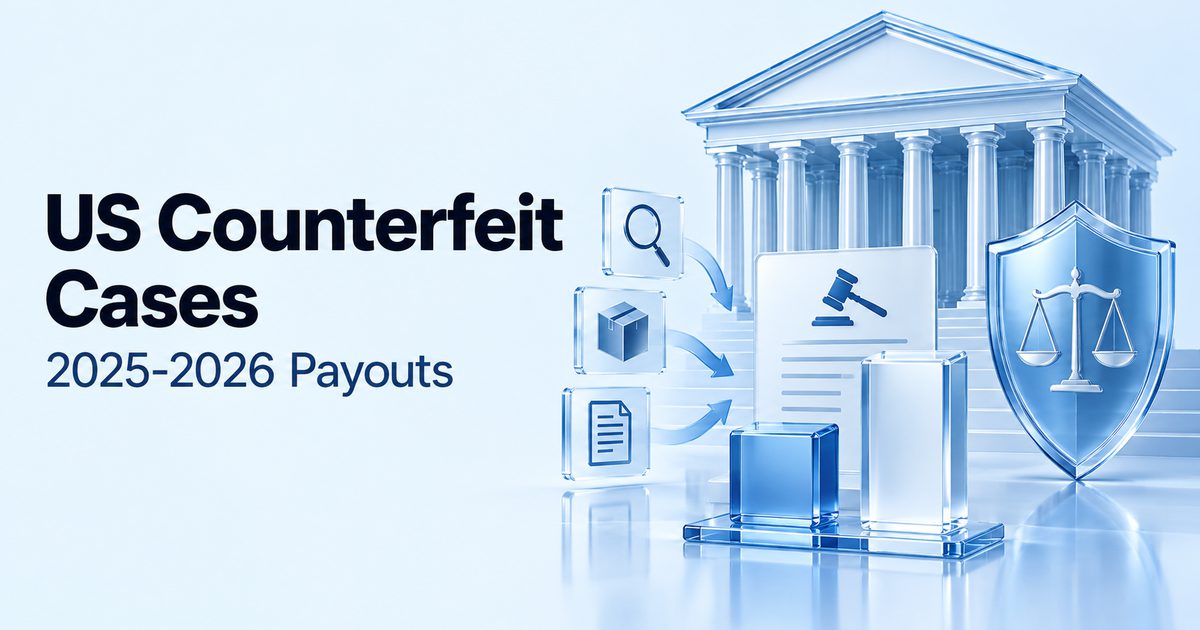
    US trademark and counterfeit litigation cover illustration
    TL;DR
    • Nike won $11 million from a single counterfeiting influencer. Louis Vuitton won $584 million from a flea market operator who never showed up in court. Estee Lauder is still waiting on a ruling against Walmart. Same law, same rough window, wildly different outcomes.
    • Three of the most-discussed 2025-2026 US trademark rulings already have their own deep dive on this blog: Dewberry v. Dewberry Engineers, Mondelez v. Aldi, and the Seventh Circuit’s Schedule A rulings. This piece links to those and spends its time on three cases not yet covered here.
    • The size of a counterfeit payout tracks how cleanly a brand can name a defendant and prove what they sold, not how bad the counterfeiting was.

    In the space of about twelve months, three brand owners brought counterfeiting claims in US federal court and got three completely different outcomes. Nike walked away with an $11 million jury verdict against one influencer. Louis Vuitton walked away with a $584 million default judgment against a flea market operator. Estee Lauder is still waiting, having only just filed against Walmart itself. Same body of law, the Lanham Act, same country, roughly the same window. The gap between those numbers is the actual story here, not any single verdict.

    Three of the cases behind this year’s headlines already have their own detailed post on this blog, so they get one line each here rather than a repeat:

    That leaves three cases worth understanding properly, because together they show exactly what drives the size of a counterfeit payout in US courts right now.

    Nike v. Divide The Youth: removing the logo didn’t remove the liability

    In March 2026, an eight-person federal jury in the US District Court for the Central District of California heard Nike’s case against sneaker influencer Nicholas Tuinenburg and his brand, Divide The Youth. The product at the centre of the case, “Division Dunks,” copied the distinctive shape of Nike’s Dunk silhouette closely enough to create a likelihood of confusion, according to Nike, even though the Nike and Jumpman logos had been stripped off.

    That last detail is what makes the case worth reading past the headline number. Tuinenburg’s defence rested partly on the idea that removing Nike’s word marks and swoosh meant he wasn’t counterfeiting Nike’s trademarks, just making shoes that looked similar. The jury didn’t buy it. On 19 March 2026 it returned a unanimous verdict against Tuinenburg and Divide The Youth for both counterfeiting and trade dress infringement, awarding Nike $8 million in Lanham Act statutory damages for direct and contributory counterfeiting, plus $3 million in punitive damages tied specifically to the trade dress claim, for a total of $11 million.

    The mechanism matters more than the figure. Trade dress protects a product’s overall look, not just its logos, and this verdict confirms a shoe can infringe it even with every word mark and design mark scrubbed off. For any brand whose products are recognisable by silhouette or packaging alone, that’s the more useful precedent than the dollar amount.

    Louis Vuitton v. Westgate Discount Mall: the largest counterfeit judgment most brands never heard of

    The second case produced the biggest number of the year, and it happened almost entirely because the defendant didn’t fight.

    Louis Vuitton filed suit against Westgate Discount Mall, a flea market operator in Georgia, in April 2023. The case followed a 2021 Homeland Security raid that found counterfeit goods in 60 of the mall’s 62 booths, roughly 250,000 fake products in total, more than 72,000 of them carrying Louis Vuitton’s marks specifically. Court filings show Louis Vuitton had already sent more than 30 notices and 20 separate cease-and-desist letters to Westgate’s management before filing suit, and that management took no action on any of them.

    Westgate never mounted a formal legal defence. With no answer filed, the case proceeded toward a default judgment, and in September 2025 the court entered one: roughly $584 million in statutory damages, calculated from the $2 million-per-mark statutory maximum applied across 292 separate Louis Vuitton trademarks identified across 44 categories of counterfeit goods.

    The 30-plus notices and 20-plus cease-and-desist letters Louis Vuitton had on file before it ever sued are exactly the kind of continuous, timestamped evidence trail a case like this depends on.

    Explore Marketplace Scanner

    It’s tempting to read $584 million as proof that courts are getting tougher on counterfeiting generally. What actually happened is narrower and, for other brands, more instructive: the number reflects a defendant who ignored years of documented warnings and then declined to contest the case at all.

    Estee Lauder v. Walmart: the fight moves from the seller to the platform

    The third case is the one still unresolved, and arguably the most consequential for how marketplace liability plays out from here.

    On 9 February 2026, Estee Lauder Companies, together with Le Labo, Tom Ford, Clinique, La Mer and Aveda, filed suit against Walmart in the US District Court for the Central District of California. The complaint doesn’t target the individual third-party sellers who allegedly listed counterfeit versions of products including Advanced Night Repair serum and Le Labo’s Santal 33 fragrance. It targets Walmart itself, arguing the company is vicariously and directly liable because of its own role in the transactions, control over fulfilment, payment processing, returns handling, and its own SEO tools surfacing the listings to shoppers.

    Walmart has said it has “zero tolerance” for counterfeit products and will respond through the court once served. No ruling has been issued at the time of writing. What makes the case worth watching isn’t the outcome yet, it’s the theory: that a marketplace’s operational involvement in a sale, not just its role as a passive listing host, can be enough to make it liable for what a third-party seller put on its platform. If that argument succeeds anywhere, it changes the calculation for every marketplace hosting third-party sellers, not just Walmart.

    What the spread actually tells a brand

    Line these three cases up against Dewberry and the Seventh Circuit’s Schedule A rulings and a pattern appears that has nothing to do with counterfeiting getting easier or harder to punish in the abstract. It comes down to whether a brand can cleanly name a defendant and prove, with a paper trail, what that defendant actually did.

    Nike had a named individual, a specific product, and a jury willing to look past the missing logo. Louis Vuitton had years of documented notices and a raid report, against a defendant who never turned up to argue otherwise. Dewberry and the Seventh Circuit’s Schedule A rulings show the opposite: cases that got narrower because the plaintiff couldn’t cleanly tie profits to the exact entity sued, or couldn’t prove a sale actually happened where they said it did. Estee Lauder v. Walmart is the next test of that same principle at platform scale: whether the evidence trail can reach the marketplace itself, not just the seller sitting on it.

    None of that is really about how the law changed this year. It’s about what a brand has on hand before it ever gets to a courtroom. That’s the part marketplace monitoring exists to build in advance, continuous, timestamped detection across listings and storefronts, so that if a case like Louis Vuitton’s or Nike’s ever needs to be made, the evidence trail is already there rather than reconstructed after the fact.

  • Destroyed Jars, Arrest Warrants, Seized Printing Plates: India’s Counterfeit Rulings Got Physical

    Destroyed Jars, Arrest Warrants, Seized Printing Plates: India’s Counterfeit Rulings Got Physical

    Home/Blog/Destroyed Jars, Arrest Warrants, Seized Printing Plates: India’s Counterfeit Rulings Got Physical
    Marketplace Protection

    Destroyed Jars, Arrest Warrants, Seized Printing Plates: India’s Counterfeit Rulings Got Physical

    Catch the next Agrim Wholesale before it needs a court order

    Truviss monitors 5,000+ marketplaces around the clock so counterfeit listings get flagged and taken down before they scale into a six-figure lawsuit.

    Book a demo
    Scales of justice with counterfeit packaging and seized goods line art
    TL;DR
    • Six India trademark/counterfeit rulings from late 2025 into mid-2026 share one pattern: courts are backing injunctions with real teeth, destruction orders, punitive damages, contempt arrests.
    • Havells v Vijay ended with a Local Commissioner walking out with a printing press, a metal plate and 34,950 counterfeit boxes.
    • Ferrero’s Nutella case shows a court reversing its own compromise on appeal, ordering seized jars destroyed rather than repurposed.
    • Every case here started with a raid or a distributor slip-up, not a brand’s own real-time detection, months or years after the fakes were already in market.

    Between late 2025 and mid-2026, Indian courts handed down six trademark and counterfeit rulings worth reading together, not because they’re the “top” cases by some ranking, but because they show the same shift happening from six different directions. An injunction used to be the finish line in an Indian trademark suit. In these six cases, it was the starting point: courts ordered infringing stock physically destroyed rather than repurposed, pushed a company director toward arrest for ignoring a court order, and let a court-appointed Local Commissioner walk out of a raid with a printing press and 35,000 counterfeit boxes.

    Two of the six already have a full write-up on this blog, so we’ll cover them in one line each and spend the rest of this piece on four rulings that haven’t been covered here yet.

    The two we’ve already covered

    Havells vs Havai: the Delhi High Court ruled that owning a registered trademark doesn’t automatically defeat a passing-off claim against a lookalike brand.

    ₹3.34 crore J&J counterfeit medical device ruling: the Delhi High Court reframed counterfeiting as a public-safety issue, not just a trademark dispute, when it awarded Johnson & Johnson ₹3.34 crore over fake surgical devices.

    Havells India Ltd v Vijay: the Local Commissioner walks out with the evidence

    The Commercial Court at Karkardooma, Delhi decided CS(Comm.) No. 294/2024 on 30 June 2026, and the facts read less like a paperwork dispute than a factory bust. A court-appointed Local Commissioner searched the defendant’s premises and found a printing press and a metal plate set up specifically to print counterfeit HAVELLS-branded corrugated packaging. The same search recovered 34,950 packaging boxes carrying the HAVELLS mark and trade dress.

    The defendant argued he was simply a scrap dealer who happened to have the material on hand. The court rejected that, upheld the legality of the search-and-seizure operation, and found statutory infringement under Section 29(1) of the Trade Marks Act alongside copyright infringement and passing off. The result: a permanent injunction plus damages of over ₹26 lakh, made up of compensatory damages, punitive damages, and litigation costs, with delivery-up of everything seized for destruction.

    What makes this one distinct from a typical counterfeit-goods seizure is that the target wasn’t the finished fakes sitting in a warehouse, it was the equipment making them. A printing press and a metal plate are reusable infrastructure. Taking those out, not just the current batch of boxes, is what closes the operation rather than just delaying it.

    Ferrero’s Nutella jars: when a court says no to its own compromise

    Ferrero’s case over the Nutella jar’s registered shape started with a straightforward result: Local Commissioners seized roughly 3.05 lakh glass jars from three locations run by Firozabad-based glass manufacturers, deceptively similar to the registered Nutella jar shape, along with cartons and brochures carrying the Nutella name. The Delhi High Court’s initial order, in late 2025, permanently restrained the manufacturers and awarded ₹10 lakh in costs.

    Then the court did something unusual: it suggested the seized jars, rather than being destroyed, could be filled with Ferrero’s own product and donated to NGOs as a CSR gesture. It’s an understandable instinct, since 3.05 lakh jars is a lot of glass to throw away.

    On appeal, a division bench of Justice C Hari Shankar and Justice Om Prakash Shukla took a different view. In a judgment dated 6 January 2026, the bench upheld the seizure and delivery-up of the jars to Ferrero but held that they must be destroyed and not put to any commercial or other use, however well-intentioned. Infringing goods, once established as infringing, don’t get a second life just because the alternative use is charitable rather than commercial.

    See how Truviss’s continuous marketplace and reseller monitoring flags counterfeit stock moving under your trademarks, across 5,000+ marketplaces, before it needs a court order to stop.

    Explore Marketplace Scanner

    Dhanuka Agritech v Agrim Wholesale: counterfeits sorted into the marketplace’s own categories

    Dhanuka Agritech’s case against Agrim Wholesale is a reminder that a counterfeit doesn’t need a back-alley seizure to reach a buyer, sometimes it’s sitting inside a legitimate-looking app’s own category system. Agrim’s mobile marketplace listed unauthorised Dhanuka-branded agrochemicals under an “Infringing Products” tag positioned right alongside a “Popular Brand Category” tag, according to Dhanuka’s filing.

    The Delhi High Court, in an interim order under CS(COMM) 1056/2025 (Justice Tejas Karia), restrained Agrim from further unauthorised use of the DHANUKA mark and ordered the infringing listings taken down within 72 hours. Dhanuka’s claim also invoked the Insecticides Act, 1968 and Insecticides Rules, 1971, since the products in question are regulated agrochemicals, not just branded goods.

    This case sits apart from the others on this list because the infringement moved through a platform’s own structure rather than a physical counterfeit operation, and because agrochemicals carry a regulatory layer, safety and registration requirements under the Insecticides Act, on top of the ordinary trademark question.

    Jain Shikanji: when ignoring the injunction becomes the whole story

    The Jain Shikanji case isn’t really about the original trademark dispute any more, it’s about what happens when a company keeps going after it loses. The underlying injunction, restraining use of the “JAIN SHIKANJI” mark, was granted by a trial court back in November 2022. In June 2023, the trial court found the company’s director, Anubhav Jain, guilty of wilfully disobeying that injunction.

    Jain then tried to purge the contempt with an unconditional apology. On 2 July 2026, the Delhi High Court, in a judgment by Justice Jyoti Singh, upheld the trial court’s refusal to accept it, affirming arrest warrants and property attachment under Order XXXIX Rule 2A of the Civil Procedure Code, while reducing the exemplary costs from ₹5 lakh to ₹3 lakh.

    The lesson here has less to do with the trademark itself and more to do with enforcement after the ruling. A court order restraining use of a mark only works if someone is watching for continued use after the fact, since the violation that actually triggers contempt proceedings happens well after the original judgment, often quietly, until someone notices.

    What six wins with no early detection have in common

    None of these six rulings started with the brand’s own systems catching the counterfeit in real time. They started with a raid, a court-ordered search, a distributor’s slip surfacing years later, or a marketplace listing that someone happened to flag. By the time each case reached a courtroom, the fakes had already been manufactured, packaged, and in Havells’ case, printed at industrial scale, for however long it took a Local Commissioner or an investigator to catch up.

    That gap between “infringement starts” and “someone notices” is exactly what continuous marketplace monitoring is built to close. Truviss’s marketplace scanner watches 5,000+ marketplaces around the clock, checking listings against 500+ data points, so a counterfeit seller shows up on a dashboard before they’ve printed 35,000 boxes or built out an “Infringing Products” category of their own. It doesn’t replace litigation, Havells and Dhanuka both still needed a court, it shortens the runway a counterfeiter gets before someone’s watching.

    The pattern is enforcement, not just injunctions

    Read together, these six cases show Indian courts willing to go further than a standard restraining order: punitive damages layered on compensatory awards, destruction orders that override even the court’s own earlier leniency, and contempt consequences with real teeth for defendants who ignore what they’ve already been told to stop. That’s a meaningful shift, and it should reassure any brand weighing whether litigation in India is worth pursuing.

    But litigation is still a response, not a detection system. Every case above took months to years between the infringement starting and the ruling landing. Pairing that legal escalation with ongoing brand-abuse monitoring is what catches the next counterfeit operation while it’s still small enough to shut down without a printing press raid making the news. If your brand is dealing with counterfeit listings, unauthorised resellers, or a lookalike operation you’ve only just noticed, book a demo with Truviss to see how the monitoring side of this actually works.

  • Inside the UAE’s Criminal Crackdown on Counterfeiters

    Inside the UAE’s Criminal Crackdown on Counterfeiters

    Home/Blog/Inside the UAE’s Criminal Crackdown on Counterfeiters
    Marketplace Protection

    Inside the UAE’s Criminal Crackdown on Counterfeiters

    Build the UAE evidence trail before you need it

    Truviss’s Marketplace Scanner logs timestamped evidence continuously, ready for a customs referral, a DED complaint, or a criminal case.

    Book a demo
    UAE trademark enforcement scales of justice cover
    TL;DR
    • UAE trademark enforcement runs on criminal prosecution and customs/inspection campaigns, not a docket of headline civil lawsuits.
    • A January 2025 Ajman court ruling handed down the maximum penalty under UAE trademark law: one year in prison, an AED 1 million fine, and confiscation of the goods.
    • A July 2025 Abu Dhabi Commercial Court ruling forced a local retailer to stop impersonating a global trademark, upheld all the way to the Court of Cassation.
    • Dubai Customs and Abu Dhabi’s regulator both report seizure numbers in the tens of millions of dirhams for 2025, showing enforcement volume even where named cases are scarce.

    If you’re used to reading about counterfeit litigation in the US, UK or India, the UAE looks different. Search for “UAE trademark court cases 2025” and you won’t find a long list of widely reported civil judgments. That’s not because counterfeiting isn’t being tackled. It’s because the UAE’s model puts the weight on criminal prosecution and administrative enforcement, customs seizures, inspection campaigns, Department of Economic Development and regulator action, rather than brand owners slugging it out in open court for years. Two rulings from 2025 show both sides of that machinery working, and the seizure numbers show why the case count alone understates how much enforcement is actually happening.

    The law behind the crackdown

    UAE trademark protection sits under Federal Decree-Law No. 36 of 2021 on Trademarks. It replaced the older framework, and it’s the law every 2025 case below was decided under.

    Two articles matter most for counterfeiting specifically. Article 49 covers forging or imitating a registered trademark in a way that could confuse the public: imprisonment plus a fine of no less than AED 100,000 and no more than AED 1,000,000, or either penalty on its own. Article 50 covers selling or offering counterfeit goods for sale: up to one year in prison and/or a fine of AED 50,000 to AED 200,000. Courts can also order confiscation and destruction of the goods.

    That combination, criminal exposure plus confiscation, is what makes the enforcement model different from civil-litigation-led markets. A brand owner doesn’t need to win a multi-year lawsuit to see a seller shut down. A police or Department of Economic Development referral can end in a criminal conviction.

    Case one: Ajman’s maximum-penalty ruling

    On 31 January 2025, a court in Ajman convicted a defendant of imitating, selling and promoting goods under a protected trademark. The court applied the maximum penalty available under Federal Decree-Law No. 36 of 2021: one year’s imprisonment, an AED 1 million fine, and confiscation of the counterfeit goods.

    It’s one of the clearest examples of the criminal track being used at full strength rather than settled down to a fine alone, reported as a deliberate signal from the judiciary that counterfeiting carries real custodial risk, not just a cost of doing business.

    Case two: Abu Dhabi Commercial Court halts a trademark impersonator

    The second confirmed 2025 action runs through the civil courts instead. The Abu Dhabi Commercial Court ruled that a local retail store had to immediately stop using a globally recognised fashion and e-commerce trademark across its storefront, products, and online and social media presence. The store had used the brand’s name and logo in a way that misled customers into thinking it was affiliated with the original company, which trades exclusively online.

    The court ordered the infringing trade name struck from Abu Dhabi’s Department of Economic Development records and from commercial registries across the UAE, and banned the store from using the trademark in any form going forward, including on signage, packaging and social accounts. The ruling was announced on 9 July 2025, and it didn’t stop at first instance: it was upheld on appeal and confirmed by the Court of Cassation, making it final and enforceable UAE-wide.

    See how Truviss builds the same kind of documented evidence trail these rulings relied on, automatically, across marketplaces and social channels.

    Explore Marketplace Scanner

    Two verified, independently reported cases is a smaller list than the five-or-more you’ll find in roundups of India, the US or the UK. That’s the honest count. It reflects a structural difference, not a gap in research: UAE counterfeit enforcement produces convictions and injunctions, but relatively few of them get individually named and reported the way common-law civil suits do.

    The numbers behind the headlines

    The seizure and inspection data fill in the picture that named cases alone can’t. Dubai Customs reported 68 seizures of counterfeit goods in the first quarter of 2025 alone, worth around Dh42.195 million, spanning watches, eyewear, electronics, clothing, fabrics, bags and shoes.

    In Abu Dhabi, the Abu Dhabi Registration Authority (ADRA) reported that the value of counterfeit and non-compliant goods seized across the emirate during 2025 exceeded AED 1.8 million. That figure came out of 465 inspection campaigns targeting commercial establishments and retail outlets, a 16.2% increase on the 400 campaigns run in 2024, and 16,748 inspection visits, more than double 2024’s 6,665, resulting in 104 violations and 294 warnings.

    Put together, that’s tens of millions of dirhams in seized counterfeit stock and thousands of inspection visits across just two emirates in a single year, run largely without a matching wave of named court judgments. It’s the clearest evidence that the UAE’s enforcement effort is real and growing, even where it doesn’t produce the kind of case-by-case headlines seen elsewhere.

    What this means if you sell into the UAE

    For a brand owner, the practical takeaway isn’t that the UAE is soft on counterfeiting. It’s that the enforcement route runs mostly through customs, DED and regulator inspection channels and criminal referral rather than brand-initiated civil suits, so the burden shifts onto having documented proof, test purchases, listing screenshots, seller identifiers, dates, ready to hand a regulator or prosecutor rather than a law firm.

    That’s the gap continuous monitoring closes. Truviss’s detect, verify, enforce loop builds that evidence trail automatically across marketplaces and social channels, so when a counterfeit listing or impersonating storefront turns up in the UAE, there’s already a verified record ready to support a customs referral, a DED complaint, or a criminal case, rather than starting from scratch after the fact. The same monitoring principle underpins how brands protect intellectual property in e-commerce more broadly, and it applies just as much to impersonation on social media as it does to storefronts.

    Elsewhere on Truviss, a similar enforcement-track piece looks at how US courts are hitting counterfeiters harder under the Seventh Circuit, a useful contrast to the UAE’s criminal and administrative-led approach above.

    The UAE’s counterfeit enforcement story in 2025 is two confirmed rulings, a criminal maximum-penalty conviction in Ajman and a civil injunction upheld to the Court of Cassation in Abu Dhabi, sitting on top of a much larger, less visible base of customs seizures and inspection campaigns. For brands selling into the region, that means enforcement is active and improving, but it rewards being monitored and documentation-ready well before a dispute reaches a courtroom.

  • What Happens After You Report a Counterfeit Listing

    What Happens After You Report a Counterfeit Listing

    Home/Blog/What Happens After You Report a Counterfeit Listing
    Marketplace Protection

    What Happens After You Report a Counterfeit Listing

    Stop relisted counterfeits before they cost you the next sale

    Truviss’s Marketplace Scanner runs continuous, SKU-level monitoring across 5,000+ marketplaces, so a relisted counterfeit surfaces the moment it reappears, not the next time someone happens to search for it.

    Book a demo
    Decision-branch diagram showing a counterfeit report splitting into removed, rejected and contested outcomes
    TL;DR
    • Filing a counterfeit report is the easy half; whether it actually gets actioned depends on evidence strength and each platform’s own review process, not the act of filing itself.
    • Amazon’s Project Zero requires a 90% acceptance rate on Report a Violation submissions to enrol and a 99% self-removal accuracy rate to keep access, dropping below either ends it.
    • Rejections are rarely random: the two most common causes are weak trademark documentation and an unclear comparison to the genuine product, and every platform allows resubmission.
    • A takedown removes the one listing reported, not the seller’s ability to relist within days, which is why continuous monitoring matters more than any single successful report.

    Filing the report is the easy half. Amazon, Flipkart and Alibaba each move a submitted report through their own internal review, and what happens next depends on evidence strength and platform process, not on the fact that a report was filed at all. Three outcomes follow from here: the listing gets removed, the report gets rejected, or the seller contests it. Each one has its own mechanics, and most guidance on reporting counterfeits, including Truviss’s own walkthrough of where to file on Amazon, Flipkart and Alibaba, stops at “submit the form.” This picks up from there. If a report hasn’t been filed yet, that post is the place to start; this one is for what happens once it has been.

    What actually happens during platform review

    Every platform’s review step checks broadly the same signals: verified trademark ownership, listing-specific evidence (the URL, screenshots, seller ID) and how clearly the report demonstrates the listing differs from the genuine product. How that check gets carried out differs by platform. Amazon’s Report a Violation tool, available to any rights owner, routes a submission to a review queue; brands enrolled in Amazon Brand Registry generally see faster action because their reports route to brand-protection specialists rather than a general queue. Project Zero goes further for a subset of enrolled brands: instead of waiting on Amazon’s review at all, the brand searches for a suspected counterfeit by ASIN, product URL or image and removes it directly. Enrolment itself has a bar: Amazon requires at least a 90% acceptance rate on Report a Violation submissions over the preceding six months before granting self-service access, and once enrolled, a brand must keep its self-removal accuracy rate at 99% or above to keep it. Drop below that threshold and Amazon revokes Project Zero access, though the brand can still use standard Report a Violation. Alibaba’s IP Protection Platform works differently again: rather than an open-ended review queue, it runs on a structured internal timeline with defined response windows, which is worth breaking out on its own.

    Typical resolution windows, and why they vary this much

    There is no single industry-standard turnaround time. Each platform sets its own, and the gap between them is real. Alibaba’s IP Protection Platform gives a seller three days to respond to a complaint; if that window lapses without a response, the listing is removed and the complaint upheld automatically, and brand-protection guides citing Alibaba’s own reported figures put uncontested resolution at within one business day for the large majority of valid complaints. Amazon does not publish an equivalent fixed service-level timeline. Reports routed through Brand Registry commonly see action within a few business days, but Amazon’s own seller forums are full of cases where a contested or complex report ran for weeks rather than days. The pattern holds across both platforms: an uncontested report backed by clear evidence resolves fastest, and anything thin on documentation or actively disputed slows down, sometimes considerably.

    Why reports get rejected, and how to fix one

    Rejections aren’t random. The two most common causes, across Amazon’s own seller guidance and repeated seller-forum discussion, are insufficient documentation, meaning the report doesn’t clearly establish trademark ownership or include a verifiable supply chain trail, and a report that fails to show how the reported counterfeit listing actually differs from the genuine product. Neither of these is a dead end. Every platform allows resubmission, and Amazon in particular states a reason when it rejects a report. Read that reason as a checklist for the resubmission, not as a final verdict: add the specific document that was missing, tighten the comparison between the fake and the genuine listing, and refile. This is exactly what continuous, evidence-based enforcement is built to shortcut.

    Truviss builds the violation report itself, listing URL, screenshots and timestamps attached automatically, from the moment a counterfeit listing is detected, rather than a brand assembling that evidence from scratch after the fact and discovering a gap only once a report bounces back.

    Explore Marketplace Scanner

    Catch the documentation gap before you file, not after a rejection.

    When a seller contests the report

    Alibaba’s IPP has a formal counter-notification step: once a report is filed, the seller can dispute it directly, which pauses the takedown and starts a response clock for the rights holder. Miss that window and the listing gets reinstated by default, upheld in the seller’s favour purely because nobody responded in time, regardless of how strong the original evidence was. A seller can escalate this up to three times, according to reported figures on Alibaba’s own appeal structure, with each round adding several more days before final resolution. This is the moment an evidence trail built before filing actually earns its keep. A report backed by timestamped screenshots and trademark documentation gathered at the point the listing was first found, the same SKU-level matching discipline used elsewhere in brand protection, is straightforward to defend when contested. A report assembled hastily, after the fact, from whatever’s still findable, is much harder to hold up once a seller pushes back.

    The repeat-offender pattern, and why one takedown rarely ends it

    A takedown removes the specific listing that was reported. It does nothing to stop the same seller relisting the same counterfeit product under a new account, or the same account with a slightly reworded title, often within days. This is the part that gets one line in most reporting guides and deserves to be the main point: without a way to see the new listing the moment it reappears, a brand is permanently a step behind a seller who only has to relist once to be back in business. Filing a fresh report against the new listing is the only option available manually, since a takedown applies to the listing reported, not to every future instance of it. Continuous marketplace monitoring closes exactly this gap. Truviss’s Marketplace Scanner runs the same detect, verify, enforce cycle around the clock across more than 5,000 marketplaces, so a relisted item surfaces the moment it reappears rather than the next time someone happens to search for it.

    Building the evidence trail before you need it

    None of the above works well without one habit: keeping a record of every report filed, its evidence, and its outcome, whether the listing was removed, rejected or contested. That record is what makes a resubmission fast rather than a rebuild from zero, what makes a contested report defensible within whatever window the platform gives, and what makes a fresh report against a relisted item quick to file rather than a fresh research exercise. Sourcing this evidence trail from continuous, automated detection, rather than reconstructing it manually every time a platform asks a question, is the difference between reporting counterfeits reactively and running enforcement as a repeatable process.

  • The One Step Most Brands Skip Before Fighting Counterfeits

    The One Step Most Brands Skip Before Fighting Counterfeits

    Home/Blog/The One Step Most Brands Skip Before Fighting Counterfeits
    Marketplace Protection

    The One Step Most Brands Skip Before Fighting Counterfeits

    Already registered? Put it to work.

    Once a brand holds a registered mark, Truviss scans marketplaces, social platforms, domains, apps and ads continuously, so every report carries the standing to actually get acted on.

    Book a demo
    Foundation blocks connecting through a document to a shield, representing registration as the prerequisite for enforcement
    TL;DR
    • Marketplaces, social platforms, domain registrars and courts all check for a registered trademark before acting on a takedown or enforcement request.
    • Amazon Brand Registry and eBay’s VeRO programme both require an active registration (or a pending application in Amazon’s case) before granting fast-lane enforcement access.
    • Brands often deploy monitoring tools before securing this legal foundation, which produces accurate detection that nobody with authority will act on.
    • Register the trademark first, then bring in monitoring and enforcement, so every takedown request actually has standing behind it.

    A brand protection team signs up for a monitoring tool, runs its first scan, and finds two hundred counterfeit listings across three marketplaces in the first week. Reports go out. Most of them come back rejected, or simply sit unanswered.

    The listings were real. The detection was accurate. What was missing was upstream of any of it: a registered trademark. Marketplaces, social platforms, domain registrars and courts all have their own version of the same gate, and it opens for one document. Without it, even a perfectly accurate takedown request often goes nowhere. Fake trademark deeds have even started targeting brands at exactly this weak point, forging the very document marketplaces check for.

    Monitoring tells you what’s infringing. Registration is what gives you standing to act on it. Skip the second and the first becomes a very detailed list of problems you can’t fix.

    Marketplaces check for a registered mark before they help you

    Amazon’s Brand Registry is the fastest path to counterfeit enforcement on the platform: proactive image and text-match protections, priority support, and expedited takedowns. Enrolment requires an active registered trademark, or a pending application with a serial number from a recognised government trademark office, tied to the brand’s own products (confirmed via Amazon’s own seller documentation). Without it, a seller is limited to the standard “report a listing” form, which is slower and offers no proactive protection at all.

    eBay runs a similar model through its Verified Rights Owner (VeRO) programme, which requires an active registered trademark and proof of ownership, such as a certificate or registration number, before a brand can enrol as a rights owner (per eBay’s own VeRO policy). A brand without a registration is not automatically excluded from reporting infringement, but it is arguing from a weaker position on every submission, and slower, generic reporting paths are what’s left.

    The pattern repeats across most marketplaces a brand sells on. The fast lane is reserved for brands that can point to a registration number.

    Once a registration is in place, the next question is how to actually get a listing removed. That’s covered step by step in How to Report Counterfeit Sellers: Amazon to Alibaba — this piece is about the prerequisite that makes that process work, not a repeat of it.

    Truviss can surface every unauthorised listing across a brand’s marketplaces from day one. Whether Amazon’s fastest reporting path is available to act on them still depends on being Brand Registry-enrolled first.

    Explore Marketplace Scanner

    Social platforms ask the same question in a different form

    Instagram, Facebook and most other platforms’ intellectual property report forms have a field for a trademark registration number, and claims backed by one move through review faster. A brand relying on common-law rights (use in commerce without formal registration) can still file a report, but it typically has to substantiate ownership with additional evidence before the platform will act, which slows the process and increases the chance the report is bounced back for more information.

    For counterfeit sellers running “DM to order” schemes on Reels or Stories, that delay matters. Every day an unverified report sits in review is another day the fake listing keeps selling.

    Domain registrars and dispute panels want proof of rights, not just a complaint

    Fighting a lookalike or typosquatted domain usually runs through a UDRP-style dispute process, and the first thing a panel evaluates is whether the complainant has rights in a trademark identical or confusingly similar to the disputed domain. A registered trademark is by far the cleanest, fastest way to clear that bar. UDRP panels do accept unregistered, common-law rights in principle, but only with solid, specific evidence of the mark’s distinctiveness, and a merely pending application isn’t enough on its own at the time a complaint is filed. Without a registration in hand, a brand ends up building that evidentiary case from scratch before the panel even reaches the question of whether the domain is confusingly similar. That’s an extra fight layered on top of the one the brand actually came to have.

    Courts are the slowest gatekeeper, and the one where this matters most

    In the US, a federal trademark registration gives its owner a legal presumption of validity and ownership under the Lanham Act, along with constructive nationwide notice, which streamlines proving the basic facts a court would otherwise expect the plaintiff to establish from scratch. Certain remedies, including statutory and treble damages provisions and the path to incontestable status after five years, are only available to marks that are federally registered. A brand relying solely on common-law rights can still bring a claim, but establishing standing and validity becomes a bigger part of the case itself, adding cost and time before the actual infringement is even addressed. For a broader look at how IP protection plays out across the wider e-commerce lifecycle, see Protecting Intellectual Property in E-commerce: The Complete Guide.

    Litigation is the most expensive and slowest gatekeeper on this list. It’s also the one where showing up without a registration costs the most.

    Why brands skip this step anyway

    Registration is invisible admin work. It runs through a different process (an IP attorney, a national or regional trademark office, jurisdiction-by-jurisdiction filing) than the one that produces a demo-able dashboard. It takes months, sometimes longer in some markets, with no visual output along the way. Monitoring tools, by contrast, are the purchase that shows results in the first scan.

    That combination pulls buying attention toward detection and away from the paperwork that makes detection actionable. Nobody markets “go register your mark first” the way they market a live threat dashboard. The result is brands with excellent visibility into their counterfeit problem and comparatively weak ability to make anyone act on it.

    The right sequence, and where Truviss fits into it

    Register the mark first, in the markets where the brand actually sells or plans to. Then bring in monitoring and detection. Then use the registration to make every report and takedown request land with the weight it’s designed to carry.

    Truviss doesn’t file or manage trademark registrations. That’s an IP attorney’s job, working through the relevant trademark office. What Truviss does is the layer that comes after: continuous scanning across marketplaces, social profiles, lookalike domains, app stores and ad networks, with the reporting and top-offenders tracking a legal or brand team needs to act on what it finds. A registered mark gives a brand the standing to demand a takedown. Truviss is what finds the thing worth demanding it for, and keeps finding it after the first round of reports is done.

    Check the registration status of the brand in every market it sells in before assuming the next takedown request will work. That’s the step that decides whether everything downstream of it actually functions.

  • ₹3.34 Crore: J&J Counterfeit Medical Device Ruling

    ₹3.34 Crore: J&J Counterfeit Medical Device Ruling

    Home/Blog/₹3.34 Crore: J&J Counterfeit Medical Device Ruling
    Marketplace Protection

    ₹3.34 Crore: J&J Counterfeit Medical Device Ruling

    Catch counterfeit distributors before a court has to

    Continuous marketplace and reseller monitoring flags counterfeit stock moving under your trademarks while it’s still in the supply chain, not years later in a lawsuit.

    Book a demo
    Counterfeit medical device safety risk cover
    TL;DR
    • Delhi High Court awarded Johnson & Johnson’s Ethicon business ₹3.34 crore (₹2.34 crore compensatory + ₹1 crore exemplary) against a Delhi distributor for counterfeit surgical devices sold under the SURGICEL, LIGACLIP and ETHICON trademarks.
    • The court called counterfeiting medical devices “a grave offence that endangers the lives of people”, not merely trademark infringement.
    • The counterfeits were traced back through a UAE reseller to unauthorised manufacturing in China and Turkey, caught only after a US neurosurgeon flagged a suspect device mid-operation in 2019, six years before the verdict.
    • The six-year gap between incident and verdict is the core argument for continuous marketplace and reseller monitoring over relying on litigation alone.

    On 11 March 2025, the Delhi High Court awarded Johnson & Johnson’s Ethicon surgical business ₹3.34 crore in damages against a New Delhi-based distributor for selling counterfeit surgical devices under J&J’s trademarks. In its judgment, the court said plainly that counterfeiting medical devices “is not merely a trademark infringement, but a grave offence that endangers the lives of people.” That line, not the damages figure, is the part worth sitting with. A court didn’t just rule on a brand dispute. It ruled on a public health risk that had already reached an operating table.

    How the counterfeits were actually caught

    This case wasn’t caught by any brand’s monitoring system. It was caught by a neurosurgeon at the University of Kentucky, mid-operation, in 2019, six years before the judgment came down. The surgeon noticed irregularities in a surgical device bearing the SURGICEL trademark during a procedure and flagged it. That single flag set off an investigation that traced the device back through Pure Care Traders FZE, a reseller based in the UAE, to Medserve, the New Delhi distributor named in the suit, and its proprietor Pritamdas Arora. From there the trail led further back to unauthorised manufacturers in China and Turkey, who had built the counterfeit devices and had them repackaged under J&J’s SURGICEL, LIGACLIP and ETHICON trademarks before they moved through the international supply chain.

    That’s worth pausing on. The detection point here was not a lab test, a customs inspection, or a brand’s own audit of its resellers. It was a surgeon, in the middle of an operation, noticing something was off about a device already in use. Every step before that point, manufacturing, repackaging, export from the UAE, import and resale in India, had gone unchecked. This is exactly the kind of blind spot a counterfeit listing represents, except surfacing through a physical supply chain and an operating room rather than an online marketplace. The public health framing in the court’s judgment isn’t rhetorical. A counterfeit surgical device reaching an operating room is the worst-case version of what counterfeit risk can mean.

    The damages, broken down

    The ₹3.34 crore total splits into two parts: ₹2.34 crore in compensatory damages, calculated as 25% of Medserve’s total sales revenue from the counterfeit products, and ₹1 crore in exemplary damages, alongside a permanent injunction restraining Medserve from manufacturing, distributing or selling any product bearing the SURGICEL, LIGACLIP or ETHICON marks. The distinction between the two damages components matters. Compensatory damages aim to make J&J whole for what it actually lost. Exemplary damages exist for a different reason entirely: to punish conduct severe enough that compensation alone wouldn’t deter it, and to signal to anyone else running a similar operation that the cost of getting caught is designed to outweigh the profit of not getting caught.

    See how Truviss’s continuous marketplace and reseller monitoring flags counterfeit stock moving under your trademarks, across 5,000+ marketplaces, before it reaches a customer.

    Explore Marketplace Scanner

    Why medical devices are a distinct counterfeit risk category

    Counterfeiting shows up across categories Truviss covers regularly, fashion, cosmetics, electronics, each with its own risk profile. Medical devices sit apart from all of them for one structural reason: there is no safety margin and no consumer choice at the point of use. A shopper who buys a counterfeit handbag or a fake pair of headphones at least has a chance to notice something’s wrong before real harm follows, a stitch out of place, a charger that runs hot. A patient on an operating table has none of that. They aren’t checking a label, comparing packaging, or making a purchasing decision in that moment. The device is already inside them or already in use on them, and any defect in materials, sterility or manufacturing tolerance surfaces as a medical complication, not a returned item.

    This is a different failure mechanism from other physical-risk counterfeit categories. A counterfeit charger fails through basic physics: an absent or undersized isolation transformer overheats, shorts, or catches fire, and that’s true whether it happens in someone’s hand or plugged into a wall, the kind of case covered in Why Counterfeit Chargers Are a Safety Problem. A counterfeit surgical device fails through the absence of everything a certified medical device has to prove before it ever reaches a hospital: material safety testing, sterility validation, manufacturing tolerances, batch traceability. The charger case is a single-brand, single-shipment failure mode caught at a US port. The J&J case ran through a genuinely international chain, manufacturing in China and Turkey, repackaging and export through a UAE reseller, distribution into the Indian market, each link adding distance between the counterfeit’s origin and the point where it caused harm.

    The six-year gap between the incident and the verdict

    The counterfeit device surfaced in 2019. The judgment landed in 2025. That gap is not a footnote, it’s the central problem with relying on litigation as the primary defence against this kind of counterfeiting. A lawsuit, however decisive the outcome, only ever addresses the one distributor actually named in the suit. It does nothing to the manufacturing operations in China and Turkey that built the devices in the first place, and it does nothing about however many units moved through that same UAE-to-India channel in the years the case was working its way through court. By the time a court rules, the underlying supply chain that produced the problem is very likely still active, possibly under a different distributor’s name entirely.

    Litigation is a response mechanism. It establishes precedent, it can deter future bad actors who read the judgment, and in this case it produced a clear public statement from a court that counterfeiting medical devices is a safety issue, not just an IP one. What it isn’t, and can’t be, is a prevention mechanism. It only starts once the harm has already happened and someone has already noticed.

    What this means for brand and legal teams selling in India and cross-border

    For brand managers, legal and IP leads, and e-commerce heads at companies with product lines that carry any physical safety stakes, medical devices, electronics, anything ingested or applied to the body, this case gives a sharper internal argument for monitoring budget than IP protection alone usually does. The court didn’t frame this as a trademark dispute that happened to involve health products. It framed counterfeiting medical devices as conduct that endangers lives, full stop. That’s a different conversation with a board or a legal team than “someone might be selling fakes of our product somewhere.”

    The gap this case exposes is the same gap continuous marketplace and reseller monitoring is built to close: catching a counterfeit distribution channel while it’s still moving product, rather than after a surgeon has already flagged something wrong in an operating room. Truviss’s approach follows the same detect, verify, enforce sequence across 5,000+ marketplaces with 500+ data points checked per listing, running continuously rather than as a periodic audit, because a distributor selling counterfeit stock under a brand’s trademarks looks, on paper, exactly like a legitimate reseller until someone actually checks the product against the real one. The earlier that check happens in the chain, the fewer of these cases end with a court ruling six years after the fact, and the fewer end with a patient rather than a distributor as the one who finds out first.

  • Mondelez vs Aldi: The Lawsuit Over Dupe Packaging

    Mondelez vs Aldi: The Lawsuit Over Dupe Packaging

    Home/Blog/Mondelez vs Aldi: The Lawsuit Over Dupe Packaging
    Marketplace Protection

    Mondelez vs Aldi: The Lawsuit Over Dupe Packaging

    Catch lookalike packaging before it reaches a courtroom

    Truviss monitors marketplaces and social platforms for copycat listings and dupe packaging, so brand owners can act early instead of waiting years for a verdict.

    Book a demo
    Mondelez vs Aldi dupe packaging lawsuit cover
    TL;DR
    • Mondelez sued Aldi in May 2025 over private-label packaging it says copies Oreo, Chips Ahoy!, Nutter Butter, Ritz, Wheat Thins and Nilla Wafers.
    • A judge already dismissed several claims as too generic for trade dress protection, but the case is not over.
    • The case is in discovery, with a jury trial tentatively expected late 2026 or early 2027, no verdict, settlement or class action exists yet.
    • The case is a live test of how far trade dress law protects packaging from lookalikes, echoing the wider “dupe culture” trend across marketplaces and social.

    In May 2025, Mondelez International, the maker of Oreo, Chips Ahoy!, Nutter Butter, Ritz, Wheat Thins and Nilla Wafers, sued Aldi in federal court over its private label snack packaging. The claim: Aldi’s Benton’s and Savoritz lines look close enough to the name brands, in font, colour, layout and product imagery, to confuse shoppers and unfairly ride on decades of brand recognition.

    More than a year later, the case is still open. It is not settled, there is no verdict, and no jury has weighed in. What has happened is more interesting than most coverage suggests: a judge has already thrown out part of Mondelez’s own case, ruling some of the packaging elements it tried to claim were too generic to protect. That single ruling says more about how trade dress law actually works than the lawsuit’s headline claim does.

    This is worth understanding closely, not because the outcome is settled, but because it isn’t. Mondelez v. Aldi is a live test of exactly how far a brand’s look and feel can be protected from a near-identical copy, playing out at the same moment “dupe” culture has become one of the biggest forces in retail marketing.

    What’s actually happened so far

    Three things are confirmed, and worth separating from everything else written about this case.

    The filing. Mondelez filed suit on 27 May 2025 in the US District Court for the Northern District of Illinois. The complaint alleges willful trade dress infringement and unfair competition against Aldi, centred on its Benton’s and Savoritz store-brand lines. The products named span Aldi’s cookie, cracker and wafer packaging, matched against Oreo, Chips Ahoy!, Nutter Butter, Ritz, Wheat Thins and Nilla Wafers.

    The history behind it. Mondelez’s filing states this isn’t the first time it has raised the issue. It says it previously contacted Aldi about earlier lookalike packaging, including an Oreo-style cookie design and versions resembling Teddy Grahams, Belvita, Triscuit and Tate’s Bake Shop cookies, and that Aldi discontinued or changed those products after being approached. That prior enforcement history is doing real work in the current case: it’s evidence Mondelez has consistently policed its trade dress, which matters because trade dress protection can weaken if a brand lets lookalikes go unchallenged for years. This is the same kind of copycat pattern covered in Fake Trademark Deeds Now Hijack Marketplace Listings, where inconsistent enforcement made a brand’s later claims harder to defend.

    Where the case stands now. As of the most recent reporting available, the case is in discovery, the pre-trial phase where both sides exchange evidence, depose witnesses and build the factual record a jury will eventually see. A jury trial is tentatively expected in late 2026 or early 2027.

    What hasn’t happened is just as important to state plainly. There is no settlement. There is no consumer class action attached to this case, despite some low-quality content online implying otherwise. There is no finding, one way or the other, that Aldi’s current packaging infringes. Anyone asserting a final result at this stage is getting ahead of the actual docket.

    Why part of the case was already thrown out

    The most legally significant development so far isn’t the filing, it’s the dismissal. A federal judge has already ruled that several of Mondelez’s trade dress claims cannot proceed, because the packaging elements they rested on were too generic to deserve trademark protection on their own.

    This gets at something people outside IP law tend to miss: trade dress doesn’t protect an idea like “a photo of the product on the front of the box.” It protects a specific, distinctive combination, colour palette, typography, layout and imagery working together in a way that has become recognisably tied to one brand in a shopper’s mind. A single generic convention, on its own, belongs to the whole product category, not to whoever used it first. Aldi’s defence leans directly on this distinction: showing cookies on a cookie box is standard packaging language across the entire category, not something one company can claim exclusively.

    That’s the practical lesson for any brand owner watching this case, regardless of how it ends. Distinctiveness has to be built, documented and defended element by element, and as a combination, well before a dispute ever reaches a courtroom. Asserting it retroactively, after a competitor has already launched something similar, is a much weaker position, as Mondelez is now finding with its narrowed claims.

    What’s still undecided

    The dismissal narrowed Mondelez’s case. It did not end it. Some claims survived, and those are the ones now moving through discovery. Whether Aldi’s remaining packaging, evaluated as a whole rather than element by element, crosses the line into infringement is a question no one can answer yet. That’s precisely what the surviving claims, and the eventual jury, still have to resolve.

    It’s worth treating any confident prediction of the outcome, from either side of this argument, with some scepticism. Trade dress cases turn heavily on consumer perception evidence, expert testimony and how a jury weighs the overall commercial impression of packaging side by side. That evidence is still being built. The pattern of courts narrowing enforcement tools mid-case isn’t unique to this dispute either, as seen with the Seventh Circuit making Schedule A litigation harder to use earlier this year, a reminder that legal tools brand owners rely on keep evolving underneath live cases.

    Dupe culture is testing this exact question everywhere, not just in a courtroom

    Mondelez v. Aldi is one highly visible instance of a much broader pattern. “Dupe” marketing, openly comparing a cheaper product to the name brand it resembles, has become mainstream across retail, social commerce and marketplace listings over the past few years. Shoppers now actively search for dupes, and sellers openly market to that search intent.

    The legal question at the centre of this lawsuit, how close is too close, is being asked and answered informally thousands of times a day, on marketplace listings and social posts that will never see a courtroom. A private-label packaging decision that ends up in federal court is the visible tip of something that mostly happens invisibly: near-identical fonts, colour blocking and product photography spreading across channels far faster than any single lawsuit can move.

    What it means for brand owners’ protection strategy

    Litigation like this is slow by design. Mondelez filed in May 2025 and, more than a year on, is still in discovery with a trial well over a year away, and even a partial dismissal in its own favour on some points has already narrowed what it can claim. That’s not a criticism of the case, it’s simply what trade dress enforcement through the courts looks like: thorough, expensive and not guaranteed, even when a resemblance feels obvious to an ordinary shopper.

    The more durable strategy pairs two things. First, well-evidenced, consistently enforced trade dress, the kind of documented history Mondelez is now relying on in its own filing, which is exactly what makes a distinctiveness argument credible years later. Second, continuous monitoring across the channels where lookalike packaging and dupe content actually spread day to day, rather than waiting for a single lawsuit to settle the question. This is where marketplace and social monitoring earns its place, not as a courtroom substitute, but as the layer that catches a copycat pattern early, while a brand still has the choice to send a cease-and-desist, document the evidence properly, or decide litigation is warranted, instead of finding out from a shopper’s screenshot two years in.

    Truviss’s Marketplace Scanner and Social Media Monitor surface lookalike listings and copycat packaging across marketplaces and social platforms as they appear, paired with case management and evidence storage that makes any future enforcement easier to bring.

    Explore Marketplace Scanner

    Mondelez v. Aldi will eventually reach a jury, or a settlement, or a further round of dismissals. Whichever it is, the case has already made one thing clear: trade dress protection isn’t something a brand can assert after the fact. It has to be built and watched for continuously, long before a competitor’s packaging ends up on a shelf next to the original.