Book a demo to see how Truviss’s Marketplace Scanner monitors your own catalogue across the marketplaces that matter to you.
Book a demo
- The European Commission fined AliExpress €550M ($629M) in July 2026 under the Digital Services Act for failing to catch counterfeit goods, unsafe toys and dangerous cosmetics for extended periods.
- This is a regulator, not a vendor, formally confirming that platform-wide moderation misses counterfeit listings at scale, even on a platform with strong incentive to catch them.
- Generic marketplace moderation manages platform-wide risk, not any single brand’s specific catalogue.
- SKU-level, brand-side monitoring catches what platform moderation misses, because it checks listings against the brand’s own real product data instead of generic patterns.
In July 2026, the European Commission fined AliExpress €550 million (about $629 million) under the Digital Services Act. The finding: AliExpress failed to adequately assess and mitigate the risk of counterfeit goods, unsafe toys and dangerous cosmetics remaining listed on its platform for extended periods. EU Commission Executive Vice-President Henna Virkkunen put it directly, quoted by Fortune: “it is a failure by AliExpress to comply with its obligations under the Digital Services Act.”
That’s not a brand-protection vendor making a point about marketplace moderation. That’s a formal regulatory finding, backed by an investigation, stating plainly that a major marketplace’s own enforcement missed counterfeit and unsafe listings at scale, for extended periods, on the platform with arguably the strongest regulatory incentive of any of them to catch it.
Why this matters beyond AliExpress
It’s tempting to read this as a story specific to one platform’s compliance failure, especially since coverage has framed it as part of a broader EU crackdown that also touches Temu and Shein. But the underlying mechanism isn’t AliExpress-specific.
Every marketplace at this scale moderates the same way: automated review across millions of listings, with human review reserved for whatever gets flagged. A brand’s own products sitting somewhere in that queue are one entry among millions. The platform’s incentive is managing aggregate risk, avoiding exactly the kind of regulatory exposure AliExpress just got fined for, not protecting any single brand’s specific catalogue.
What the EU’s finding adds is independent, formally investigated confirmation that this gap is real and material. It’s not a hypothetical raised to sell a monitoring tool. A regulator spent the time to establish that counterfeit and unsafe listings stayed up for extended periods, on a platform that had every incentive not to let that happen.
The categories named in the finding are worth sitting with too: counterfeit goods alongside unsafe toys and dangerous cosmetics. These aren’t fringe, low-stakes product types. A toy or a cosmetic that stays listed while unsafe or counterfeit isn’t just a lost sale for the genuine brand, it’s a product a customer can actually be harmed by, sold under conditions a regulator has now formally said weren’t adequately assessed. If a marketplace’s moderation missed that combination for an extended period, there’s no reason to assume it’s reliably catching the narrower, harder-to-spot case of one specific brand’s counterfeit listing sitting a few pages deep in search results.
What this means for a brand’s own monitoring
If the platform with a formal regulatory obligation to catch counterfeit listings still missed them for extended periods, no brand should assume its own listings on that platform, or any platform, are being adequately watched on its behalf.
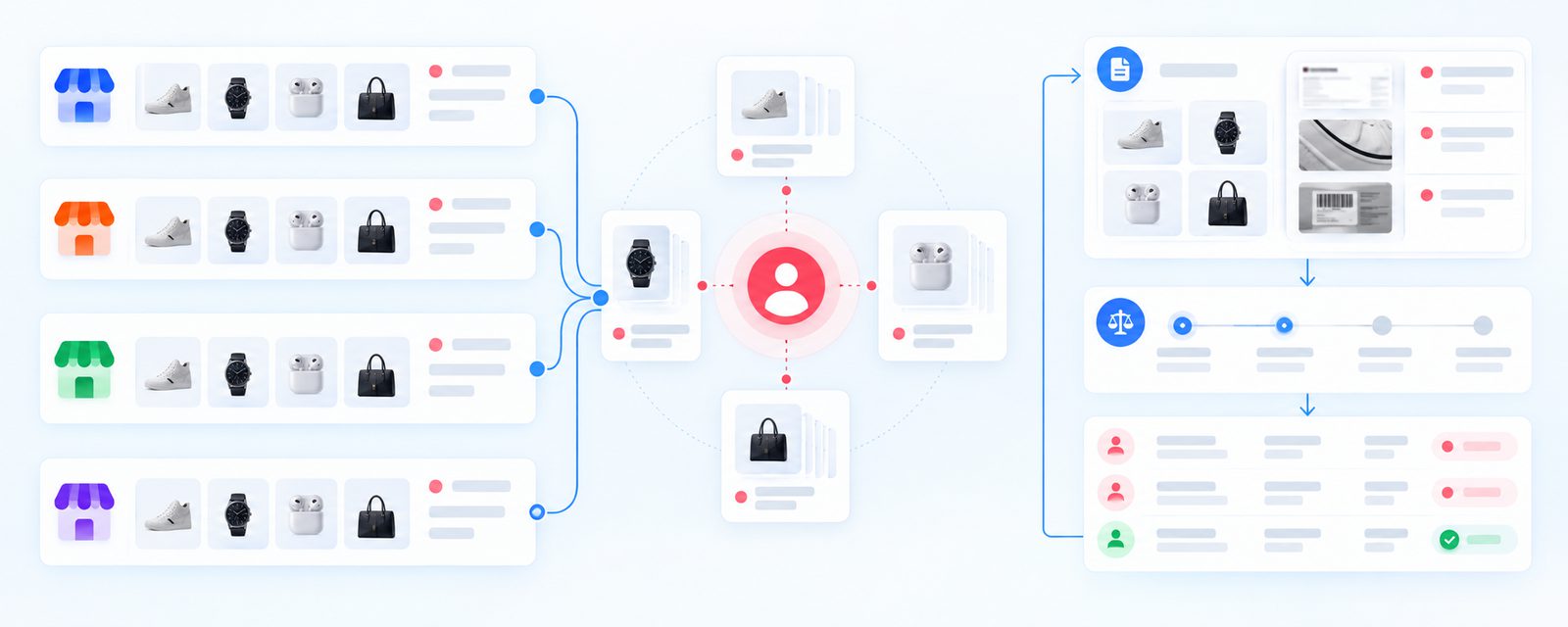
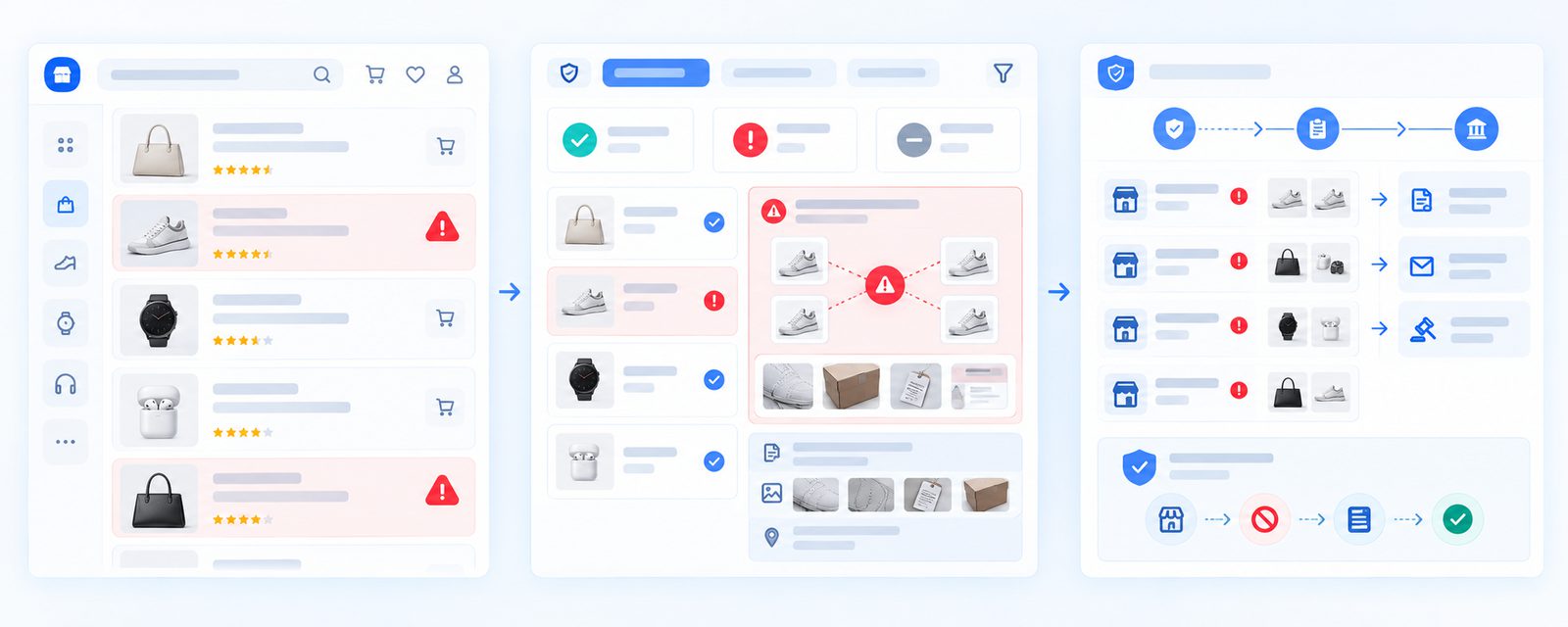
The fix isn’t waiting for platform-wide moderation to improve. Generic moderation is built to catch patterns across everyone’s listings at once, which is exactly why it misses things that only look wrong when checked against one specific brand’s real catalogue. That’s what SKU-level matching does differently: instead of pattern-matching a listing against other known fakes, it checks the listing against the brand’s own real product data, real SKUs, real images, real pricing bands. A listing can dodge a pattern built from other counterfeits far more easily than it can fabricate a match against a brand’s genuine catalogue.
See how Truviss’s Marketplace Scanner monitors your catalogue across marketplaces, continuously.
Explore Marketplace ScannerThis is the specific gap Truviss’s Marketplace Scanner is built to close: continuous marketplace monitoring run from the brand’s side, across the marketplaces that matter to that brand, rather than relying on any single platform’s internal enforcement to catch what shouldn’t have been listed in the first place. A counterfeit listing doesn’t need to survive platform-wide moderation forever to do damage, it only needs to survive long enough to take sales, collect reviews under the wrong name, and put a customer at risk with a product the brand never made.
The AliExpress fine is a useful, concrete reminder of why that distinction matters. It’s also a reminder that the timeline matters as much as the outcome: a regulator’s finding of “extended periods” is a retrospective judgment, made after the harm already happened. A brand waiting for the same kind of after-the-fact confirmation on its own catalogue is accepting the same delay. Platform moderation exists to manage the platform’s aggregate risk across every seller and every category at once. It was never built, and per this finding, wasn’t even reliably managing that, to guarantee any one brand’s catalogue is clean in real time.

Mithileshkumar leads growth at Truviss, working every day to make sure the brands losing the most to counterfeits, fraud and digital impersonation are the ones who find out about a fix first. He’s spent his career believing that good marketing isn’t about noise, it’s about showing up right when someone needs the answer. Off the clock, he’s usually chasing the same instinct in something entirely unrelated to work.