Truviss’s Ads Scanner flags fraudulent ads across Google, Facebook and Instagram and routes verified cases straight into evidence storage.
Book a demo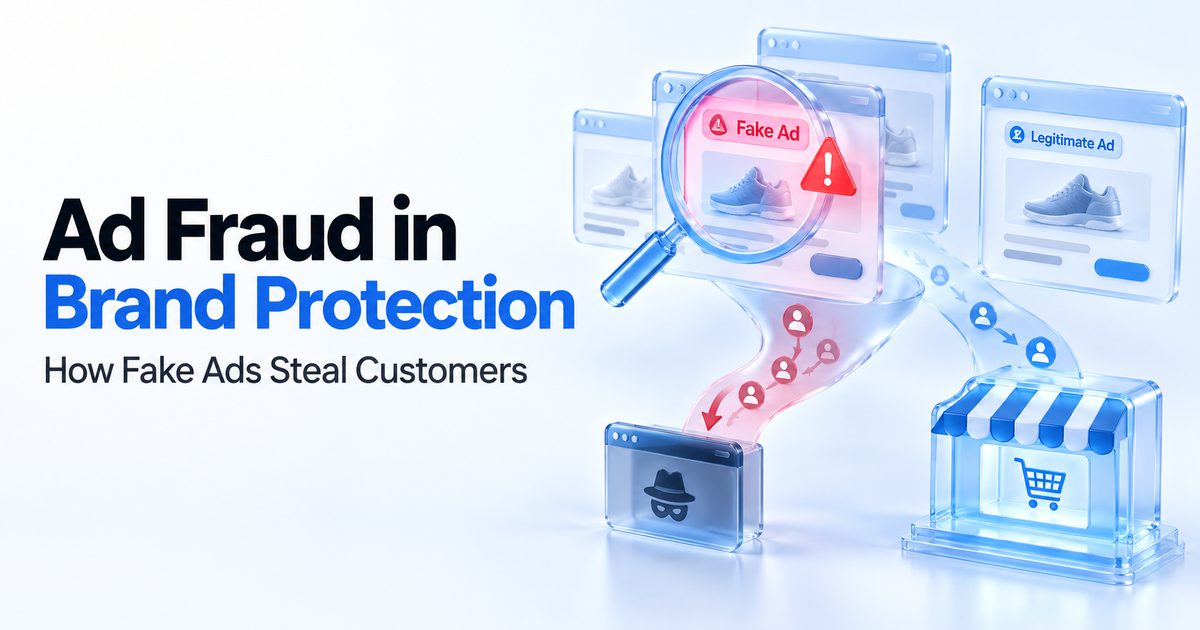
- Ad fraud in a brand-protection context isn’t click-fraud against advertisers, it’s a fake ad impersonating a real brand to redirect traffic to a fraudulent storefront or phishing page.
- It works by hijacking the exact moment a customer is already searching for the brand, when trust and intent are both at their highest.
- The cost is stolen ad-adjacent traffic and stolen trust, a customer who lands on the fake often blames the real brand for what happens next.
- Manual spot-checks of search results miss most of it, since fraudulent ads rotate and often only run for the buyer to see, not the brand.
What ad fraud looks like for a brand, not an advertiser
Most writing about ad fraud is aimed at advertisers worried about bots inflating their own click counts. Brand protection is a different problem entirely: someone else runs an ad using a brand’s name, logo or product images to send traffic somewhere the brand never approved, a counterfeit storefront, a phishing page, or a copycat seller undercutting the real price. This is ad fraud aimed at the brand itself, not at the platform selling the ad space.
It shows up on the exact channels a brand already relies on for genuine customers, search ads triggered by the brand’s own name, and social ads on Facebook and Instagram styled to look like an official promotion.
How a fake ad actually steals a customer
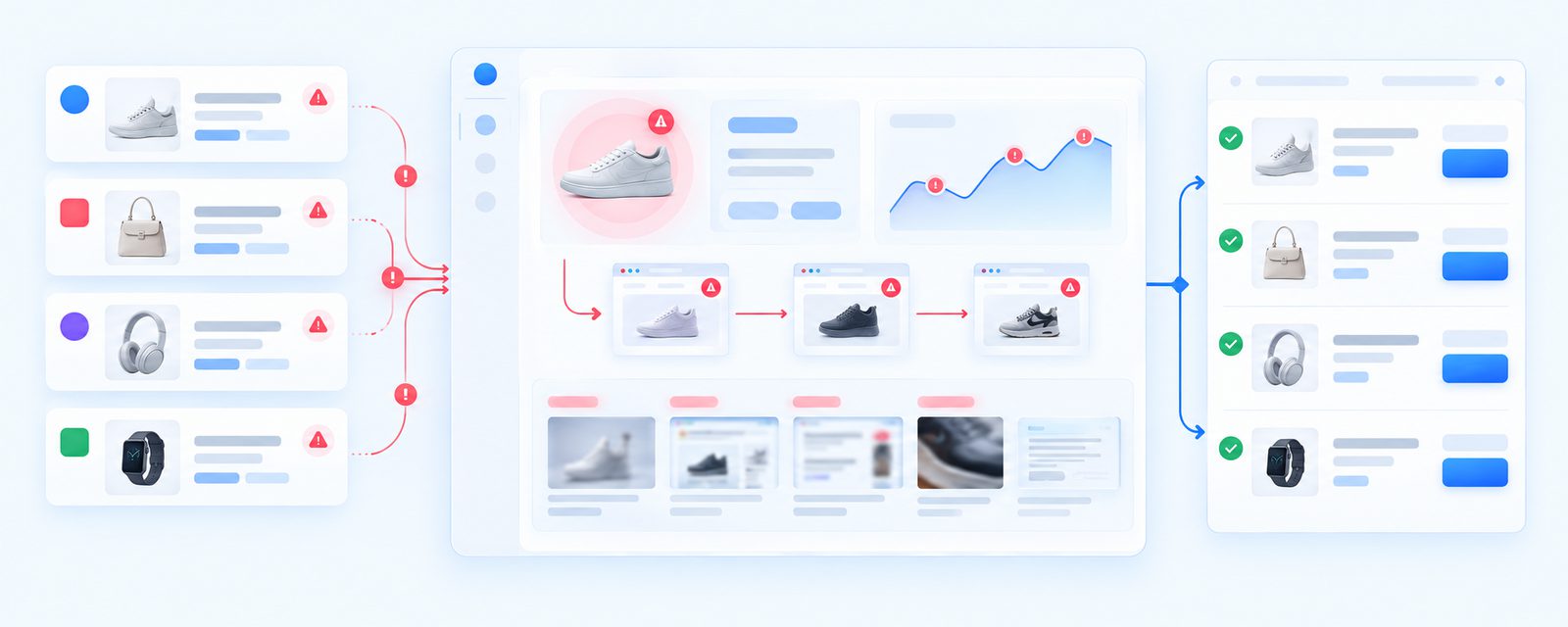
The mechanics are simple and that’s what makes them effective. A fraudulent seller buys a search ad against a brand’s own name or a close variant, sometimes underbidding the brand’s genuine ad, sometimes appearing alongside it. The ad copy mirrors the real brand’s tone and the destination page mirrors the real product page closely enough that a customer mid-search has no reason to pause and check.
The moment this happens is precisely the moment a brand’s own marketing has worked, a customer with high intent, actively searching, ready to buy. A fraudulent ad doesn’t need to build trust from nothing, it borrows the trust the real brand has already spent years building.
The cost: stolen clicks, stolen trust
The direct cost is the sale itself, a customer who clicks the fake ad and buys was, a moment earlier, a genuine prospect for the real brand. But the larger cost lands after the sale. A customer who receives a counterfeit product, or has their card details taken on a phishing page styled to look like a real checkout, usually assumes the brand itself was responsible, not the fraudulent seller who ran the ad. That damage lands on the real brand’s reputation, not the fraudster’s.
It also quietly wastes the brand’s own paid-search budget in a different way: a fraudulent ad competing for the same keyword can push up the auction price the genuine brand pays to appear, an indirect cost that rarely gets traced back to its actual cause.
Why fraudulent ads are hard to catch manually
Search and social ads are personalised and often geographically targeted, which means a brand’s own marketing team may never actually see the fraudulent version running against their name. A fake ad shown to a customer in one city or on one device isn’t visible to someone checking from a different location or a different account. Fraudulent sellers also rotate ad copy and destination URLs frequently, specifically to stay ahead of any manual spot-check a brand might run.
A periodic manual search catches the most obvious, longest-running cases. It misses the ones deliberately built to be short-lived and geographically scattered, which describes most of them.
How detection actually works
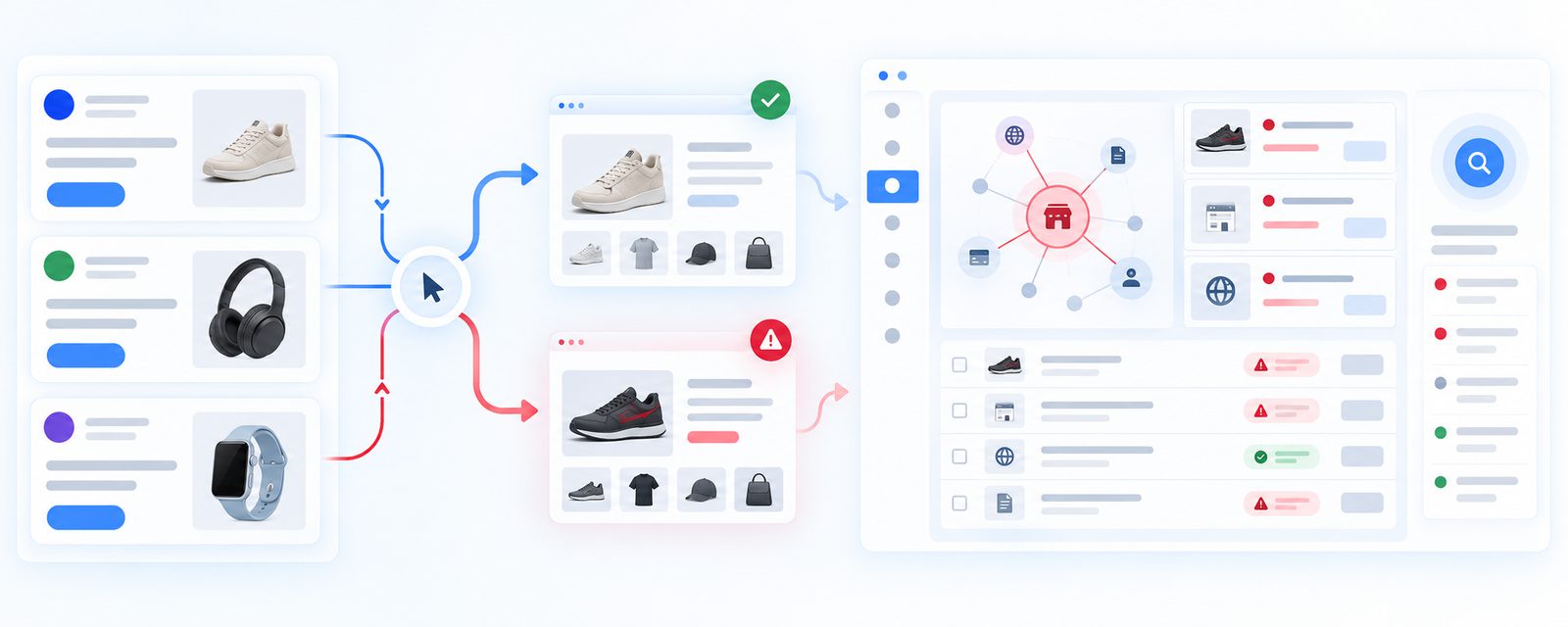
Effective detection has to operate the same way the fraud does, continuously and across the same platforms. Truviss’s approach analyses ad creative, destination pages and seller signals across Google, Facebook and Instagram to identify ads using a brand’s assets or name without authorisation, then routes verified cases straight into evidence storage with the ad creative, destination URL and timestamp logged for reporting.
See how Truviss’s Ads Scanner flags fraudulent ads across Google, Facebook and Instagram.
Explore Ads ScannerDetection-only enforcement is a deliberate distinction here: unlike marketplace or domain takedowns, ad networks don’t offer a direct automated takedown path the way a marketplace does, so a verified case goes into evidence storage ready for a brand’s team to action through the ad platform’s own reporting channel, with the documentation already built.
Getting started
If a brand runs any paid search or social spend at all, that’s the first place to check, since a fraudulent ad specifically targets the same keywords and audiences the brand is already paying to reach. Combine ad monitoring with marketplace monitoring where relevant, since a fraudulent ad’s destination is very often a counterfeit listing on a marketplace the brand already tracks.
Frequently asked questions
No. Click fraud is bots or competitors artificially inflating an advertiser’s own ad spend. Ad fraud in a brand-protection sense is someone else running an ad using a brand’s name or assets to redirect customers to an unauthorised or fraudulent destination, a different problem aimed at the brand rather than at the ad platform.
No, reporting someone else’s fraudulent ad through a platform’s own trademark or brand-abuse reporting channel doesn’t put a brand’s own account at risk. It’s a separate process from a brand’s own ad campaigns.
Because ad targeting is personalised and geographic, a fraudulent ad shown to one customer may never appear to someone on the brand’s own team checking from a different location, device or account. Manual spot-checks catch only the most persistent, widest-running cases.
Ad-network enforcement is detection-only, unlike marketplace or domain takedowns. Verified fraudulent ads are routed into evidence storage with full documentation, ready for the brand’s team to action through the ad platform’s own reporting process.

Mithileshkumar leads growth at Truviss, working every day to make sure the brands losing the most to counterfeits, fraud and digital impersonation are the ones who find out about a fix first. He’s spent his career believing that good marketing isn’t about noise, it’s about showing up right when someone needs the answer. Off the clock, he’s usually chasing the same instinct in something entirely unrelated to work.