SKU-level precision, automated takedowns with human review available, and strong Indian and regional marketplace coverage.
Book a demo
- Red Points, BrandShield and Truviss all offer online brand protection, but differ in matching precision, enforcement model and regional marketplace depth.
- Red Points and BrandShield are established, broad-coverage platforms built primarily around global marketplaces and social platforms.
- Truviss differentiates on SKU-level catalogue matching, automated takedowns with an optional human-review step, and stronger native coverage of Indian and regional marketplaces alongside global ones.
- The right choice depends on where a brand actually sells and how much regional marketplace exposure it has, not just overall platform size.
How to read this comparison
Every brand-protection platform in this space, Truviss included, describes itself using similar language: AI-powered detection, automated takedowns, comprehensive coverage. The meaningful differences show up in three specific places: how precisely a platform matches a suspected infringement against a brand’s real catalogue, whether enforcement is automated, human-reviewed, or a mix of both, and which marketplaces a platform actually covers in depth rather than in name only. This comparison focuses on those three, based on publicly available information about each platform.
Quick comparison
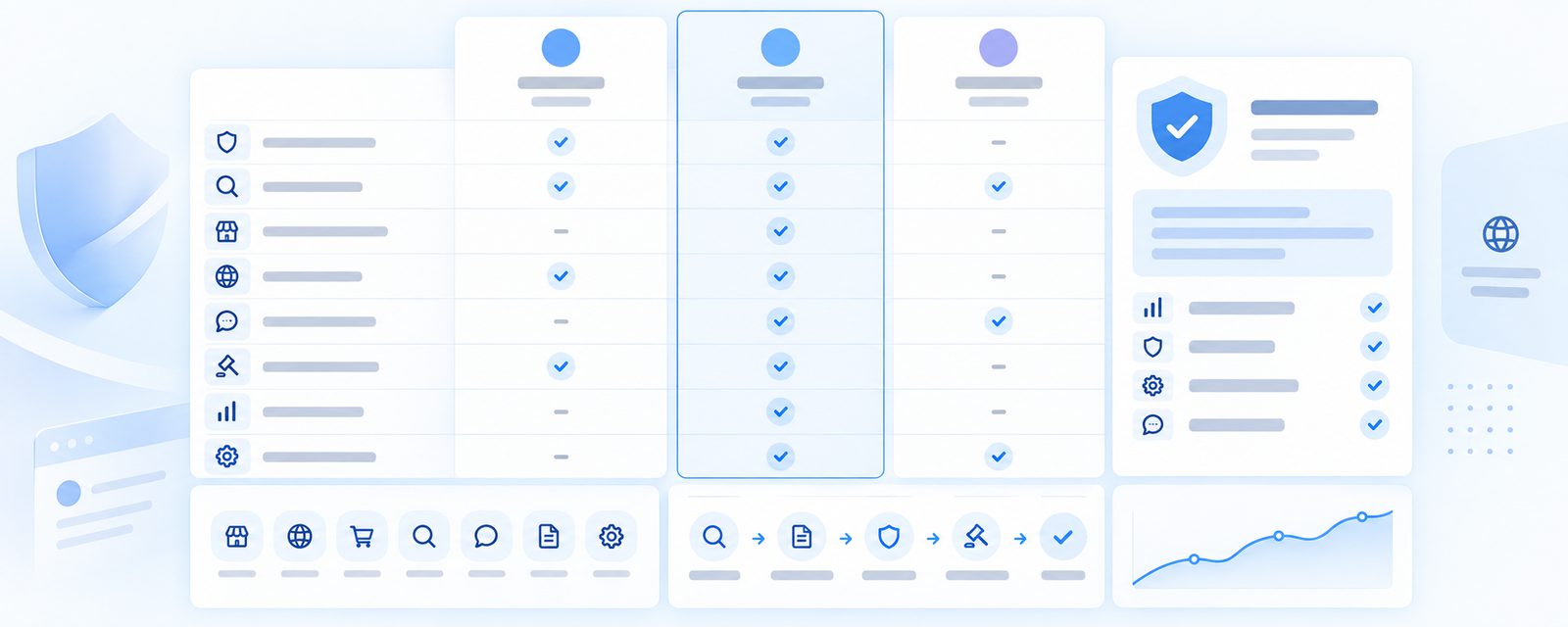
| Platform | Detection approach | Enforcement model | Regional marketplace depth |
|---|---|---|---|
| Truviss | SKU-level matching against the brand’s real catalogue, 500+ data points per listing | Automated takedowns, human review available | 150+ marketplaces, strong native coverage of Indian and regional platforms alongside global ones |
| Red Points | AI-led detection across marketplaces, social and web at large scale | Managed enforcement, largely automated with expert oversight | Broad global coverage, primarily oriented around major international marketplaces |
| BrandShield | AI monitoring across marketplaces, websites, ads and social | Detected incidents typically reviewed by an enforcement team before removal | Broad global coverage, similarly oriented around major international marketplaces |
This is a summary based on how each company publicly describes its own platform, not an independent benchmark. Verify current specifics directly with each vendor before deciding.
Detection approach: matching precision
The core technical difference between brand-protection platforms is how a suspected infringement gets matched against what’s actually genuine. A keyword-only approach flags anything mentioning a brand name, which catches a lot of false positives, genuine resellers, fan content, unrelated mentions, alongside real infringements. Truviss’s approach analyses SKU-level matching, comparing images, pricing and seller history against the brand’s real product catalogue rather than keyword presence alone, which is what lets automated takedowns proceed with lower false-positive risk. Red Points and BrandShield both also use AI-driven detection at scale, though the specific matching methodology and how it’s tuned per brand is generally not published in comparable detail.
Enforcement model: automated vs human-reviewed
Some platforms lean toward fully managed enforcement, where a specialist team reviews and actions each detected case, trading some speed for an added layer of judgement on ambiguous ones. Others, including Truviss, default to automated takedowns once a match is verified against the catalogue, with human review available as an option rather than a mandatory step for every case. Neither model is universally better, a heavily managed model can be reassuring for a brand with limited internal resources to review cases itself, while an automated-first model moves faster on the high volume of straightforward cases and reserves human attention for genuinely ambiguous ones.
See Truviss’s detect, verify, enforce cycle in action across your actual marketplace footprint.
Explore Marketplace ScannerRegional marketplace coverage
This is where platform choice often matters most in practice. A brand selling primarily through Amazon, eBay and major European or North American marketplaces is well served by most established platforms in this space, since that’s where global brand-protection tooling has matured first. A brand with meaningful exposure on Indian or regional marketplaces, Flipkart, Meesho, and similar platforms, needs to check specifically whether a platform’s coverage genuinely extends there in depth or only lists them nominally. Truviss’s coverage was built with Indian and regional marketplaces as a core focus alongside global ones, which is a specific differentiator worth checking against any platform being evaluated if that’s where a brand’s actual risk sits.
Choosing between them
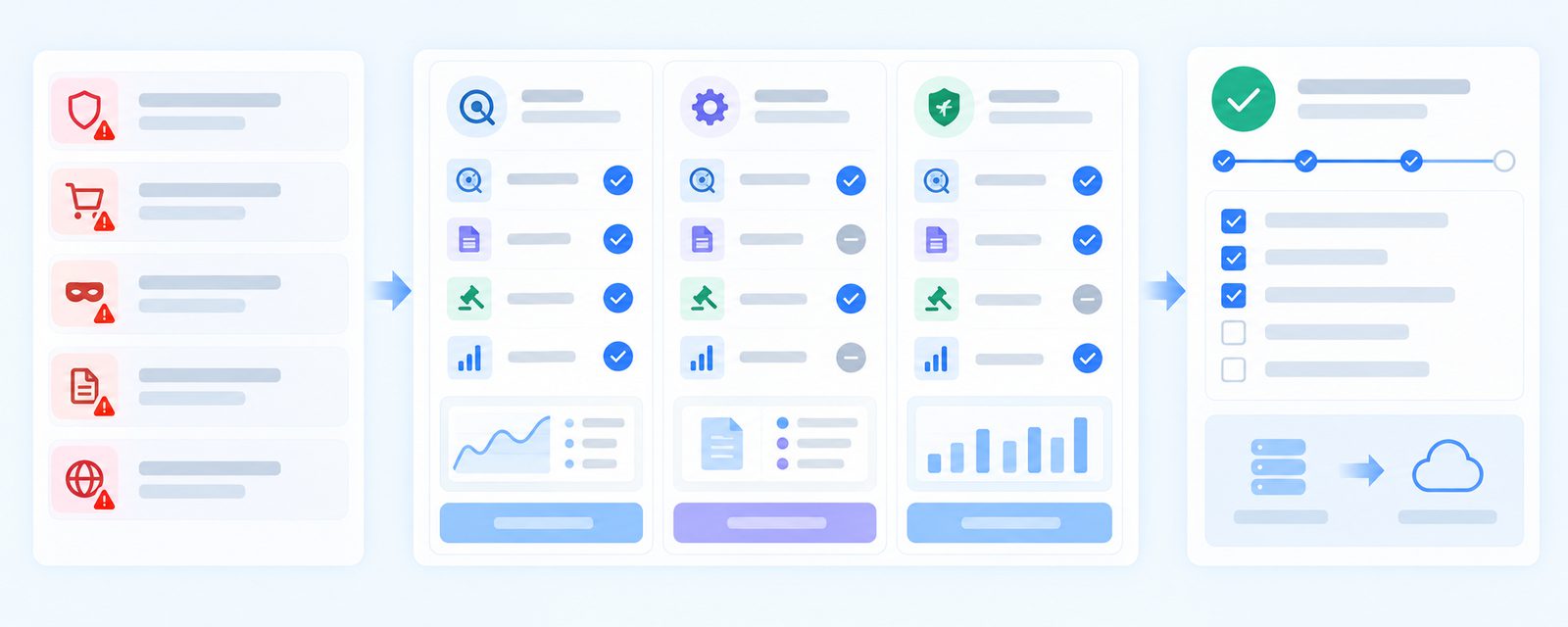
The right platform depends on a brand’s actual footprint more than any single feature comparison. A brand selling almost entirely through major global marketplaces, with a preference for a fully managed enforcement team, may be well served by an established platform like Red Points or BrandShield. A brand with real exposure on Indian or regional marketplaces, wanting SKU-level precision and the option to run enforcement automated-first, is the profile Truviss is built around most directly. The most useful next step for any brand comparing these is checking each platform’s coverage against its own specific list of marketplaces, not a generic feature list.
Frequently asked questions
Pricing for all three platforms is generally quote-based and depends on catalogue size, channel coverage and enforcement volume, so a direct price comparison isn’t meaningful without a specific quote from each vendor for a brand’s actual requirements.
Yes, all three offer coverage beyond marketplaces, social media impersonation, phishing domains and, for some, app stores and ad networks. The depth of coverage per channel varies, which is worth confirming directly for whichever channels matter most to a specific brand.
It may not, if Amazon and similar global marketplaces genuinely represent the bulk of a brand’s exposure. It matters specifically for brands with real sales or counterfeit risk on regional platforms that a global-first platform may cover only nominally rather than in depth.
Generally yes, brand-protection contracts are typically not permanent commitments, though switching does mean re-onboarding a brand’s catalogue and re-establishing enforcement history with the new platform, which is worth factoring into the decision rather than treating the first choice as risk-free to reverse.

Mithileshkumar leads growth at Truviss, working every day to make sure the brands losing the most to counterfeits, fraud and digital impersonation are the ones who find out about a fix first. He’s spent his career believing that good marketing isn’t about noise, it’s about showing up right when someone needs the answer. Off the clock, he’s usually chasing the same instinct in something entirely unrelated to work.