See how Truviss’s Marketplace Scanner flags unauthorised listings and relisted sellers across 150+ marketplaces the moment they reappear.
Book a demo
- Finding an unauthorised seller and responding to one are two separate skills, and most brands are only built for one of them.
- Sort sellers into unauthorised resellers, grey market imports, and counterfeit sellers before choosing a response.
- The earliest signal is the same product code turning up outside authorised channels, not just a new listing.
- A takedown removes one listing, not the seller. Continuous monitoring catches the relist.
The problem is really two problems
Most guidance on unauthorised sellers treats “find and respond” as one motion, but they’re separate skills, and a brand that’s good at only one of them still loses margin. A team that spots every rogue listing but has no enforcement process watches the same sellers operate indefinitely. A team with a sharp legal process but no detection only finds out about a problem after a customer complaint or a distributor’s phone call, by which point the seller has usually been active for months.
This is Part 1 (find) and Part 2 (respond), covered in that order because the response you should take depends entirely on what you found.
What actually counts as an unauthorised seller
Not every seller operating outside your approved list is doing something you can act against legally, and knowing the difference decides which lever you reach for later. See what online brand abuse covers for the broader category this sits inside.
Unauthorised resellers are moving genuine stock, usually sourced from a legitimate distributor who broke a contract term, outside your approved retailer list. This is a distribution problem, not an IP problem. There’s no counterfeit claim to make, because the product is real.
Grey market or parallel-import sellers are also moving genuine product, but across regions your distribution agreements don’t cover. Same issue as above: real goods, wrong channel, no infringement claim.
Counterfeit sellers are the only category with a clean intellectual property claim, because the product itself is fake (what qualifies as a counterfeit listing). This is where trademark and IP enforcement tools actually apply.
Confusing these categories is the most common way a brand wastes a response. Sending a cease-and-desist to a reseller who simply broke a distribution term, rather than a counterfeiter, is usually unenforceable and burns goodwill with a partner you may still want back on side later.
Where sellers surface, and the signal that’s easy to miss
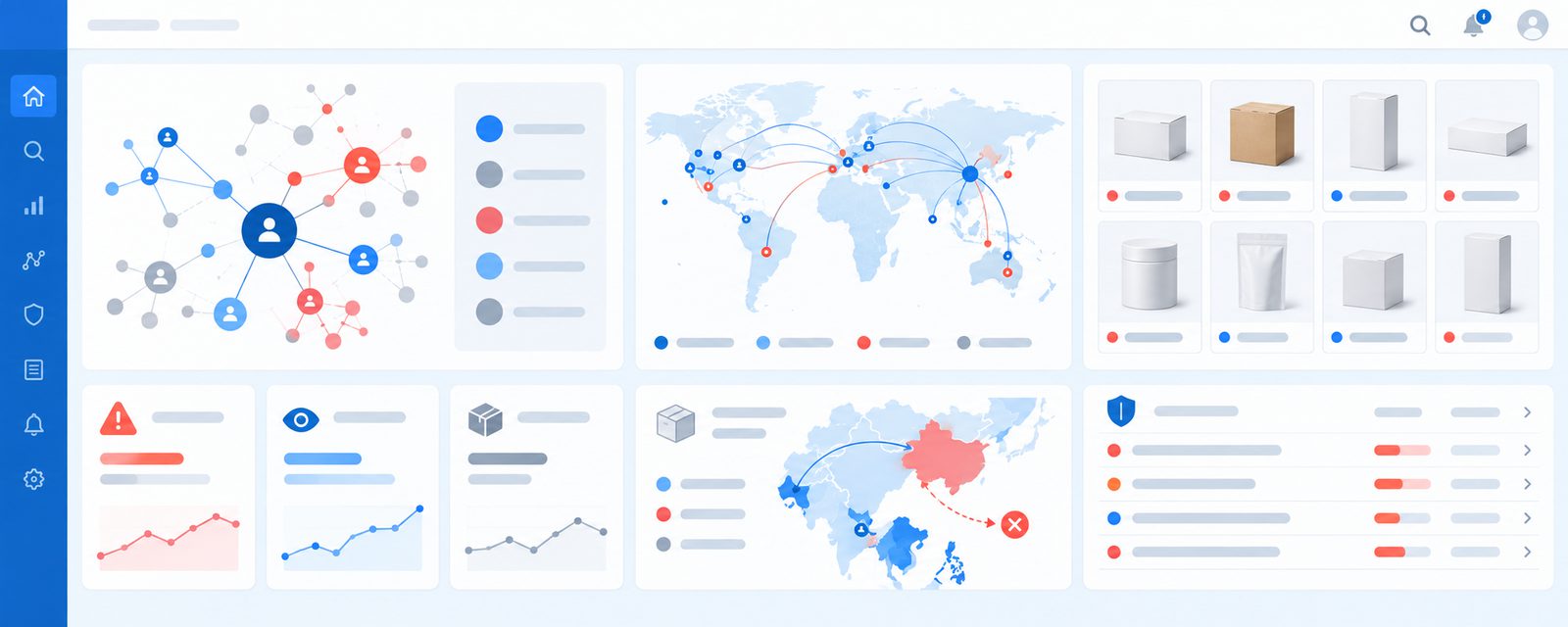
Unauthorised sellers cluster in three places: large marketplaces (Amazon, eBay, Walmart and regional equivalents), social commerce (Instagram and TikTok Shop listings), and open-web storefronts cloning a brand’s product pages directly.
Most guides on this topic stop at “monitor these channels for new listings.” That catches a seller once they’ve already built a storefront and started selling, which is usually well after the fact. A signal that surfaces earlier: the same product code being verified or scanned by end customers in locations, quantities, or patterns that don’t match your authorised distribution map. That’s a product-level signal, not a listing-crawl signal, and none of the marketplace-monitoring guides built around scraping listings can see it, because it depends on having SKU-level matching set up in the first place (marketplace monitoring covers the listing-side half of this).
If your product carries any kind of scannable code, this is the earliest warning you’ll get that stock is moving somewhere it shouldn’t, often before a listing has even gone up.
Build the evidence file before you report anything
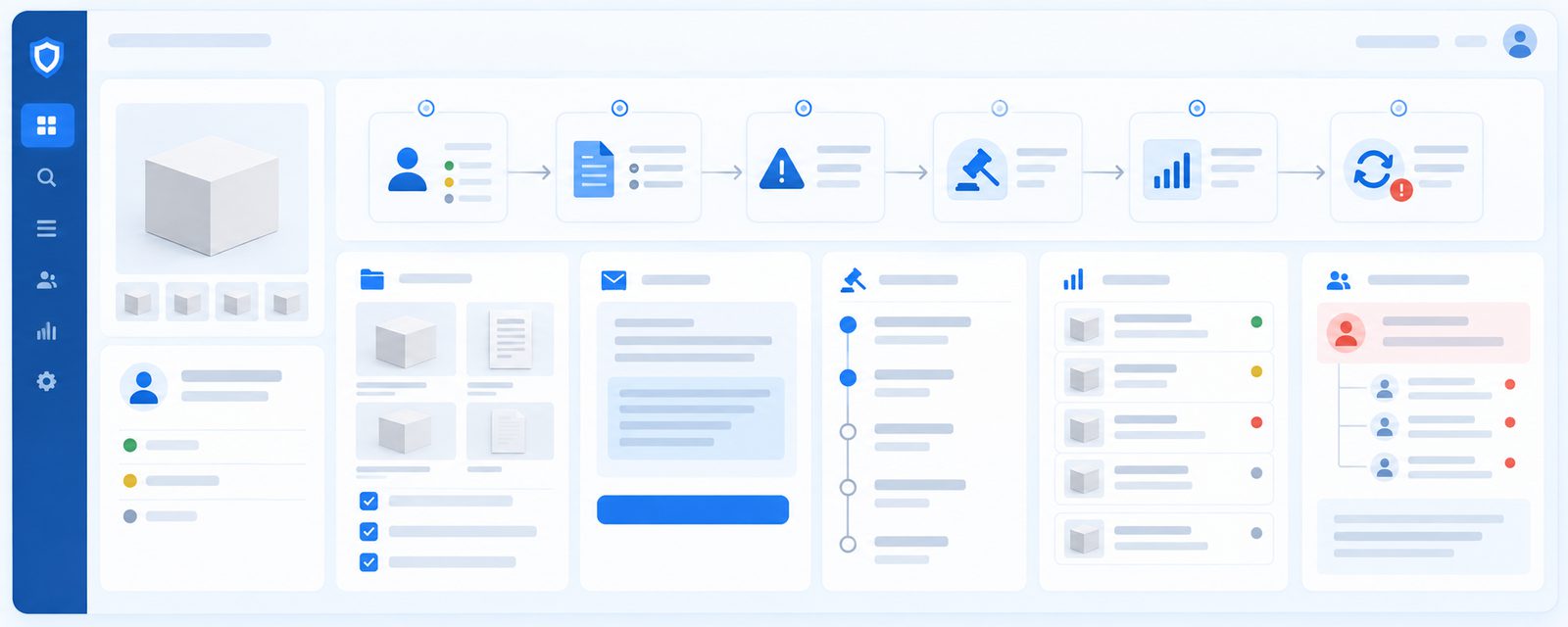
A report filed with a single screenshot gets rejected far more often than one filed with a documented trail. Before submitting anything to a platform, gather: the listing URL and a timestamped capture of it, the seller’s account ID, and, where available, verification-scan data showing where and how often the product code has surfaced outside your authorised channels.
This is preparation, not the response itself, and it should happen the moment you spot something suspicious, not after you’ve decided how to act. Evidence gathered late is evidence gathered under time pressure, which is when mistakes happen.
Respond, using the right lever for the category
Once you know which of the three categories you’re dealing with, three levers are available, roughly in order of speed:
Marketplace takedown tools are fastest and platform-specific: Amazon’s Report a Violation, eBay’s VeRO programme, Alibaba’s IPP (how a takedown request actually gets evaluated). These work for counterfeit claims and, on some platforms, for authorised-seller-only policy violations too.
Direct contact with the seller or distributor is the right tool for a policy or contract breach: an unauthorised reseller or a distributor who broke a MAP or territory agreement. No IP claim is needed here, because none exists. This is a contract conversation, not a legal one.
Legal action, cease-and-desist letters or litigation, is the slowest lever and the one to reserve for counterfeit sellers or repeat offenders who ignore lower-friction responses.
Matching the lever to the category matters more than moving fast. A marketplace takedown request filed against a legitimate reseller, rather than a counterfeiter, can get rejected outright, and a legal letter sent to the same reseller is often unenforceable since no infringement occurred.
Why one takedown rarely ends it
A removed listing doesn’t remove the seller. The same account, or a new one, frequently relists the same product within days, sometimes under a slightly altered title or a fresh seller profile built specifically to avoid the record of the last takedown.
See how Truviss’s Marketplace Scanner tracks listings and product codes across thousands of marketplaces continuously, flagging a relisting the moment it reappears.
Explore Marketplace ScannerPairing continuous monitoring with repeat-offender tracking means the same seller account or pattern gets flagged and prioritised automatically the second time round, instead of starting the evidence-gathering process from zero.
Getting started
Three things to do before the next unauthorised listing appears, not after:
1. Check whether you already have product-level verification data (scan or authentication logs) that shows where your product is turning up outside authorised channels. This is often the earliest signal available and the one most brands aren’t looking at yet.
2. Decide in advance which of the three levers applies to each seller category, so the decision isn’t being made under pressure the first time a listing appears.
3. Keep the evidence-gathering habit running continuously, not just when you’re about to file a report. A brand that already has a timestamped trail moves through platform review far faster than one starting from a single screenshot.
Treat detection and response as the two separate disciplines they are, and each half gets noticeably easier.