Truviss’s Marketplace Scanner extends to rapid-delivery platforms alongside 150+ traditional marketplaces.
Book a demo
- Blinkit, Zepto and Instamart move products through dark-store inventory rather than a traditional open marketplace listing model, which changes how counterfeit and unauthorised stock actually gets in.
- Brand verification requirements differ by platform, and a trademark application alone is often enough to get listed, a lower bar than some traditional marketplaces require.
- These platforms also collect granular SKU-level sales data, some of it feeding private-label lines, which is a different kind of brand risk than a counterfeit listing.
- Most brand-protection programmes are still built around Amazon and Flipkart-style listings and haven’t extended monitoring to quick commerce at all.
Why quick commerce is a different kind of risk
Quick commerce platforms like Blinkit, Zepto and Instamart don’t work the way a traditional marketplace does. Instead of a seller creating a public listing that any brand can search and monitor, these platforms run on dark-store inventory, stock physically held in local fulfilment centres and surfaced to customers through the app’s own catalogue, not an open seller marketplace page. That structural difference means the usual approach to marketplace monitoring, searching public listings for counterfeit signals, doesn’t translate directly to this channel.
How counterfeit and unauthorised stock gets onboarded
Brand verification requirements vary across the three platforms. A trademark application receipt is often sufficient to get onboarded on some of them, a lower bar than the registered-trademark requirement common on more established marketplaces, and one that can be easier for an unauthorised reseller or counterfeit operation to clear with minimal documentation. Once onboarded, a seller or dark-store partner can move stock quickly with far less public visibility than a listing on an open marketplace, since customers browse a curated in-app catalogue rather than searching seller-by-seller.
Why brands underestimate this channel
Most brand-protection thinking is still built around the marketplaces that have existed longest, Amazon, Flipkart, and their international equivalents, simply because that’s where counterfeiting was first documented at scale. Quick commerce is newer, smaller in absolute volume for most categories, and easy to treat as a rounding error. But for categories that move fast, personal care, snacks, small electronics accessories, the platforms’ own delivery speed is exactly what also makes a counterfeit or unauthorised batch move through inventory and reach a customer before anyone at the brand notices.
See how Truviss extends detection to quick commerce alongside 150+ traditional marketplaces.
Explore Marketplace Scanner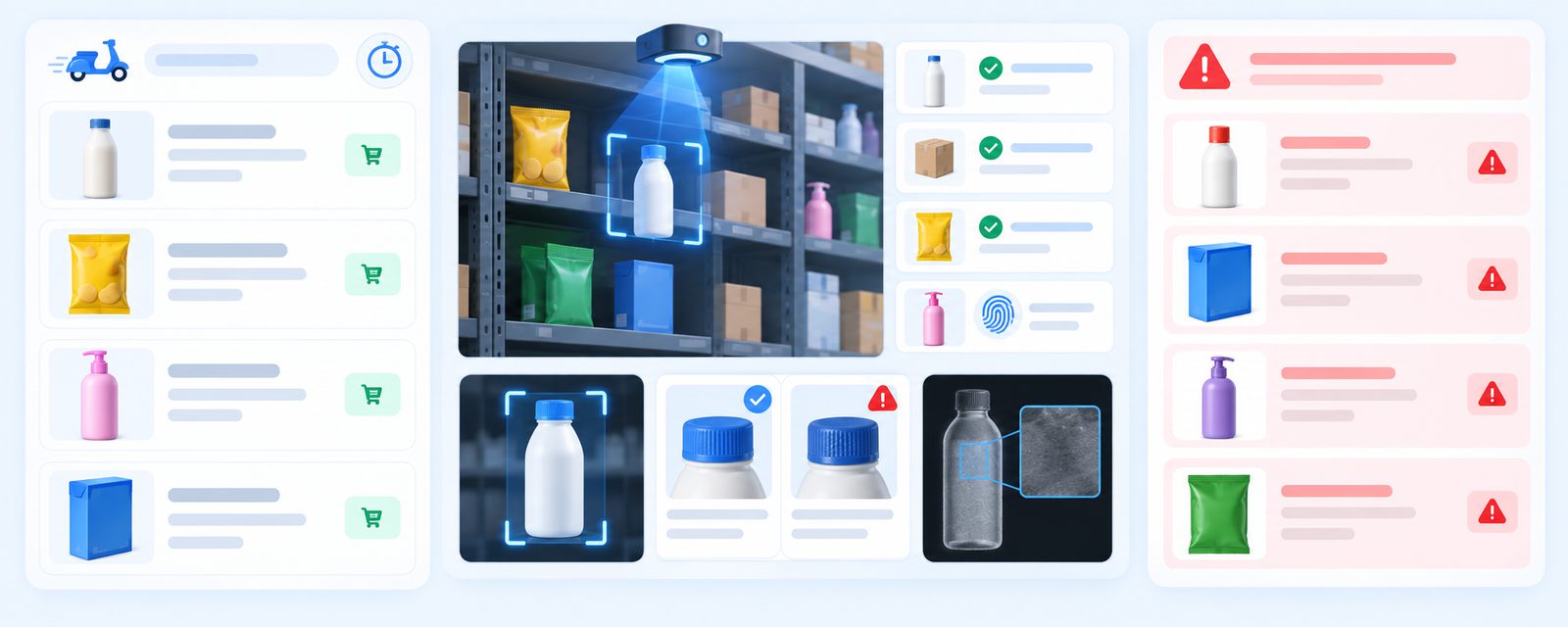
The data angle brands often miss
Quick commerce platforms collect unusually granular sales data at SKU level, since dark-store fulfilment depends on precise, real-time inventory tracking. Some of these platforms also run their own private-label product lines, which means a brand’s high-velocity SKUs are visible in exactly the kind of detail a competing private-label product would benefit from copying. This isn’t the same risk as a counterfeit listing, but it’s a related one worth tracking alongside it, since both stem from the same underlying question, who else has visibility into a brand’s real sales and product data on these platforms.
Monitoring a channel that moves this fast
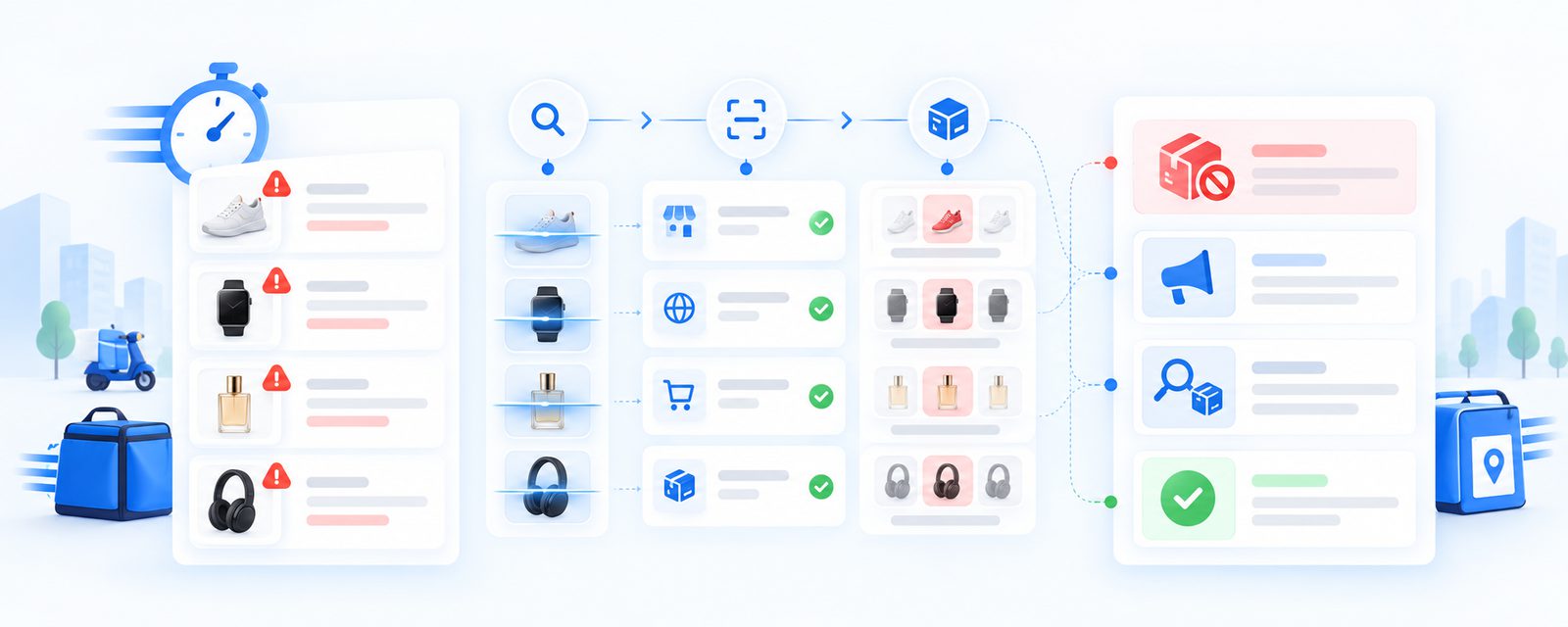
Because quick commerce inventory turns over in hours rather than the days or weeks typical of a traditional marketplace listing, periodic manual checks are close to useless here, by the time a brand notices a problem and investigates, the specific batch in question may already be sold through and gone. Effective coverage means treating quick commerce as a monitored channel in its own right, with the same continuous, SKU-level matching approach used on any other marketplace, rather than an occasional spot-check layered on top of existing Amazon or Flipkart monitoring.
Getting started
If a brand sells, or suspects it’s being resold, through Blinkit, Zepto or Instamart, the first step is establishing whether the brand’s own products are even listed there through an authorised channel at all. From there, the same detect, verify, enforce approach used across every other marketplace applies, just extended to a channel most brand-protection programmes haven’t reached yet.
Frequently asked questions
No, requirements vary by platform. Some accept a trademark application receipt for onboarding, while others expect a registered trademark, generally a lighter bar than traditional marketplaces set, which is part of why this channel needs its own dedicated monitoring rather than assuming existing marketplace processes cover it.
Not directly. Quick commerce runs on dark-store inventory rather than open public listings, so the monitoring approach has to adapt to how these platforms actually structure their catalogue and seller relationships, rather than assuming the same listing-search methods apply unchanged.
It depends on the category. For fast-moving consumer categories, personal care, snacks, small accessories, quick commerce volume can already be meaningful, and the same speed that makes these platforms attractive to shoppers is what also lets a counterfeit or unauthorised batch move through before it’s noticed.
It’s worth being aware of. Some quick commerce platforms operate their own private-label lines and have granular visibility into high-velocity SKUs sold through their app, which is a different concern from counterfeiting but related enough to track alongside it.
Related reading
- How to Report Counterfeit Sellers: Amazon to Alibaba
- How to Find & Respond to Unauthorised Sellers Online
- Fake Water Bottles on Amazon: A Detection Guide

Mithileshkumar leads growth at Truviss, working every day to make sure the brands losing the most to counterfeits, fraud and digital impersonation are the ones who find out about a fix first. He’s spent his career believing that good marketing isn’t about noise, it’s about showing up right when someone needs the answer. Off the clock, he’s usually chasing the same instinct in something entirely unrelated to work.