Truviss’s Marketplace Scanner matches listings against your real catalogue at SKU level, catching counterfeit accessory listings continuously.
Book a demo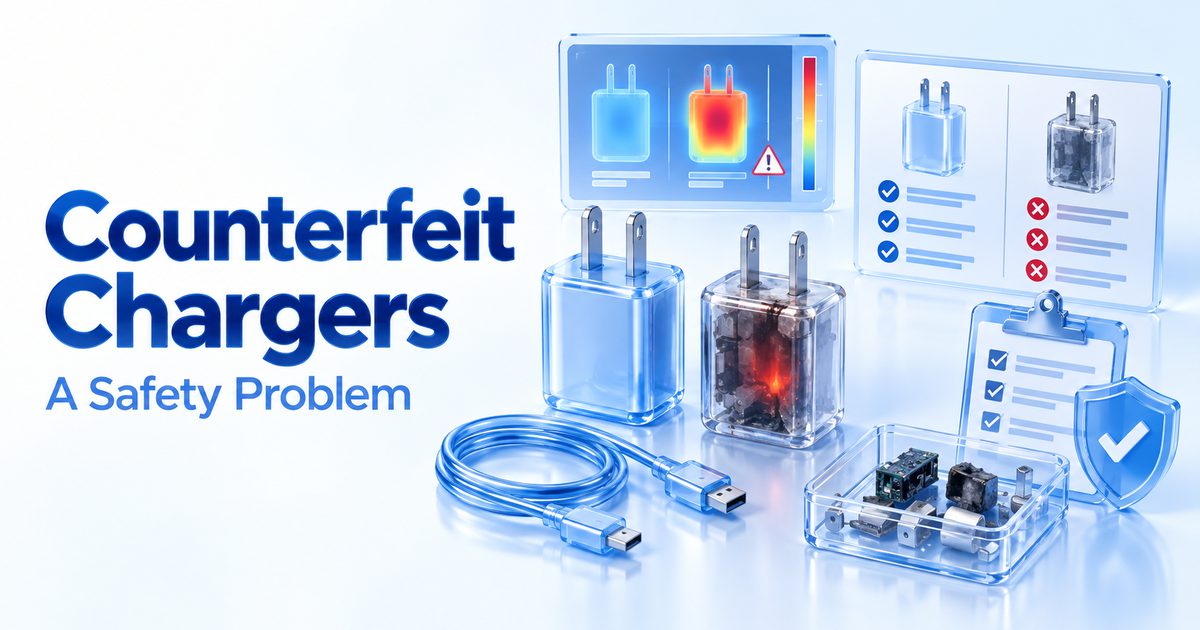
- In May 2025, CBP seized 370,000+ counterfeit Apple-branded chargers at the Port of Houston, worth over $7 million, some boxed to also mimic Anker’s logo.
- A 2016 UL study found 99% of 400 counterfeit Apple chargers tested failed basic safety tests, only 3 had adequate shock protection.
- Even genuine, certified electronics get recalled (Anker recalled 1M+ of its own power banks in 2025), but that happens inside a testing and recall system. Counterfeits have none of that.
- Customs seizures happen at the border; brand-side monitoring is what catches listings already live and selling before a customer plugs something dangerous in.
In May 2025, US Customs and Border Protection seized more than 370,000 counterfeit chargers bearing the Apple trademark at the Port of Houston, worth over $7 million at genuine retail prices, packed into 7,460 cartons. Inside some of those cartons, officers found charger boxes labeled “Ankar,” closely mimicking Anker’s own logo, a second counterfeit nested inside a shipment already counterfeiting a first brand. That single detail says more about the scale and sophistication of counterfeit electronics operations than the dollar figure on its own. Whoever built this shipment wasn’t opportunistically faking one product, they were running an operation sophisticated enough to counterfeit two different brands’ packaging within the same load.
The safety stakes are physical, not just financial
Most counterfeit categories carry financial and reputational risk. Counterfeit chargers carry that too, but they add something most categories don’t: an immediate, physical failure mode. A 2016 UL-commissioned study of 400 counterfeit Apple chargers bought online found that 99% failed basic safety tests, and only three of the 400 had sufficient insulation to protect against electric shock. That’s a decade-old study, not new data, but the underlying physics it exposed, cheap or absent isolation transformers, no safety certification, no quality control, hasn’t changed simply because a decade has passed. A counterfeit charger doesn’t fail the way a counterfeit listing for a handbag or a lipstick fails. It fails by overheating, shorting, or catching fire, in someone’s hand or plugged into their wall.
A necessary distinction: counterfeit risk versus genuine-product recalls
It’s worth being precise here, because even genuine, certified electronics from known brands sometimes get recalled too. Anker recalled more than a million of its own authentic PowerCore power banks in June 2025 after 19 reports of fires and explosions. That’s a real safety issue, and it’s a serious one, but it happened inside a testing, reporting and recall infrastructure that caught the problem and acted on it. A counterfeit product has none of that infrastructure at all. No safety testing before it ships, no manufacturer accountable for a recall, no traceable batch or serial number tying a specific unit back to a specific failure. A genuine product’s recall is the floor of acceptable risk in this category, the system working as intended, even if imperfectly. An untested counterfeit starts below that floor with effectively zero visibility into what’s actually inside it.
See how Truviss matches listings against your real catalogue at SKU level, across every marketplace, not just the ones with dedicated brand-registry tools.
Explore Marketplace Scanner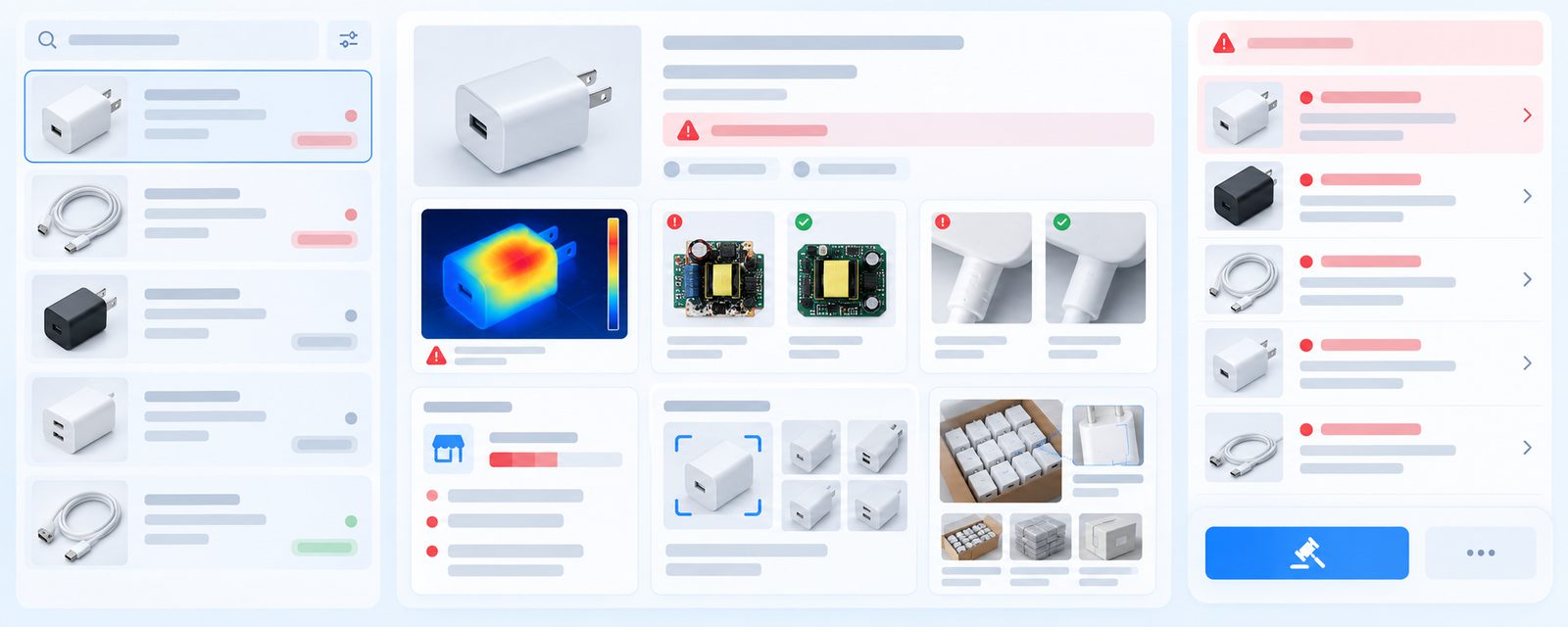
The scale, in proper context
The Houston seizure wasn’t an isolated event. In April 2026, Philadelphia CBP seized two shipments from China containing more than 20,000 pieces across 35 different types of counterfeit consumer electronics, including chargers, headphones, cameras and gaming systems. Nationally, CBP seized over 78 million counterfeit items across all categories in fiscal year 2025, worth an estimated $7.3 billion at genuine retail prices. That figure spans every counterfeit category CBP tracks, not electronics specifically, but it establishes the scale of the pipeline that a shipment like the Houston one moves through.
Why this needs brand-side monitoring, not just customs enforcement
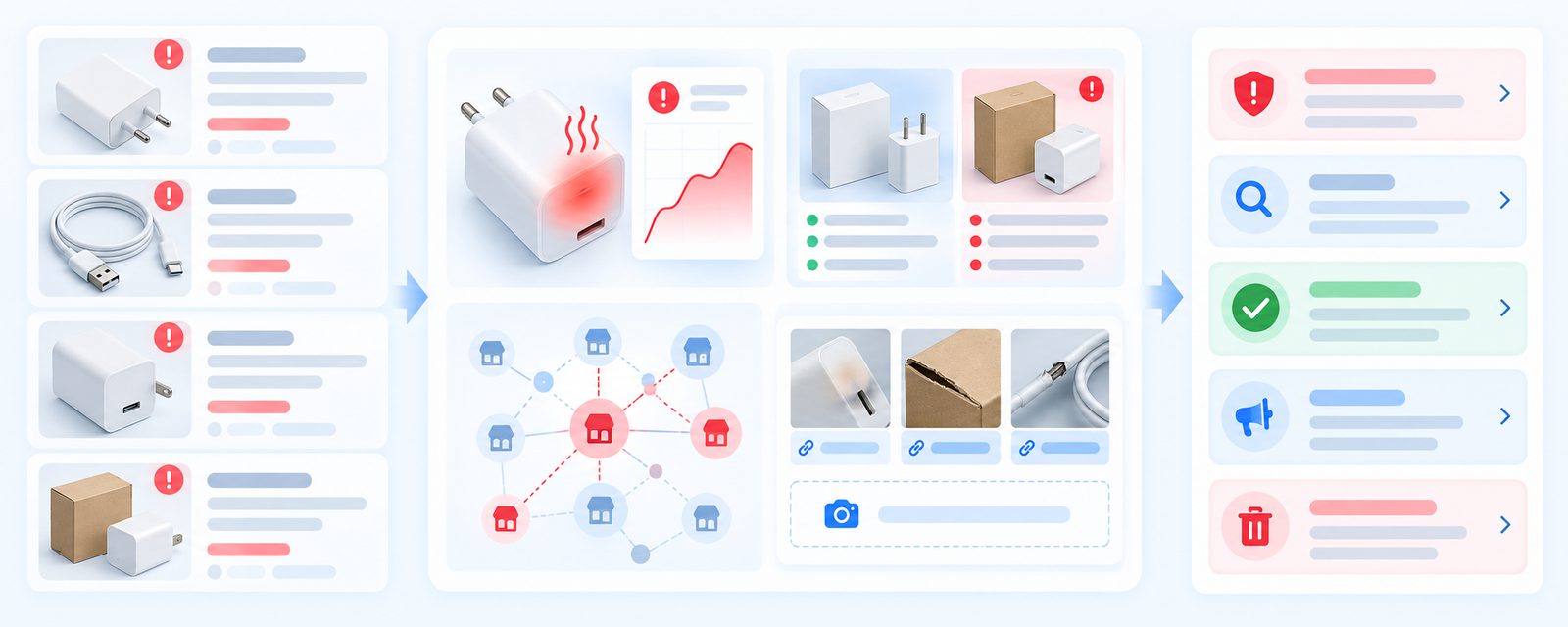
Customs seizures happen at the border, after a shipment has already been built and is already moving, and they catch what gets caught, not everything that gets through. A brand’s own continuous SKU-level matching, applied to marketplace monitoring, is what catches the listings that make it past the border and are already live and selling, before a customer plugs a dangerous counterfeit into their phone or a wall socket rather than after. The two aren’t redundant, customs enforcement disrupts supply at scale, brand monitoring catches what reaches the point of sale, but relying on customs alone leaves the entire retail side of the problem unmonitored.
Getting started
Any brand selling charging accessories, or with a high-value accessory line attached to a core product, phone chargers, laptop adapters, power banks, should treat counterfeit monitoring here with the same urgency as any product-safety issue, not just a line item under IP protection. The downside of a missed counterfeit listing in this category isn’t a bad review or a lost sale. It’s a real fire or burn risk happening under the brand’s own name, to a customer who has no way of knowing the difference until it’s already too late.

Mithileshkumar leads growth at Truviss, working every day to make sure the brands losing the most to counterfeits, fraud and digital impersonation are the ones who find out about a fix first. He’s spent his career believing that good marketing isn’t about noise, it’s about showing up right when someone needs the answer. Off the clock, he’s usually chasing the same instinct in something entirely unrelated to work.