Truviss’s Marketplace Scanner matches listings against your real catalogue at SKU level, across TikTok Shop, Vinted and every marketplace, not just the largest ones.
Book a demo
- Which?, the UK consumer body, bought 34 cosmetics from Amazon, eBay, TikTok Shop and Vinted under household names. 23 of 34, 67%, were judged likely counterfeit.
- TikTok Shop and Vinted came out worst (5/6 and 6/6), against Amazon (4/11) and eBay (8/11).
- A counterfeit cosmetic can look, smell and feel correct while containing a completely different, unregulated formulation, unlike most counterfeit categories where a visual flaw is often visible.
- Counterfeit cosmetics have been found containing lead, mercury and DEHP, a probable human carcinogen, a genuine safety exposure sitting under the brand’s own name.
Which?, the UK consumer body, bought 34 cosmetic products from third-party sellers on Amazon, eBay, TikTok Shop and Vinted, all advertised as household names, Charlotte Tilbury, MAC, The Ordinary, La Roche-Posay, Maybelline. Twenty-three of the 34, 67%, were judged likely to be counterfeit. TikTok Shop and Vinted came out worst, five of six products from TikTok Shop and all six from Vinted were suspected fakes, against four of eleven on Amazon and eight of eleven on eBay. One example: a La Roche-Posay Effaclar Serum, retailing genuinely at £40, bought on Vinted for £12, that smelt suspiciously like shampoo and carried different text on the box than the genuine sample. This wasn’t a niche listing either, the two suspected-counterfeit eBay listings investigated had collectively sold more than 2,600 units, and the flagged Ordinary listings on TikTok Shop had sold close to 1,000.
Why cosmetics resist the usual detection cues
A counterfeit lipstick or serum can look, smell and even feel correct on first impression while containing a completely different, unregulated formulation underneath, or in the Effaclar Serum’s case, smell noticeably wrong and still sell thousands of units before anyone flagged it. That’s a meaningfully different problem from most counterfeit categories. A fake electronics accessory often has a visible build-quality flaw. A fake handbag frequently has an off stitch or wrong hardware weight a trained eye catches quickly. A cosmetic product’s actual danger sits in its chemistry, not its appearance, which means the usual “does this look right” instinct that catches other fakes doesn’t reliably work here at all.
The stakes go beyond brand reputation
This isn’t just a lost sale or a damaged review score. Counterfeit cosmetics have been found containing lead and mercury in lipsticks and skin-lightening creams, and DEHP, classified by the EPA as a probable human carcinogen, in counterfeit perfumes. A customer applying a counterfeit product to their skin is exposed to whatever the counterfeiter actually put in the formulation, with no regulatory oversight and no guarantee it bears any resemblance to what the packaging claims. The brand whose name is on the box carries the reputational fallout regardless of who actually made the product.
Why social commerce platforms show up worst
TikTok Shop and Vinted’s worse results in the Which? investigation aren’t a coincidence. Both are newer social-commerce and resale formats, built around a fundamentally different discovery and trust model than an established marketplace, and neither has built out seller-verification infrastructure as mature as platforms that have been fighting counterfeiting for longer. This echoes a pattern that shows up across brand protection generally, newer channels tend to outpace the monitoring infrastructure originally built for older ones, and a brand assuming its existing marketplace monitoring automatically extends to newer social-commerce formats is very often wrong.
See how Truviss extends detection to social-commerce and resale platforms, not just established marketplaces.
Explore Marketplace Scanner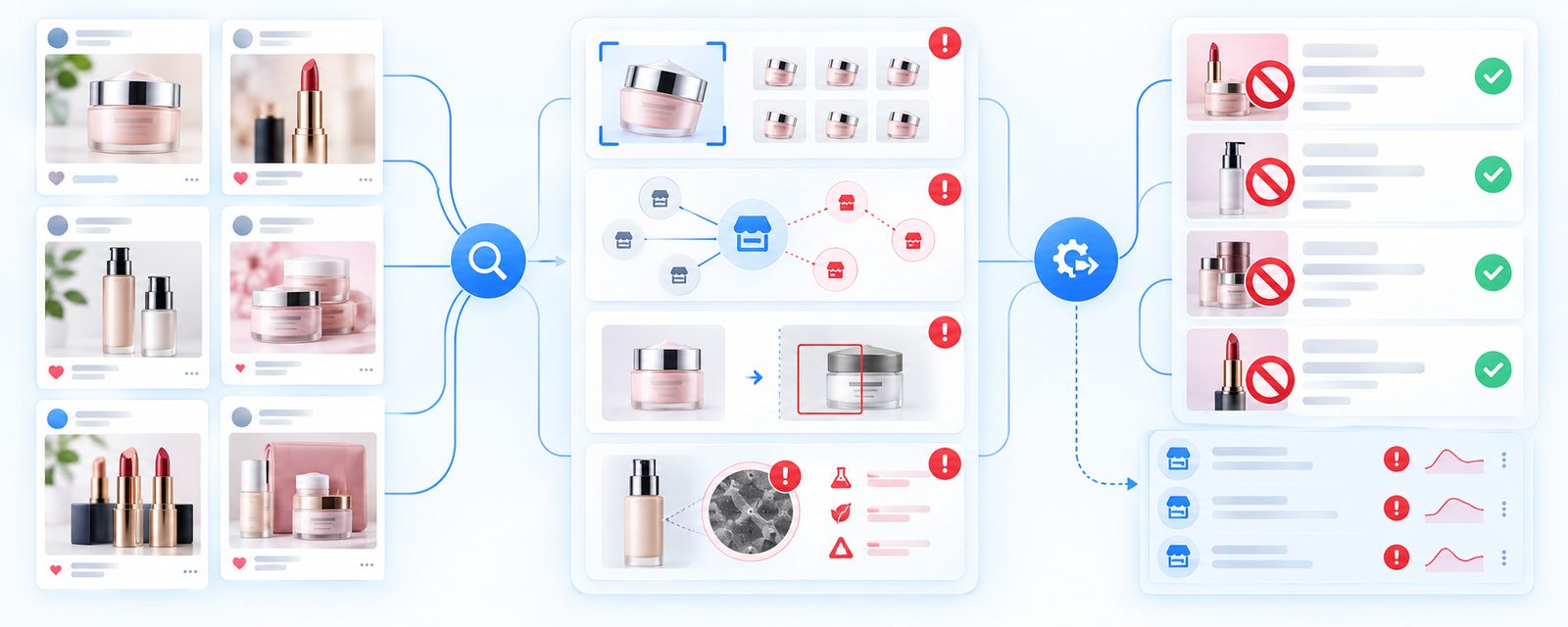
What detection actually needs for this category
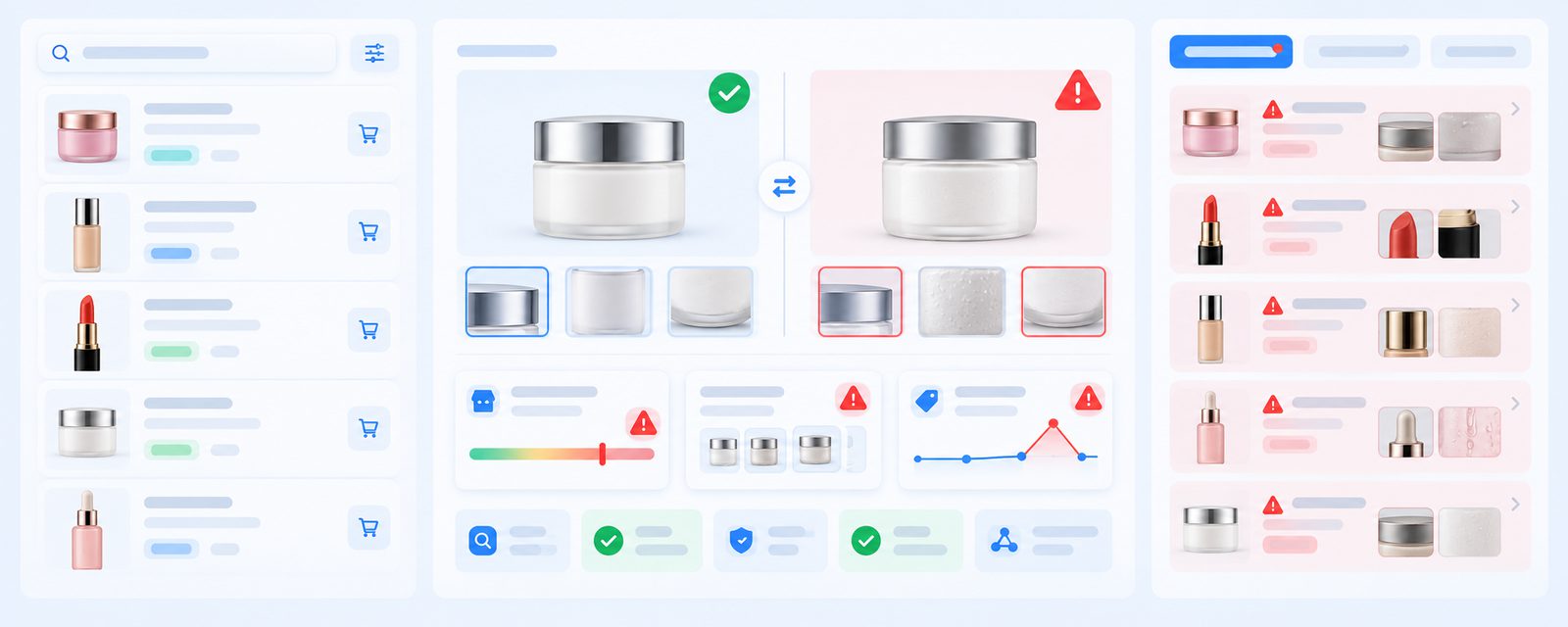
Since visual and sensory cues aren’t reliable for cosmetics the way they are for some other counterfeit categories, and a product can sell thousands of units before its formulation problem is even noticed, detection has to lean harder on signals that don’t depend on inspecting the product itself. Seller history, pricing anomalies relative to genuine retail (a £40 serum for £12 is itself a signal worth flagging automatically), and image provenance, whether a listing’s product photos have been lifted from the brand’s own official assets or from another seller entirely, all work regardless of how convincing a counterfeit formulation looks or smells. Reverse image search and SKU-level catalogue matching both apply here, arguably more so than in categories where a human reviewer might at least catch an obvious visual tell.
Getting started
A cosmetics brand’s starting point looks different from a generic brand-protection checklist. The Which? data points specifically at newer social-commerce and resale platforms as the current weak spot, not just the largest, longest-established marketplaces. Checking exposure on TikTok Shop, Vinted and similar formats, rather than assuming existing Amazon or eBay monitoring already covers them, is the fastest way to find out whether a brand’s actual risk matches where the data says the problem currently concentrates.
Cosmetics are far from the only category where marketplace moderation is losing this fight — watch counterfeiting broke eBay’s own moderation model the same way.

Mithileshkumar leads growth at Truviss, working every day to make sure the brands losing the most to counterfeits, fraud and digital impersonation are the ones who find out about a fix first. He’s spent his career believing that good marketing isn’t about noise, it’s about showing up right when someone needs the answer. Off the clock, he’s usually chasing the same instinct in something entirely unrelated to work.