
Truviss’s Marketplace Scanner logs timestamped evidence continuously, so it’s ready whichever legal route a case eventually needs.
Book a demo- Schedule A litigation lets brands sue many “hit-and-run” foreign online sellers at once in a single case, usually in the Northern District of Illinois, often with an asset freeze attached.
- Two 2026 Seventh Circuit rulings narrowed the jurisdictional and service shortcuts that made these cases move fast against overseas sellers.
- A separate, unrelated case, Richemont’s suit against a single named “superfake” jewelry seller, shows the different enforcement path available for an identifiable, higher-value counterfeiter.
- The practical lesson for brands: courts now expect real proof of an actual sale and real service, not shippability and an email, which raises the bar for a brand’s own evidence-gathering too.
Schedule A litigation has become one of the more effective legal tools brands use against online counterfeiters, and the mechanics explain why. Instead of filing a separate lawsuit against each “hit-and-run” seller, a brand can bring a single federal case naming many foreign-based online sellers at once, identified in an attached schedule of storefront names, URLs, seller IDs and email addresses rather than in the case caption itself. These cases are most often filed in the U.S. District Court for the Northern District of Illinois, frequently paired with a request to freeze the defendants’ assets before proceeds get moved offshore and out of reach. Rights owners who use Schedule A litigation generally see a significant reduction, sometimes an outright elimination, of the specific infringements targeted.
The 2026 complication
Two Seventh Circuit rulings this year have narrowed exactly the procedural shortcuts that made Schedule A cases move as fast as they do. In March, the court in Yinnv Liu v. Monthly et al. vacated a default judgment against online vendors accused of selling counterfeit goods, ruling that checkout-page screenshots showing a product could ship to Illinois aren’t enough to establish personal jurisdiction without actual evidence that a sale happened there. Then, on 29 May 2026, the court held in Kangol LLC v. Hangzhou Chuanyue Silk Import & Export Co., Ltd. that serving a Chinese defendant by email isn’t sufficient to establish personal jurisdiction over them.
Both rulings target the same two shortcuts that had made Schedule A cases fast and comparatively cheap against overseas sellers, at least within the Seventh Circuit: loose jurisdictional proof based on shippability rather than actual sales, and quick service by email instead of more formal international channels. Neither ruling ends Schedule A litigation as a tool. Both make clear that plaintiffs need a stronger evidentiary record than courts previously required before they’ll get the fast default judgments this approach has relied on.

A different enforcement path: what happens outside Schedule A
Not every counterfeiting case follows this pattern, and a recent one shows the alternative clearly. In July 2025, Richemont International, joined by Cartier and Van Cleef & Arpels, filed suit against a single named defendant, Malidani Jewelry Corp, in the Southern District of New York, alleging the company sold “superfakes,” high-quality replicas of Cartier’s LOVE bracelet, Juste un Clou collection, and Van Cleef & Arpels’ Alhambra line, priced closely enough to the originals to compete directly with them. This is a traditional single-defendant trademark and trade dress case, not a bulk Schedule A filing, and it resolved differently too: a consent judgment gave Richemont a permanent injunction against Malidani plus a $205,000 payment.
The contrast matters. Schedule A exists specifically for the high-volume, low-value, hard-to-identify “hit-and-run” seller problem, where individually pursuing each of dozens or hundreds of sellers wouldn’t be worth the cost. A single, identifiable, higher-value counterfeiter like Malidani is a different kind of target entirely, and a traditional single-defendant suit with a real settlement and injunction is often the more direct route. Knowing which situation a brand is actually facing, a wave of anonymous foreign storefronts versus one identifiable seller, determines which legal tool actually fits.
See how Truviss identifies which situation you’re facing, an anonymous seller wave or one identifiable counterfeiter, before you choose an enforcement path.
Explore Marketplace ScannerWhat this actually means, without overstating either direction
It would be easy to read the Seventh Circuit rulings two ways, and both would be wrong. This isn’t the collapse of Schedule A litigation, brands are still filing these cases and courts elsewhere haven’t followed the Seventh Circuit’s specific reasoning. But it’s also not a minor procedural footnote. Legal commentary tracking this space has started asking directly whether Schedule A litigation, at least in its fastest and cheapest form, is heading toward a real decline, not because the underlying legal theory is weaker, but because the evidentiary bar for the personal jurisdiction and service shortcuts that made it fast just went up in one circuit that has handled a large share of these cases.
The practical effect for a brand considering this route: proving that a product could theoretically ship to a jurisdiction is no longer treated as equivalent to proving an actual sale happened there, and emailing a defendant overseas is no longer treated as adequate notice on its own. Both of those used to be enough to get a quick default judgment. Now they aren’t, at least in the Seventh Circuit, and other circuits may or may not follow.
What this means for a brand’s own evidence-gathering
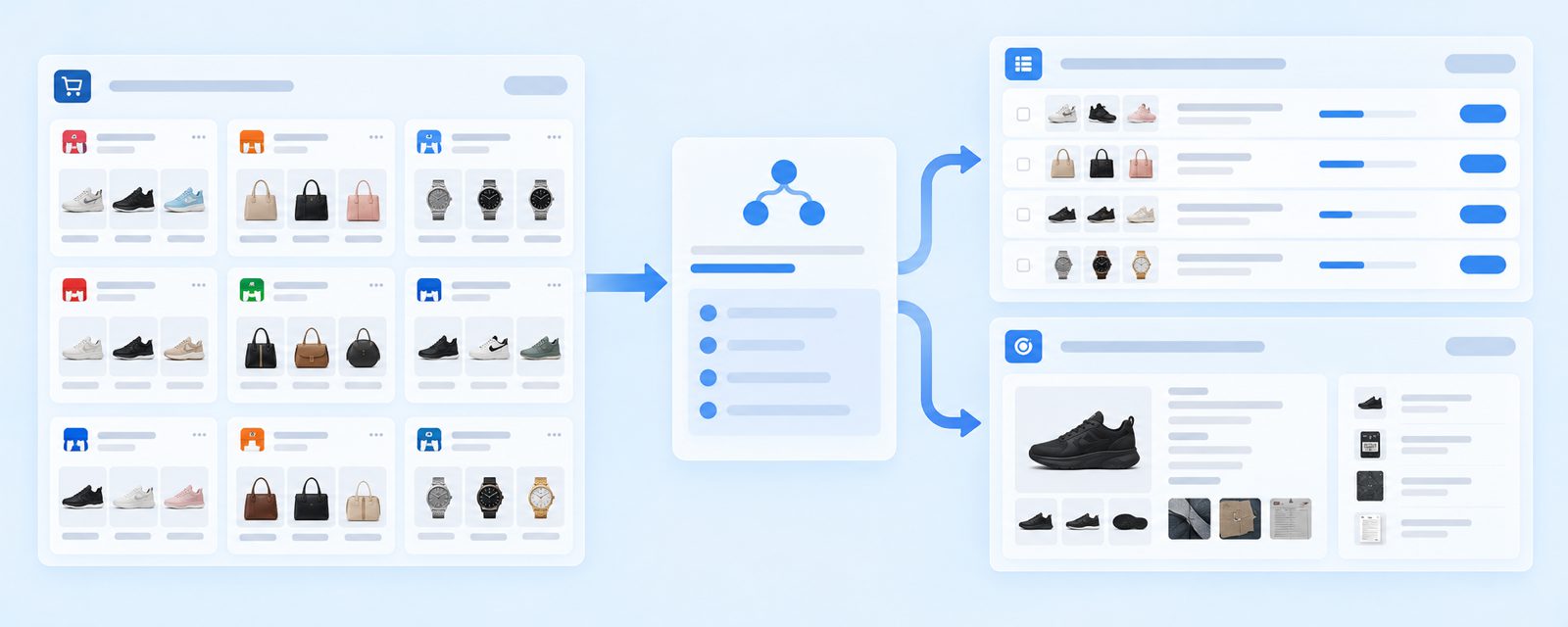
The direct lesson for a brand’s own monitoring is about evidence quality, not legal strategy. If courts now expect proof that a sale genuinely occurred in a specific jurisdiction rather than just that a listing could theoretically reach it, a brand’s own documentation needs to move in the same direction, verified transaction records, timestamped screenshots tied to a specific sale, not just a listing’s shipping settings. This is the same underlying principle behind any well-built takedown request, whether it’s aimed at a marketplace’s own reporting process or a Schedule A filing: the strength of the case rests on the quality of the evidence trail collected before anyone files anything, not on the legal mechanism chosen afterward. A brand building that evidence trail continuously, rather than reconstructing it after deciding to pursue a specific legal route, is the one positioned to act quickly whichever direction courts move next.

Mithileshkumar leads growth at Truviss, working every day to make sure the brands losing the most to counterfeits, fraud and digital impersonation are the ones who find out about a fix first. He’s spent his career believing that good marketing isn’t about noise, it’s about showing up right when someone needs the answer. Off the clock, he’s usually chasing the same instinct in something entirely unrelated to work.