Once a brand holds a registered mark, Truviss scans marketplaces, social platforms, domains, apps and ads continuously, so every report carries the standing to actually get acted on.
Book a demo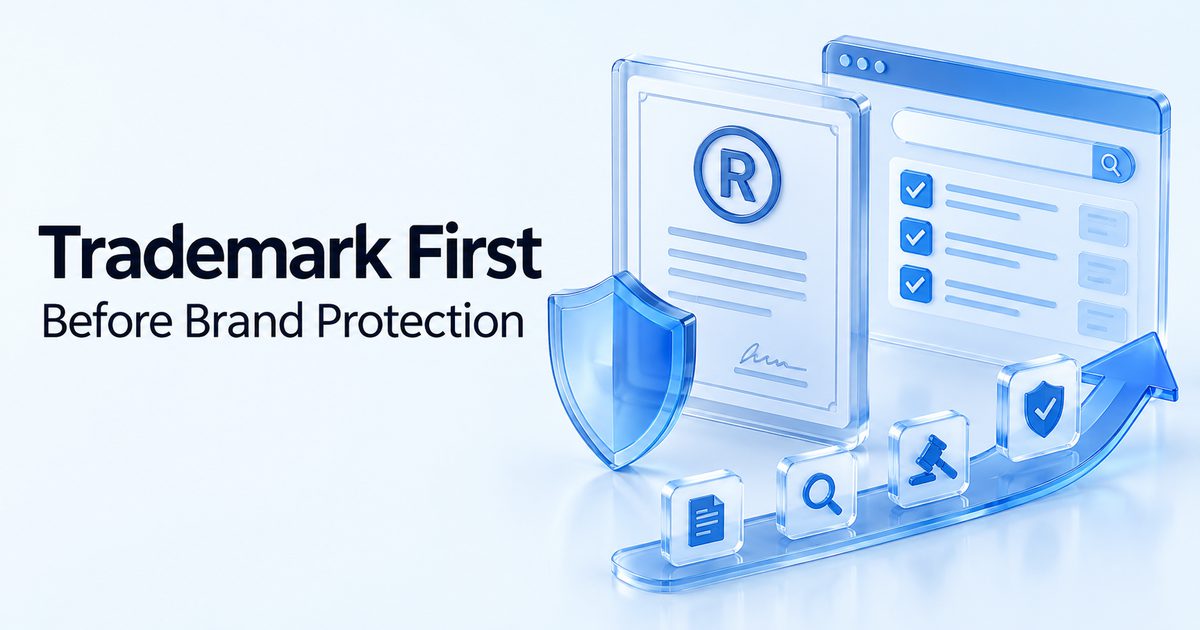
- Marketplaces, social platforms, domain registrars and courts all check for a registered trademark before acting on a takedown or enforcement request.
- Amazon Brand Registry and eBay’s VeRO programme both require an active registration (or a pending application in Amazon’s case) before granting fast-lane enforcement access.
- Brands often deploy monitoring tools before securing this legal foundation, which produces accurate detection that nobody with authority will act on.
- Register the trademark first, then bring in monitoring and enforcement, so every takedown request actually has standing behind it.
A brand protection team signs up for a monitoring tool, runs its first scan, and finds two hundred counterfeit listings across three marketplaces in the first week. Reports go out. Most of them come back rejected, or simply sit unanswered.
The listings were real. The detection was accurate. What was missing was upstream of any of it: a registered trademark. Marketplaces, social platforms, domain registrars and courts all have their own version of the same gate, and it opens for one document. Without it, even a perfectly accurate takedown request often goes nowhere. Fake trademark deeds have even started targeting brands at exactly this weak point, forging the very document marketplaces check for.
Monitoring tells you what’s infringing. Registration is what gives you standing to act on it. Skip the second and the first becomes a very detailed list of problems you can’t fix.
Marketplaces check for a registered mark before they help you
Amazon’s Brand Registry is the fastest path to counterfeit enforcement on the platform: proactive image and text-match protections, priority support, and expedited takedowns. Enrolment requires an active registered trademark, or a pending application with a serial number from a recognised government trademark office, tied to the brand’s own products (confirmed via Amazon’s own seller documentation). Without it, a seller is limited to the standard “report a listing” form, which is slower and offers no proactive protection at all.
eBay runs a similar model through its Verified Rights Owner (VeRO) programme, which requires an active registered trademark and proof of ownership, such as a certificate or registration number, before a brand can enrol as a rights owner (per eBay’s own VeRO policy). A brand without a registration is not automatically excluded from reporting infringement, but it is arguing from a weaker position on every submission, and slower, generic reporting paths are what’s left.
The pattern repeats across most marketplaces a brand sells on. The fast lane is reserved for brands that can point to a registration number.
Once a registration is in place, the next question is how to actually get a listing removed. That’s covered step by step in How to Report Counterfeit Sellers: Amazon to Alibaba — this piece is about the prerequisite that makes that process work, not a repeat of it.
Truviss can surface every unauthorised listing across a brand’s marketplaces from day one. Whether Amazon’s fastest reporting path is available to act on them still depends on being Brand Registry-enrolled first.
Explore Marketplace ScannerSocial platforms ask the same question in a different form
Instagram, Facebook and most other platforms’ intellectual property report forms have a field for a trademark registration number, and claims backed by one move through review faster. A brand relying on common-law rights (use in commerce without formal registration) can still file a report, but it typically has to substantiate ownership with additional evidence before the platform will act, which slows the process and increases the chance the report is bounced back for more information.
For counterfeit sellers running “DM to order” schemes on Reels or Stories, that delay matters. Every day an unverified report sits in review is another day the fake listing keeps selling.

Domain registrars and dispute panels want proof of rights, not just a complaint
Fighting a lookalike or typosquatted domain usually runs through a UDRP-style dispute process, and the first thing a panel evaluates is whether the complainant has rights in a trademark identical or confusingly similar to the disputed domain. A registered trademark is by far the cleanest, fastest way to clear that bar. UDRP panels do accept unregistered, common-law rights in principle, but only with solid, specific evidence of the mark’s distinctiveness, and a merely pending application isn’t enough on its own at the time a complaint is filed. Without a registration in hand, a brand ends up building that evidentiary case from scratch before the panel even reaches the question of whether the domain is confusingly similar. That’s an extra fight layered on top of the one the brand actually came to have.
Courts are the slowest gatekeeper, and the one where this matters most
In the US, a federal trademark registration gives its owner a legal presumption of validity and ownership under the Lanham Act, along with constructive nationwide notice, which streamlines proving the basic facts a court would otherwise expect the plaintiff to establish from scratch. Certain remedies, including statutory and treble damages provisions and the path to incontestable status after five years, are only available to marks that are federally registered. A brand relying solely on common-law rights can still bring a claim, but establishing standing and validity becomes a bigger part of the case itself, adding cost and time before the actual infringement is even addressed. For a broader look at how IP protection plays out across the wider e-commerce lifecycle, see Protecting Intellectual Property in E-commerce: The Complete Guide.
Litigation is the most expensive and slowest gatekeeper on this list. It’s also the one where showing up without a registration costs the most.
Why brands skip this step anyway
Registration is invisible admin work. It runs through a different process (an IP attorney, a national or regional trademark office, jurisdiction-by-jurisdiction filing) than the one that produces a demo-able dashboard. It takes months, sometimes longer in some markets, with no visual output along the way. Monitoring tools, by contrast, are the purchase that shows results in the first scan.
That combination pulls buying attention toward detection and away from the paperwork that makes detection actionable. Nobody markets “go register your mark first” the way they market a live threat dashboard. The result is brands with excellent visibility into their counterfeit problem and comparatively weak ability to make anyone act on it.

The right sequence, and where Truviss fits into it
Register the mark first, in the markets where the brand actually sells or plans to. Then bring in monitoring and detection. Then use the registration to make every report and takedown request land with the weight it’s designed to carry.
Truviss doesn’t file or manage trademark registrations. That’s an IP attorney’s job, working through the relevant trademark office. What Truviss does is the layer that comes after: continuous scanning across marketplaces, social profiles, lookalike domains, app stores and ad networks, with the reporting and top-offenders tracking a legal or brand team needs to act on what it finds. A registered mark gives a brand the standing to demand a takedown. Truviss is what finds the thing worth demanding it for, and keeps finding it after the first round of reports is done.
Check the registration status of the brand in every market it sells in before assuming the next takedown request will work. That’s the step that decides whether everything downstream of it actually functions.
Related reading
- How to Report Counterfeit Sellers: Amazon to Alibaba
- What Happens After You Report a Counterfeit Listing
- How to Find & Respond to Unauthorised Sellers Online

Mithileshkumar leads growth at Truviss, working every day to make sure the brands losing the most to counterfeits, fraud and digital impersonation are the ones who find out about a fix first. He’s spent his career believing that good marketing isn’t about noise, it’s about showing up right when someone needs the answer. Off the clock, he’s usually chasing the same instinct in something entirely unrelated to work.