Truviss monitors marketplaces continuously so you catch counterfeit listings, copied packaging and unauthorised resellers before they force a legal fight.
Book a demo
- South Africa’s Supreme Court of Appeal ruled 3-2 that genuine Enrico Coveri shoes imported without local trademark consent are not “counterfeit” under the Counterfeit Goods Act, since counterfeiting requires criminal intent to deceive.
- Kenyan courts backed two rights-holders: Ezeetile won KES 3 million in damages over copied tile-adhesive packaging, and Unga Limited got a temporary injunction against a copycat maize brand in January 2026.
- Nigeria’s Rite Foods had to go back to court twice against the same energy-drink rival after a first settlement was quietly ignored.
- A private Nigerian company lost its own trademark fight against the Central Bank of Nigeria over the “eNaira” name, showing registration alone isn’t a guaranteed shield.
Brand owners who assume “our goods are genuine, so we’re covered” got a rude awakening in South Africa this year. And they are not alone. Across South Africa, Kenya and Nigeria, courts have spent the last eighteen months drawing sharper lines around what counts as trademark infringement, who owns a brand name, and how far a rights-holder’s protection actually stretches. The results have not all gone the way brands expected.
This roundup covers five verified, recent court rulings from three African jurisdictions. It is not an exhaustive index of every case on the continent. We searched specifically for Ghana and Egypt rulings from 2025 and 2026 and found none we could verify to a specific court judgment, so they are left out rather than padded in with vague trend pieces.
South Africa: when the “real thing” still isn’t yours to sell
The most counterintuitive result of the year came from South Africa’s Supreme Court of Appeal in Yossi Barel v Popular Trading CC and Others ([2025] ZASCA 94, decided 23 June 2025).
Yossi Barel holds the registered South African trademark for the ENRICO COVERI footwear brand. Popular Trading CC, a separate distributor, imported genuine Enrico Coveri shoes sourced directly from the brand’s Italian manufacturer, without Barel’s consent as the local trademark holder. Barel tried to have those shoes seized as counterfeit under South Africa’s Counterfeit Goods Act.
In a tight 3-2 split, the majority disagreed. Authentic goods, they held, cannot be “counterfeit” under the Act purely because they were imported without the local rights-holder’s permission. The Act’s definition of counterfeiting is a criminal one, requiring evidence of intent to deceive, and is legally distinct from ordinary trademark infringement, which is a civil matter judged on likelihood of confusion, not intent. Unauthorised parallel importation of real goods, the majority reasoned, is a trademark-infringement question, not a counterfeiting one, and the two carry different legal tests and remedies.
Two judges dissented. In their view, any unauthorised use of a registered mark, even on goods that are genuinely made by the original manufacturer, should count as counterfeiting, because the registered proprietor’s exclusive rights in South Africa are what the law protects, not the goods’ factory of origin.
The upshot for brand owners: winning a criminal counterfeit seizure is not the same fight as winning a civil infringement claim, and confusing the two can mean walking away with neither remedy.
Kenya: copied packaging costs a rival KES 3 million
A more conventional result came out of Kenya’s Mombasa High Court. In Ezeetile Kenya Ltd v Dg Services Limited ([2025] KEHC 12098, judgment delivered 7 July 2025), Ezeetile held the registered trademark “TILEFIX” for its tile adhesive, built up since entering the Kenyan market in the 1990s. DG Services began selling a competing tile adhesive in 25kg packaging that Ezeetile argued was strikingly similar, to the point of misleading buyers into thinking they were purchasing the original product.
DG Services did not defend the claim. The court found infringement, awarded Ezeetile general damages of Kshs 3,000,000, and granted a permanent injunction. Straightforward as undefended cases go, but it shows Kenyan courts are willing to back registered trademark holders with meaningful damages, not just an injunction.
Copied packaging is exactly the kind of signal Truviss’s marketplace monitoring is built to catch, before it reaches this scale.
Explore Marketplace Scanner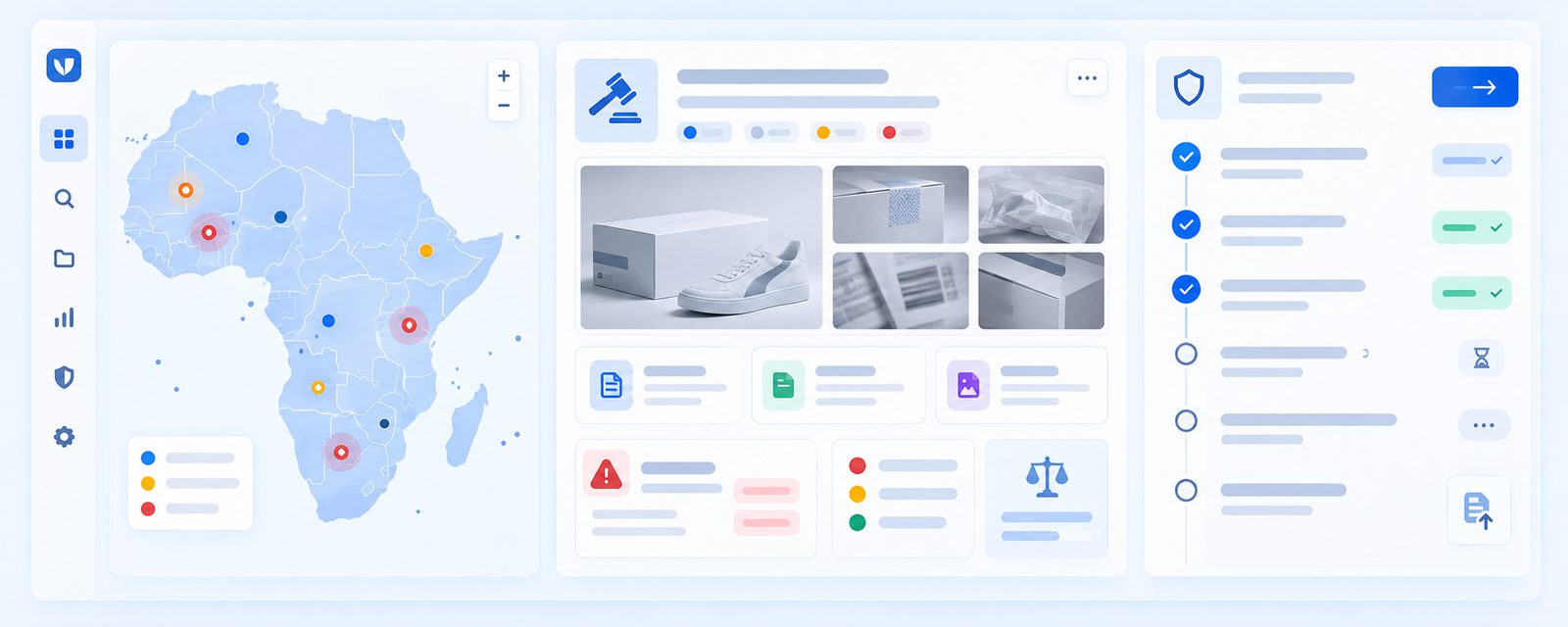
Kenya: an established maize brand fights a two-year copycat
A second Kenyan case is still working its way through court. Unga Limited, one of the country’s longest-running maize millers and the registered owner of the “HODARI” trademark across Kenya, Tanzania, Uganda and Zanzibar, discovered in late 2024 that Nanyuki-based Daiga Millers was producing and selling maize meal under the Hodari brand without authorisation.
On 22 January 2026, the High Court granted Unga a temporary injunction, restraining Daiga Millers from importing, packaging, distributing, marketing or selling any Hodari-branded product, and ordering the surrender of infringing stock, packaging and equipment pending a full trial. The case is not yet decided on the merits, but the interim order shows a court willing to act quickly once a registered rights-holder makes a credible case, rather than waiting for a full hearing to stop the harm.
Nigeria: a beverage brand fights the same rival twice
Rite Foods Limited, maker of the Fearless energy drink, sued Mamuda Beverages Nigeria Limited at the Federal High Court in Abuja in January 2025, after Mamuda launched a lookalike product, Pop Power, in a bottle design Rite Foods argued was a copy of Fearless. The parties reached a consent judgment: Mamuda agreed to stop producing Pop Power in that design, destroy existing stock, and avoid further imitation.
Mamuda then relaunched Pop Power with only cosmetic changes. Rite Foods went back to court. Justice Binta Murtala-Nyako dismissed Mamuda’s preliminary objection and granted Rite Foods’ fresh application for injunctive relief, stopping the reintroduced version too.
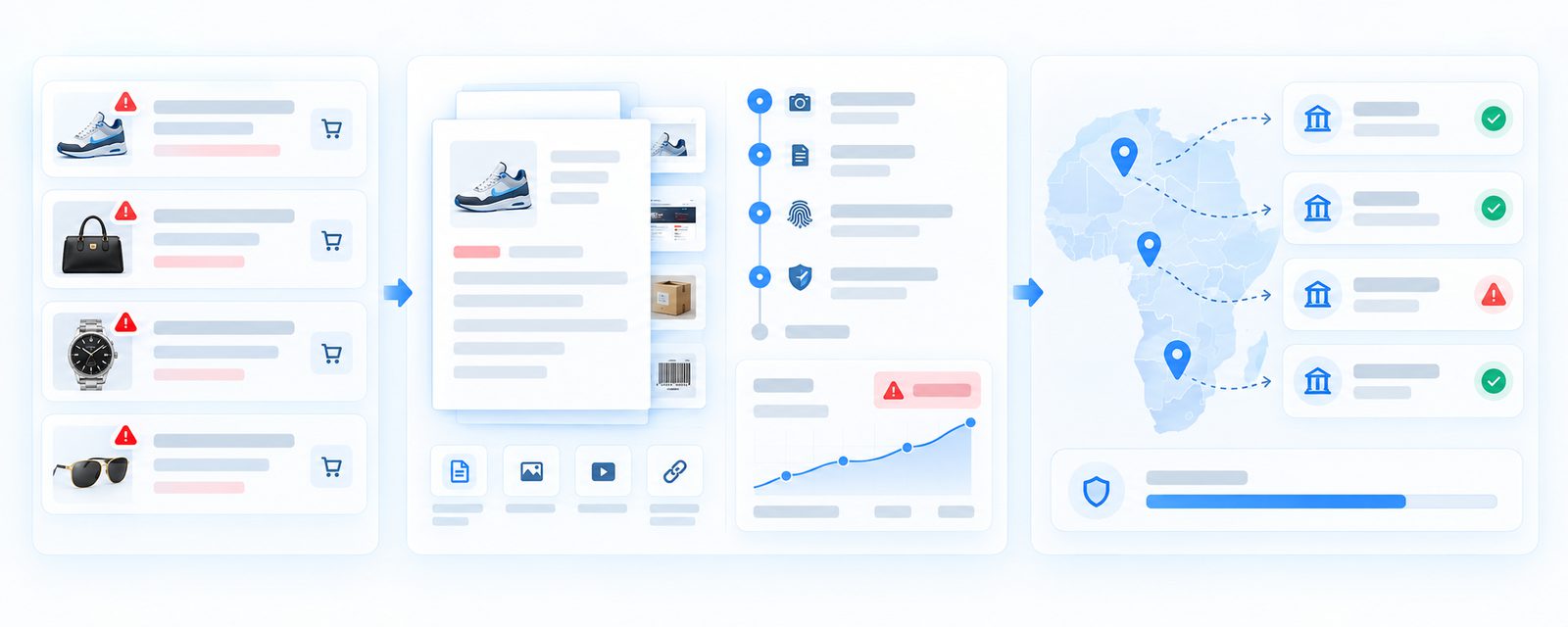
The lesson here is less about the legal test and more about enforcement mechanics: a settlement or a first injunction is not always the end of the story. Brands that win the first round should expect to keep monitoring for a repeat offence dressed up as a “redesign,” and be ready to go back to court if one turns up.

Nigeria: a private company loses the trademark fight against a central bank
The most unusual case of the five is not a counterfeit-goods dispute at all, but it belongs in a brand-protection roundup because it turns on the same underlying question: who has the right to a name.
eNaira Payment Solutions Ltd, a private company incorporated in Nigeria in 2004, sued the Central Bank of Nigeria after the CBN launched its own “eNaira” digital currency in 2021, using a name the company argued was already its trademark. On 22 May 2026, Justice James Omotosho of the Federal High Court in Abuja ruled against the company. The judgment found the company’s own chosen name was “unregistrable” in the first place, because it was misleading and implied a government affiliation it never had. The court granted the CBN a perpetual injunction affirming its exclusive rights to the eNaira name, ordered the private company to change its name to remove any reference to “Naira,” and awarded the CBN N10 million in damages.
It is a reminder that trademark rights are not purely a race to register first. A name that misleadingly borrows the credibility of an official or well-known institution can lose out even against an earlier registrant, once a court decides the original registration itself was improper.
What the pattern tells brands operating in Africa
Three things stand out across these five rulings.
First, “counterfeit” has a narrower legal meaning in most of these jurisdictions than marketing teams tend to assume. The Barel case shows that genuine goods, moved without authorisation, may sit outside a counterfeit statute entirely, even though they clearly infringe a trademark in the ordinary sense. Brands need both playbooks ready, not just one.
Second, injunctions are not self-enforcing. The Rite Foods case shows a rival can quietly reintroduce a near-identical product after a settlement, betting the brand owner will not notice or will not want to go back to court. Ongoing monitoring after a win, not just at the point of filing, is what makes an injunction stick.
Third, territorial trademark registration still carries real weight, even against a rival selling authentic, non-counterfeit goods, as the dissenting view in Barel and the outcome in Unga’s Hodari case both illustrate. Registering and actively defending a mark in each market a brand sells into, rather than relying on its reputation from elsewhere, remains the more durable strategy.
For brands trying to catch a relaunch, a copycat design, or an unauthorised import before it reaches a courtroom, continuous online brand protection monitoring is what turns “we’ll deal with it if it happens again” into evidence a court can act on quickly, the way Unga’s team did within weeks of finding Daiga Millers’ stock.
India’s courts have been moving just as fast on this front, with rulings that went well beyond a simple injunction.

Mithileshkumar leads growth at Truviss, working every day to make sure the brands losing the most to counterfeits, fraud and digital impersonation are the ones who find out about a fix first. He’s spent his career believing that good marketing isn’t about noise, it’s about showing up right when someone needs the answer. Off the clock, he’s usually chasing the same instinct in something entirely unrelated to work.